Pier 22 Buildings
| Location | Donauinsel, Vienna |
| Principal use | Kiosk, Café, Restaurant, Public Infrastructure |
| Year | 2021-2026 |
| Status | completed |
| Design team | Mark Neuner, Felix Redmann, Marlene Lötsch, Christian Höhl, Paul Feustel, Xin Xin Qiu, Ritger Traag |
| Design Consultant | Quirin Krumbholz |
| Interior Inselrestaurant | Mostlikely Architecture |
| Structural engineering | Bollinger + Grohmann |
| Infrastructure | Axis Ingenieure |
| Building Physics | Bauklimatik |
| Electrical Planning | Allplan |
| Kitchen planning | Sarah Holzer |
| Furniture Design | Mostlikely Architecture |
| Client | MA 45 / WGM / Stadt Wien |
| General Contractor | Porr / HABAU Group |
| Photos & Graphics | Mostlikely Architecture |
| Nominations | Archdaily Building of the Year, 2025 |
| Awards | Monocle Design Awards 2025, Best public space |
| Competition | 1st prize |
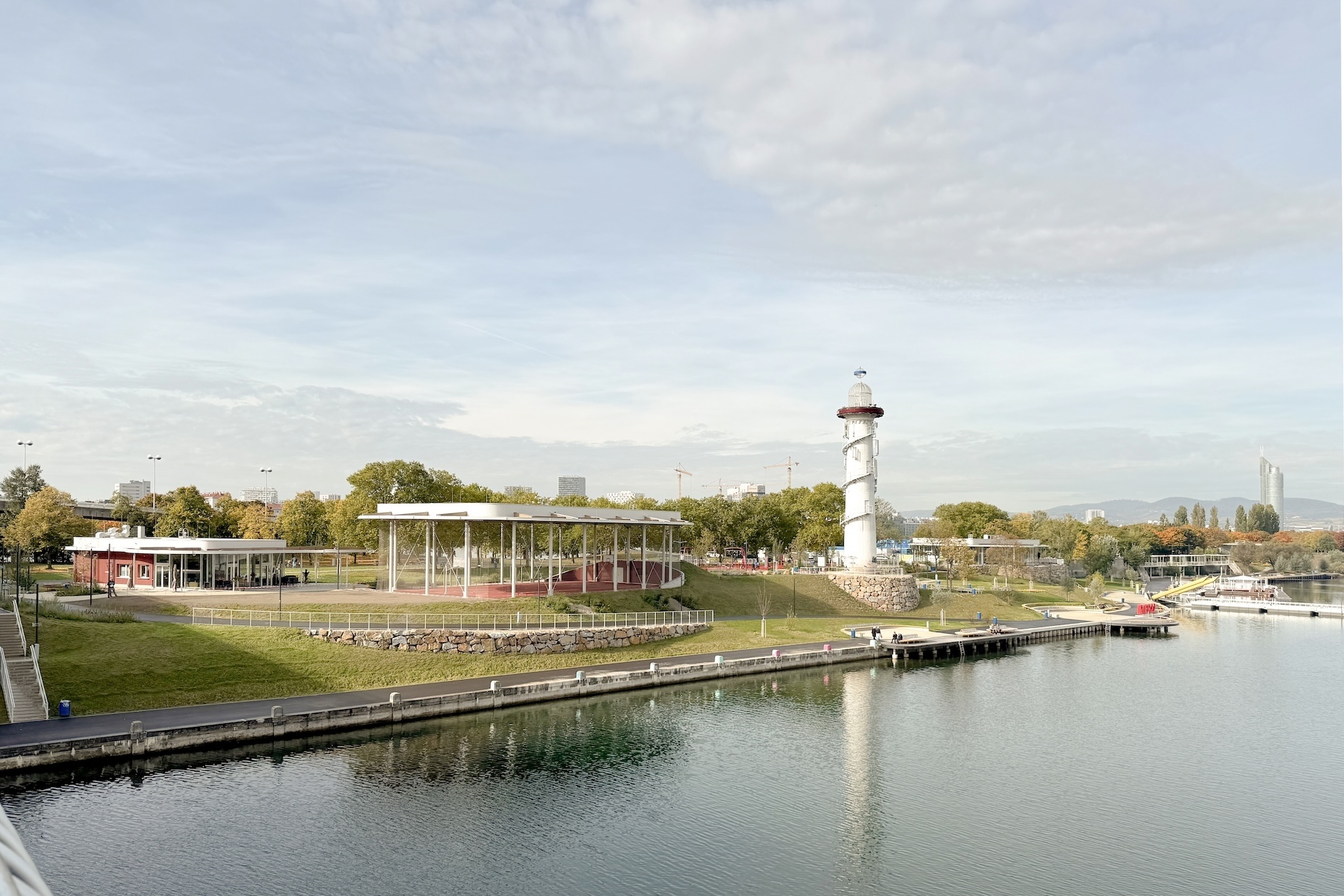
Four architectural structures — three buildings and one covered sports field — are distributed across Pier 22 and serve as hubs for the Body, Mind and Soul zones. Integrated into the landscape, they provide gastronomy, infrastructure and year-round amenities across the site.
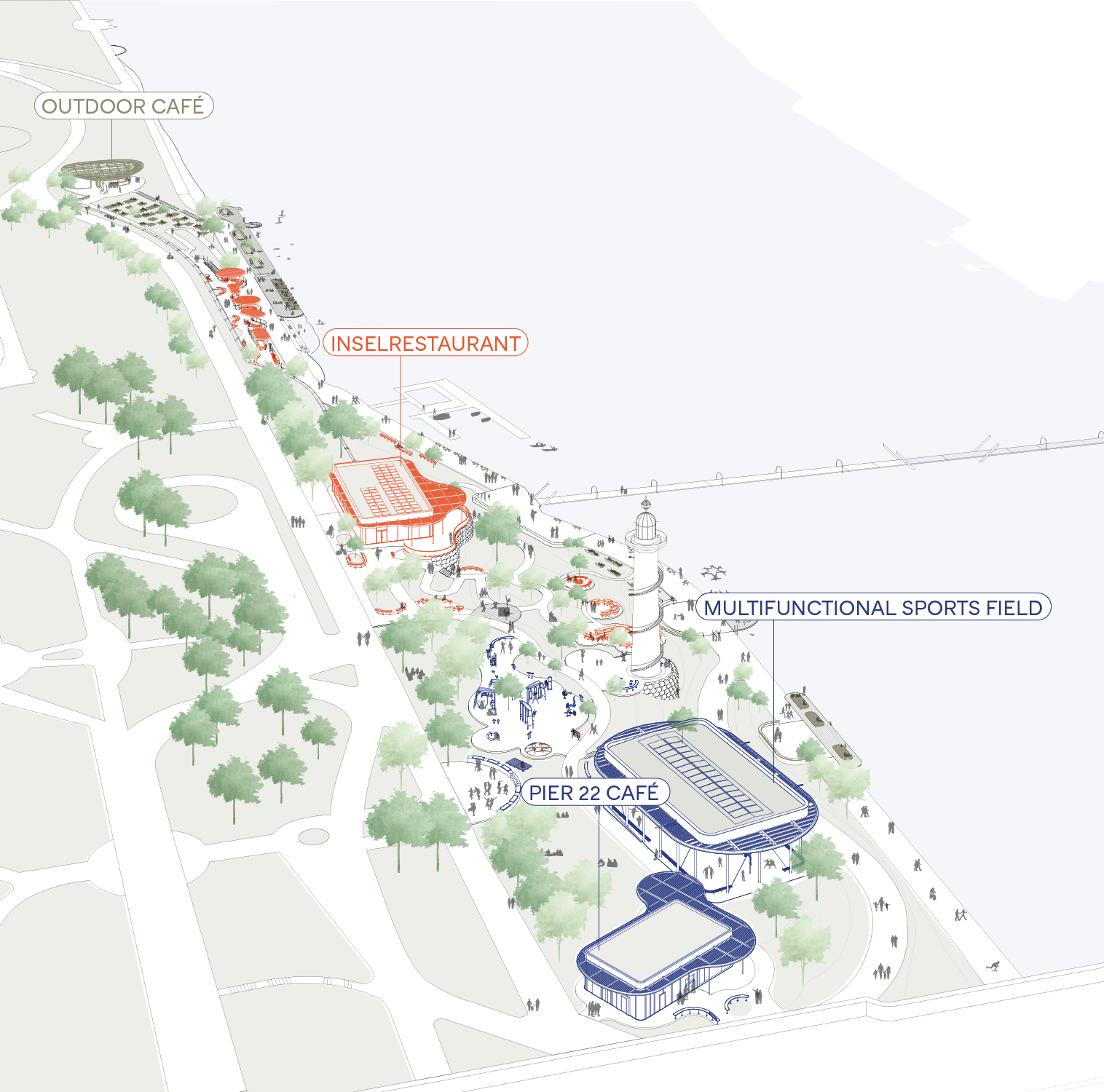
Located outside the flood-prone areas, the buildings are designed as low-rise pavilions embedded within the three landscape zones. Curved roof structures and generous terraces provide shaded outdoor areas oriented towards the water.
The Pier 22 Café and Multifunctional Sports Field form the hub of the Body Zone, the Inselrestaurant anchors the Mind Zone, and the Outdoor Café serves the Soul Zone. While the Pier 22 Café and Inselrestaurant operate year-round, the outdoor café is designed as a seasonal kiosk.
Distributed across the site, the buildings act as hubs for the three zones of Pier 22.
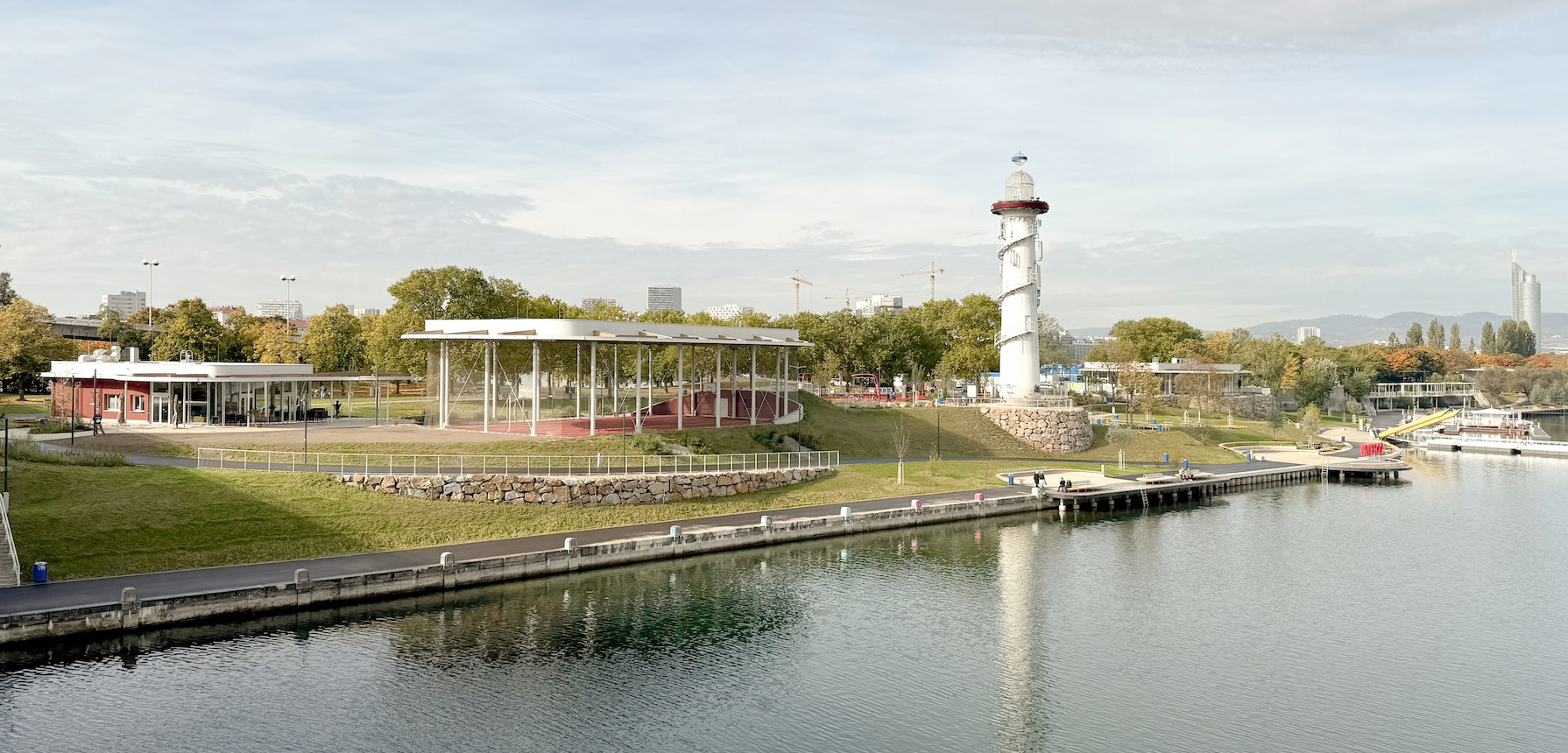
Circular Architecture
All buildings at Pier 22 follow a circular and low-tech architectural approach focused on durability, repairability and long-term resilience. Hybrid constructions made from timber and steel were developed based on Life Cycle Analysis done together with Bollinger+Grohmann. This was to achieve the best combination of durability, resource efficiency and structural performance. Regional and certified materials were selected to ensure sustainable construction and easy maintenance over time.
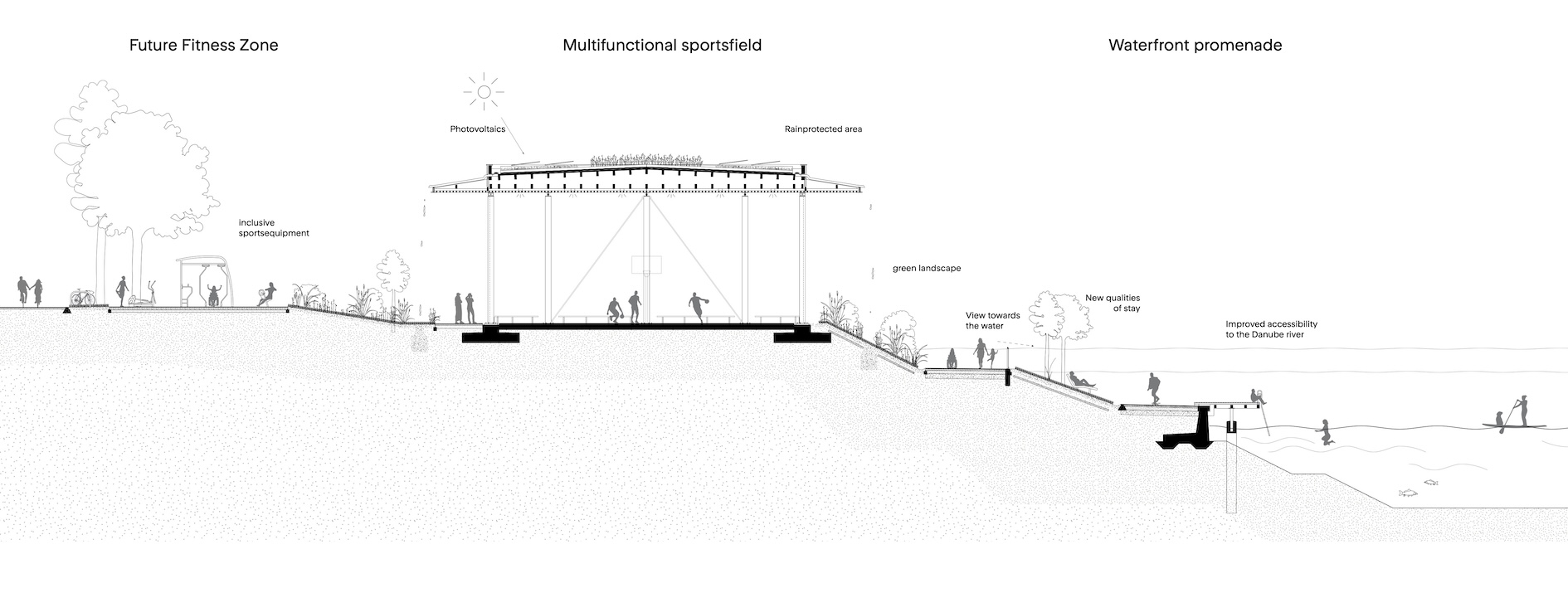
Natural ventilation, night-time cooling and integrated heat pump systems reduce the technical complexity while improving the indoor climate throughout the year. PV panels on the roofs generate energy locally, while green roofs reduce overheating and retain rainwater on site. Across the project, water is collected and guided into planted gravel bodies designed to absorb runoff during heavy rain events and flooding.
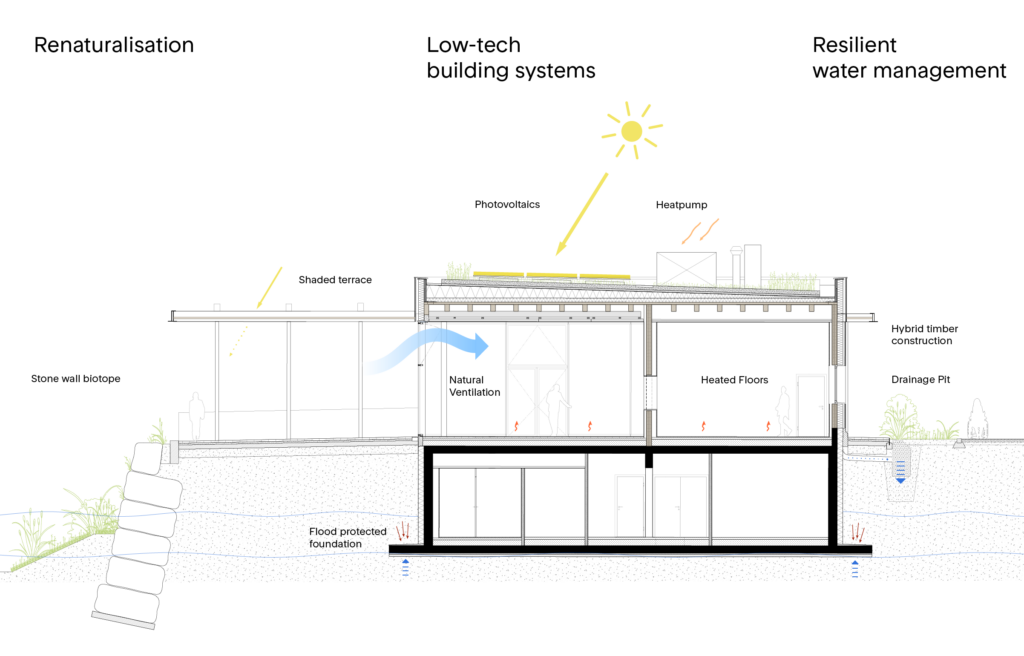
Hybrid timber structures, low-tech building systems and resilient water management create durable public architecture for a flood-prone landscape.
Outdoor Café
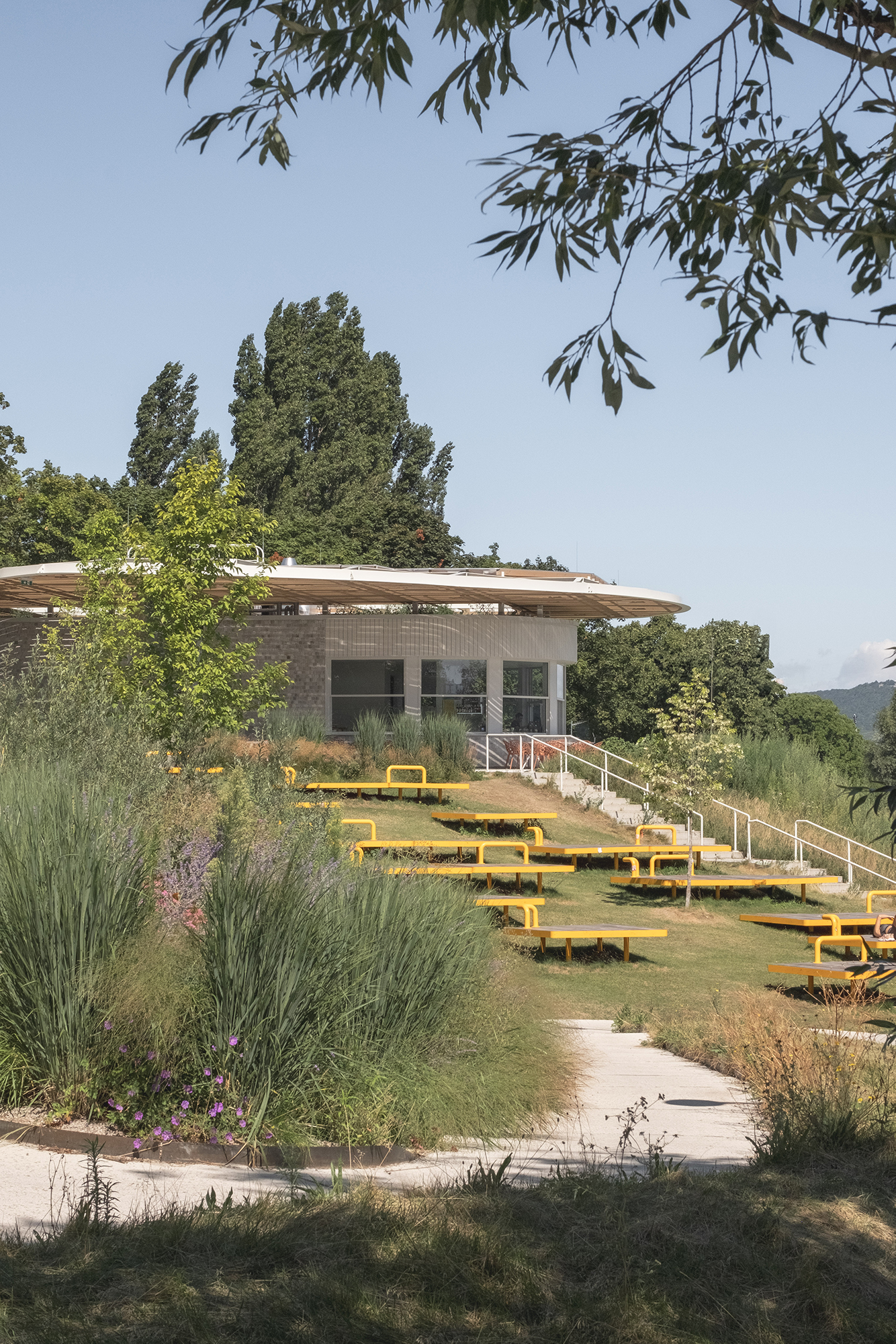
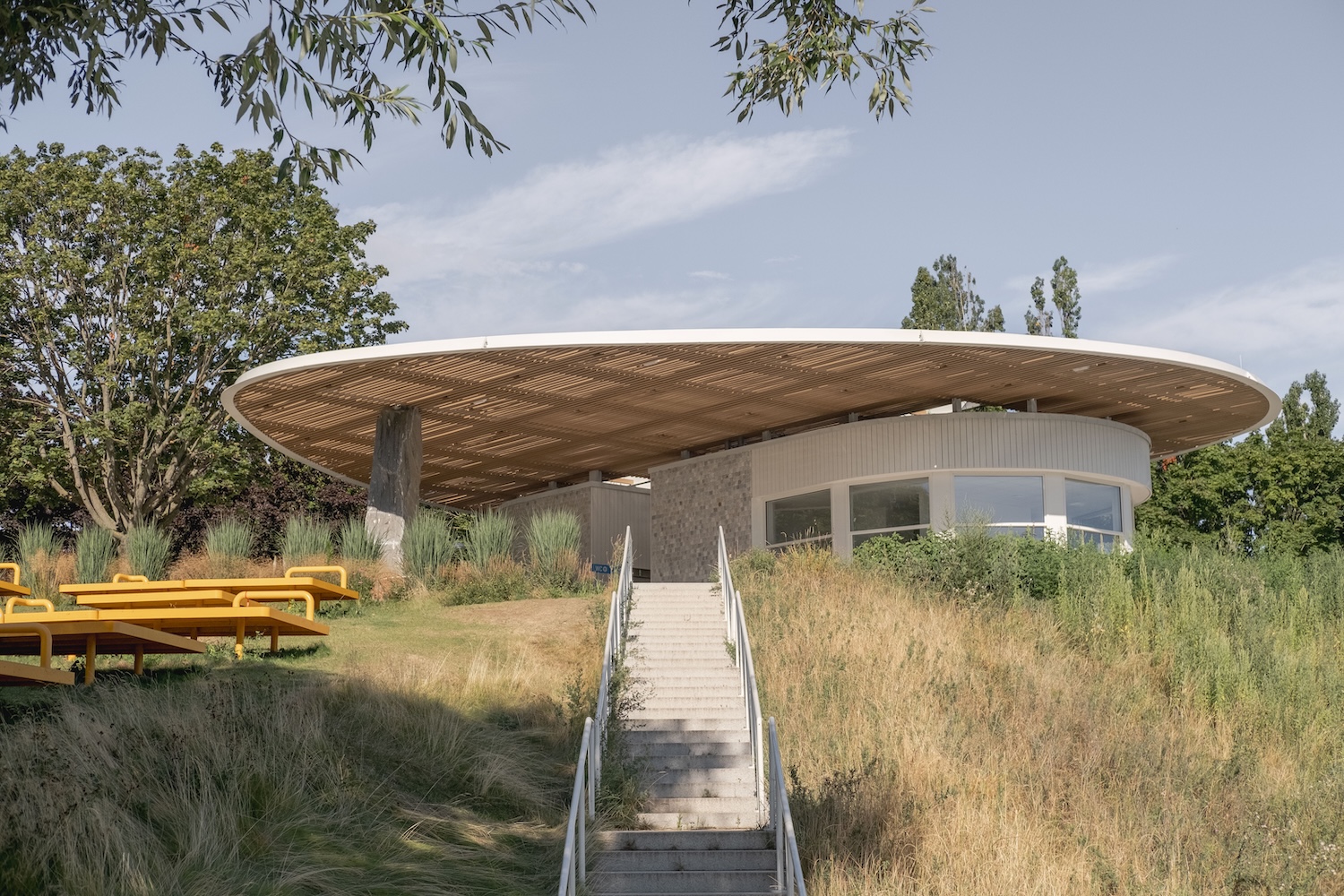
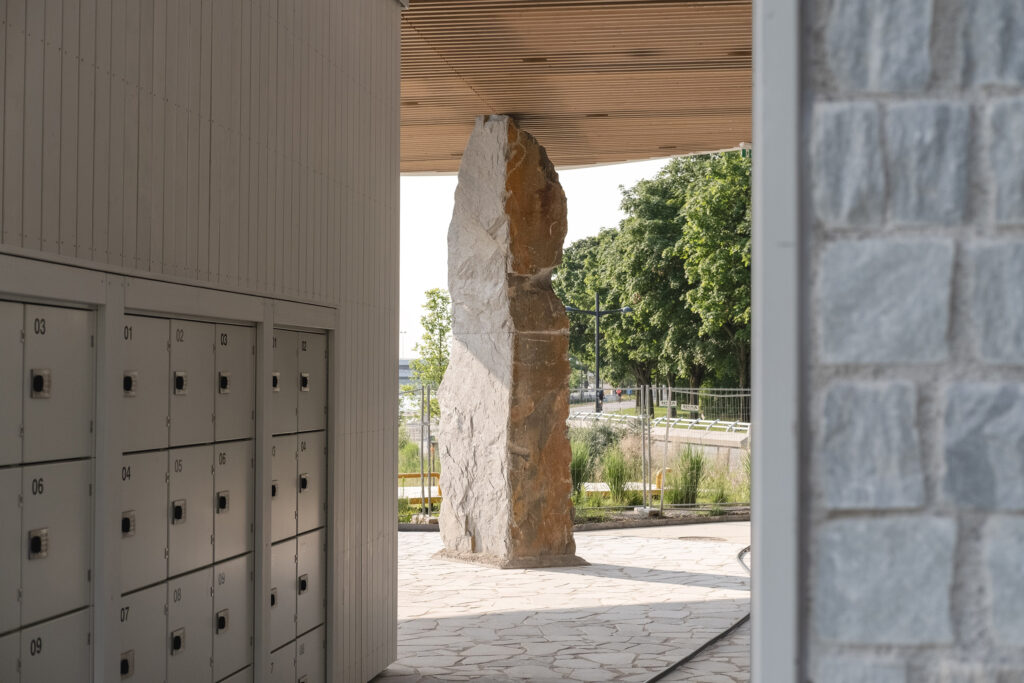
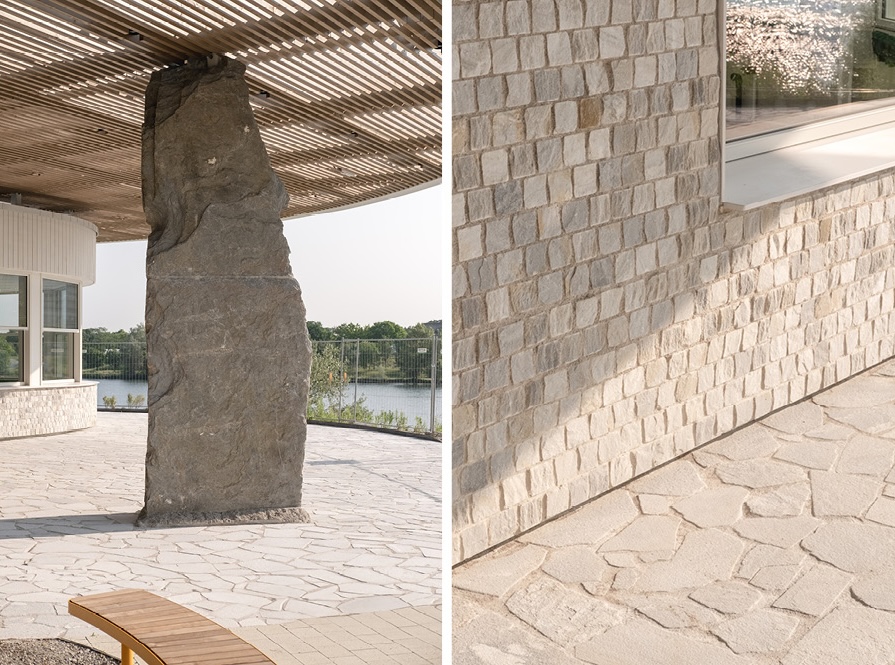
The Outdoor Café forms the social hub of the Soul zone and overlooks the bathing landscape of Pier 22. Conceived as a compact, seasonal pavilion the building is constructed as a solid structure using a consistent material palette of natural stone from Rauris across façade, floor and the characteristic stone column supporting the curved canopy roof. The roof provides shade and partial rain protection for the outdoor seating areas.
Public toilets, drinking fountains and lockers integrated into the rear side of the building support the surrounding public spaces of the Soul zone.
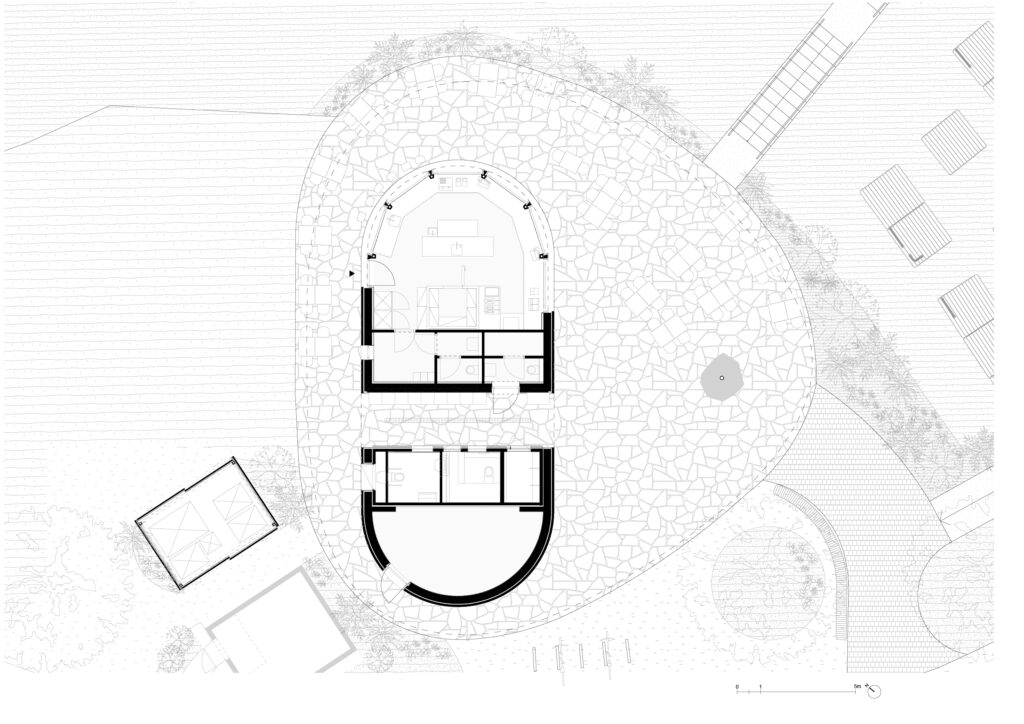
A compact stone pavilion overlooking the bathing landscape provides public infrastructure and seasonal gastronomy for the Soul zone.
Pier 22 Inselrestaurant
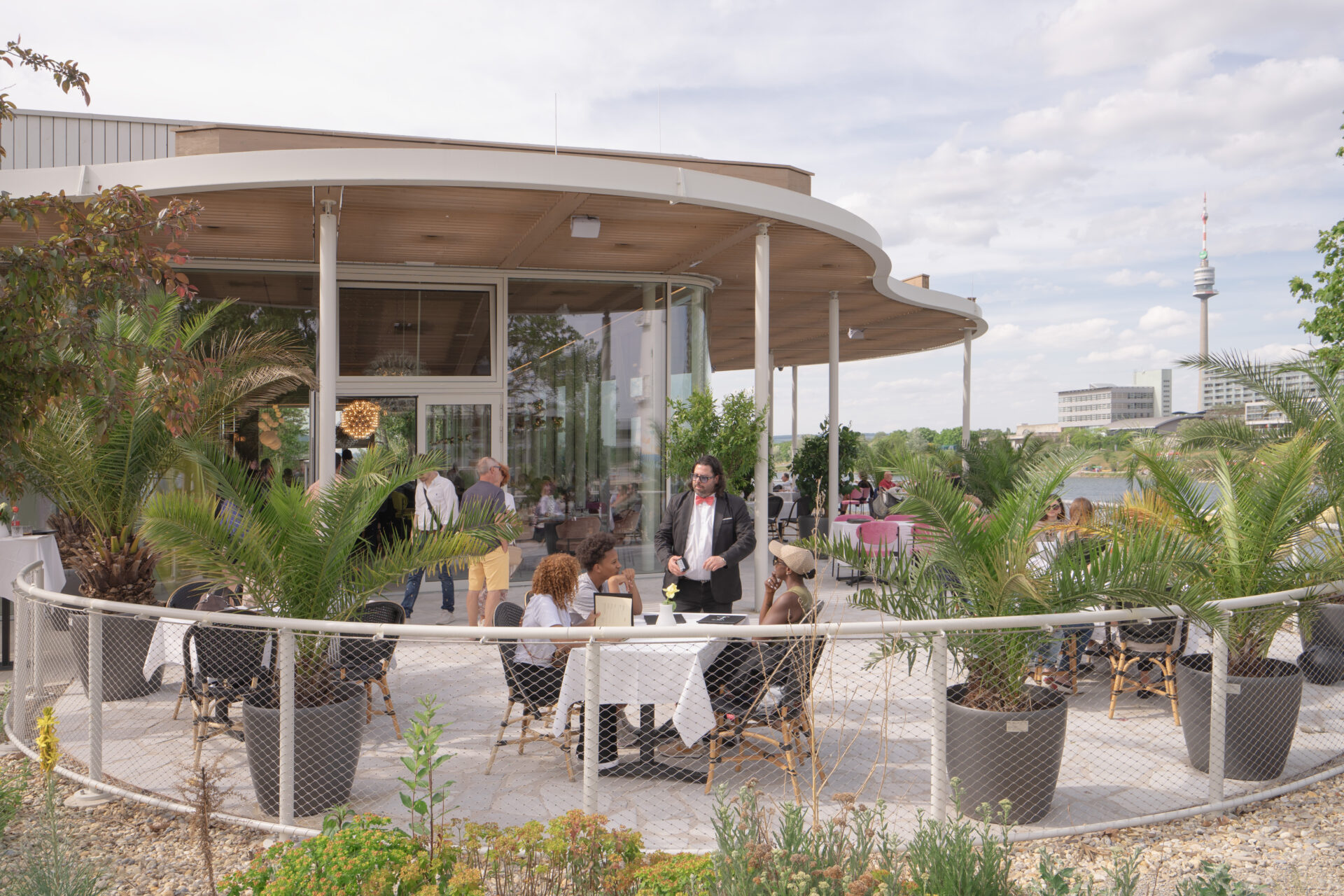
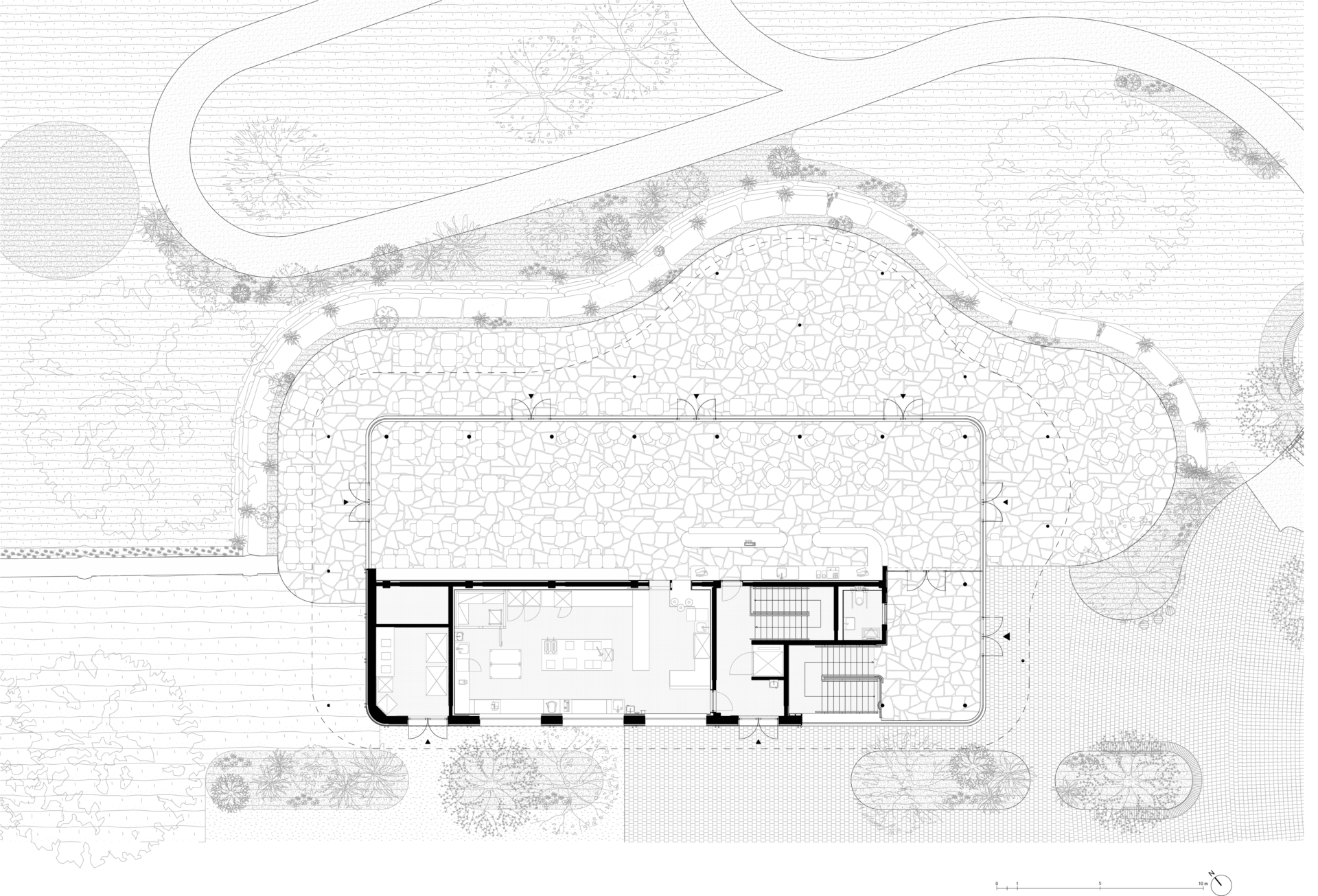
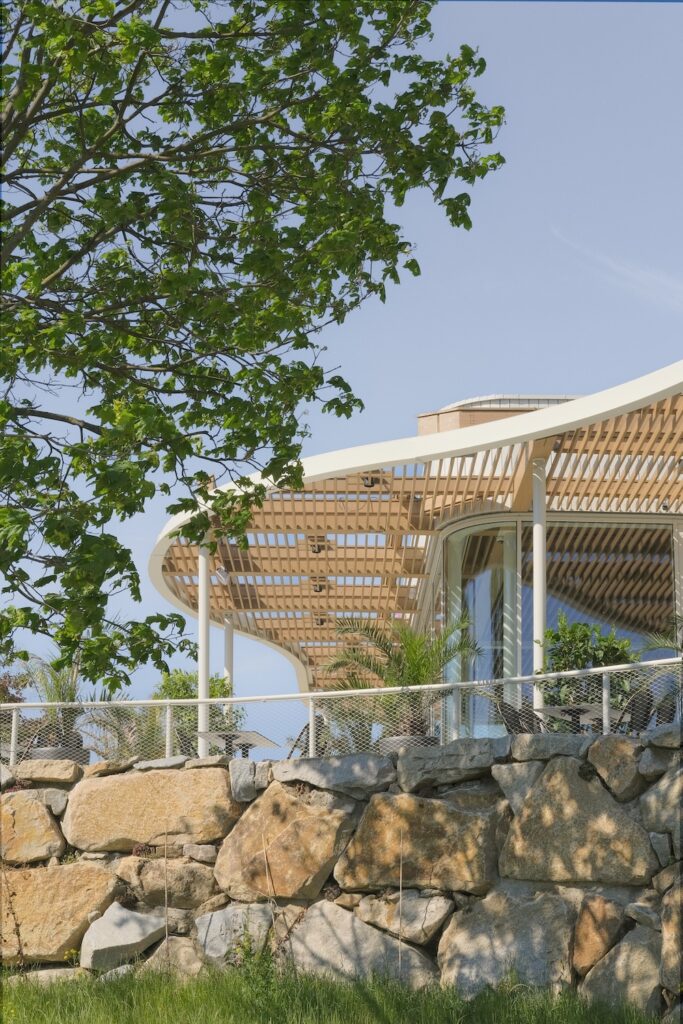
The Inselrestaurant acts as the central hub of the Mind zone. Designed as a hybrid construction of mass timber and slender steel columns, the building opens generously towards the water through curved terraces, pergolas and large glass façades framing views across the Danube and the surrounding greenery.
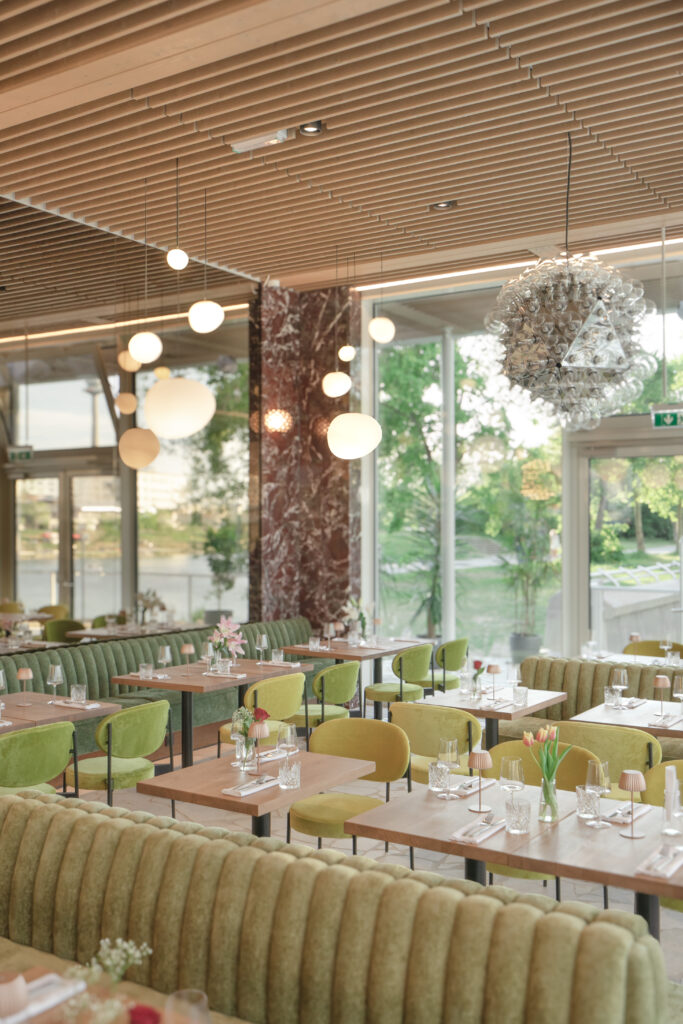
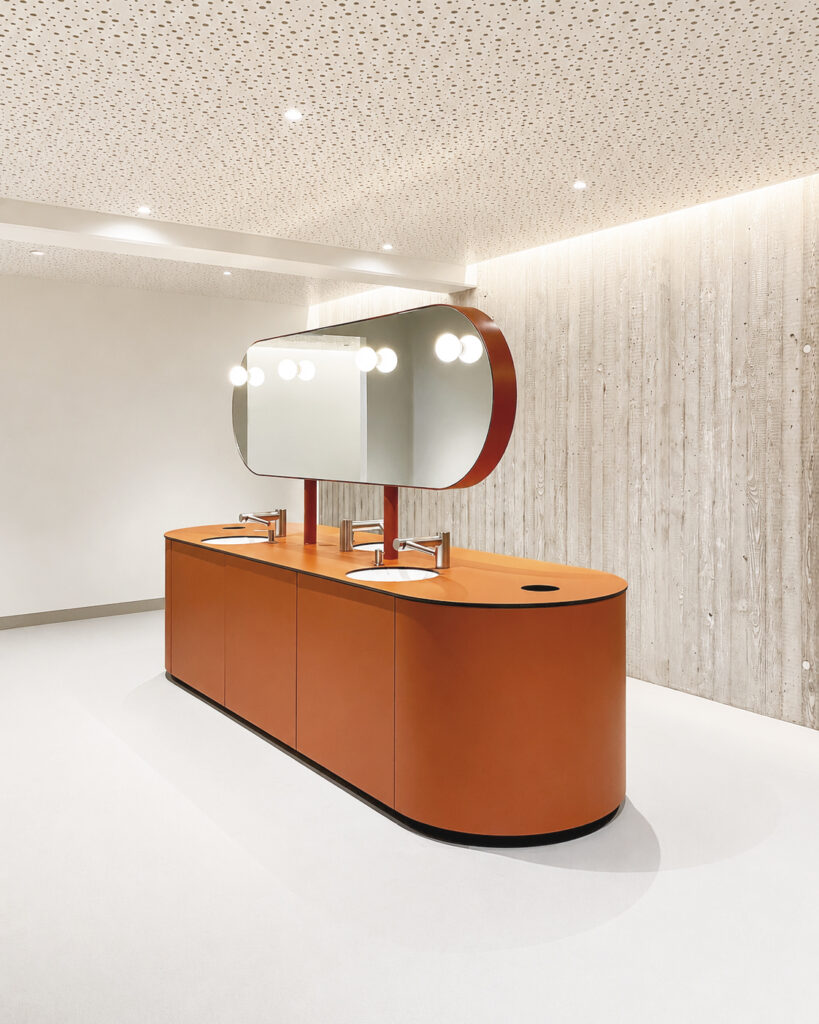
Natural stone flooring and timber lamella elements continue seamlessly between interior and exterior spaces. The interior follows an open spatial organisation, while mirrors reflect views into the greenery and across the waterfront. Alongside high-quality gastronomy, the building provides public infrastructure including public toilets with a custom-designed communal washbasin.
Pier 22 Café and
Multifunctional Sports Field
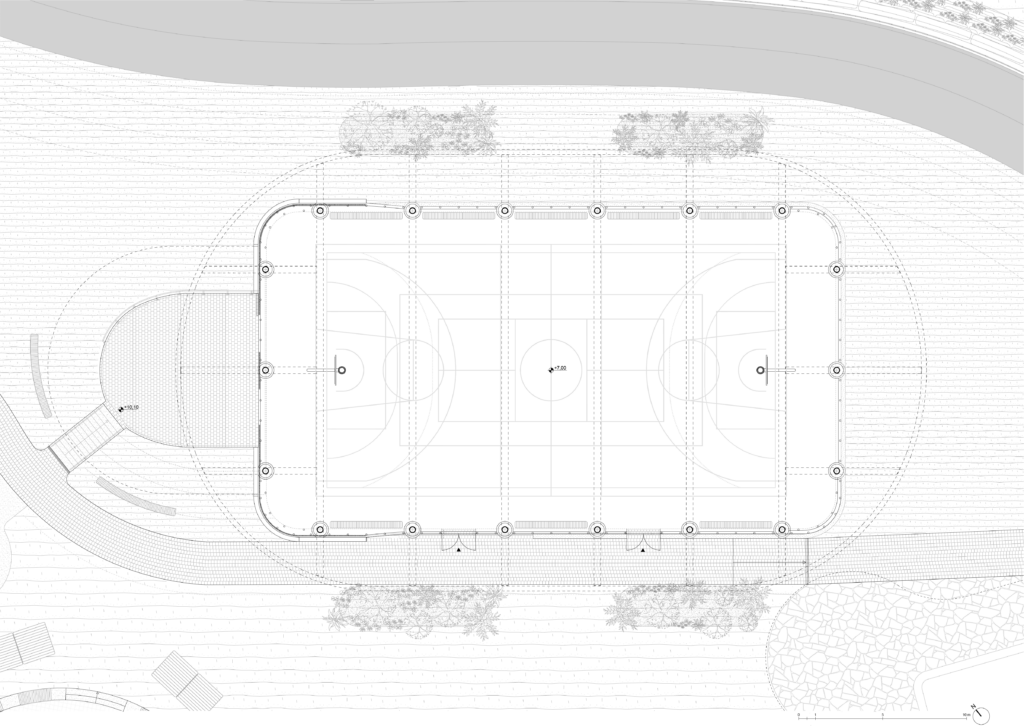
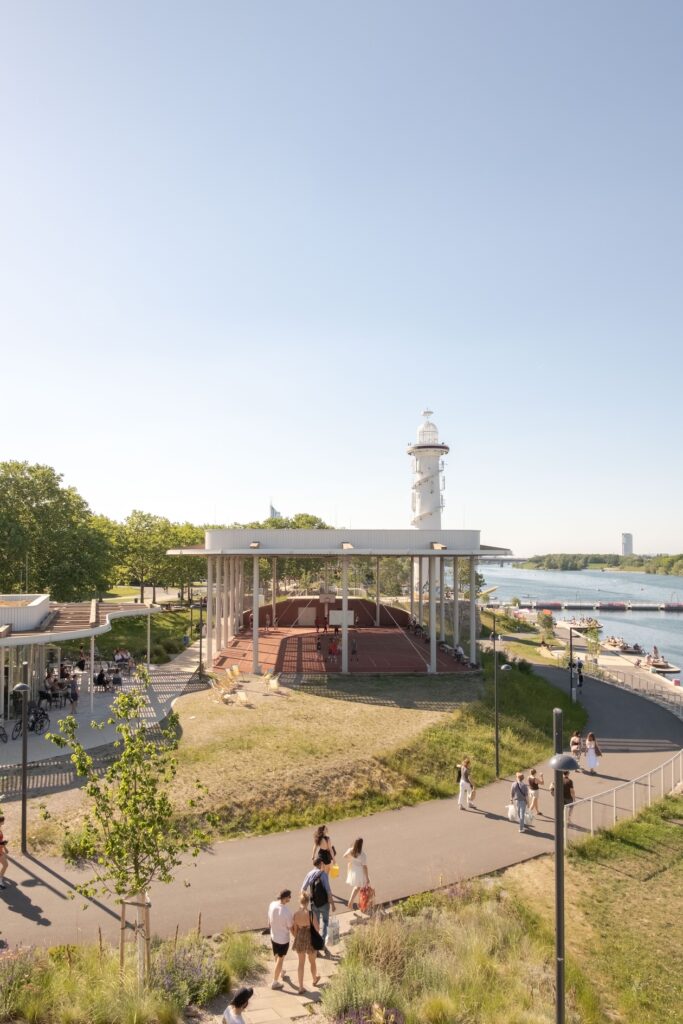
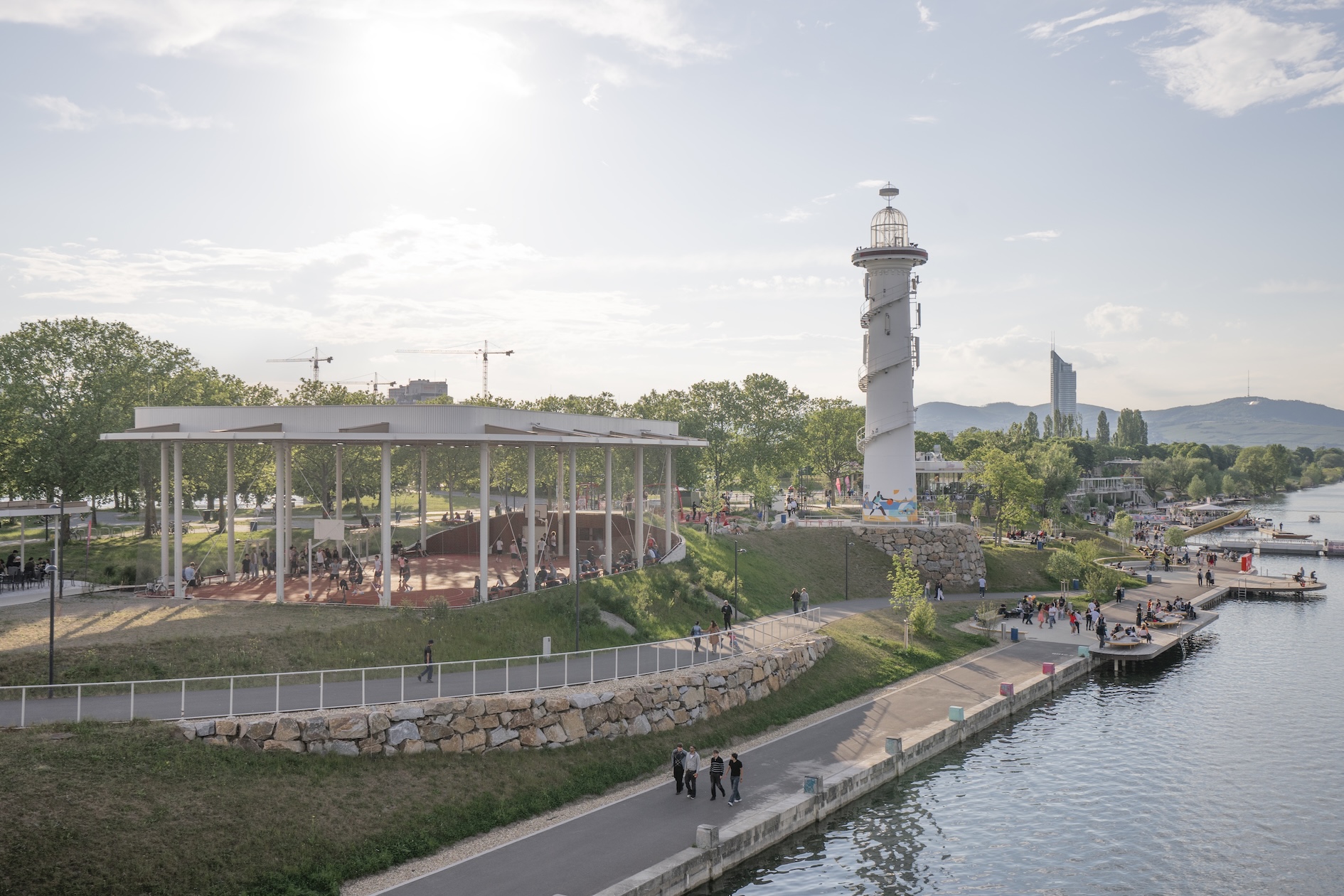
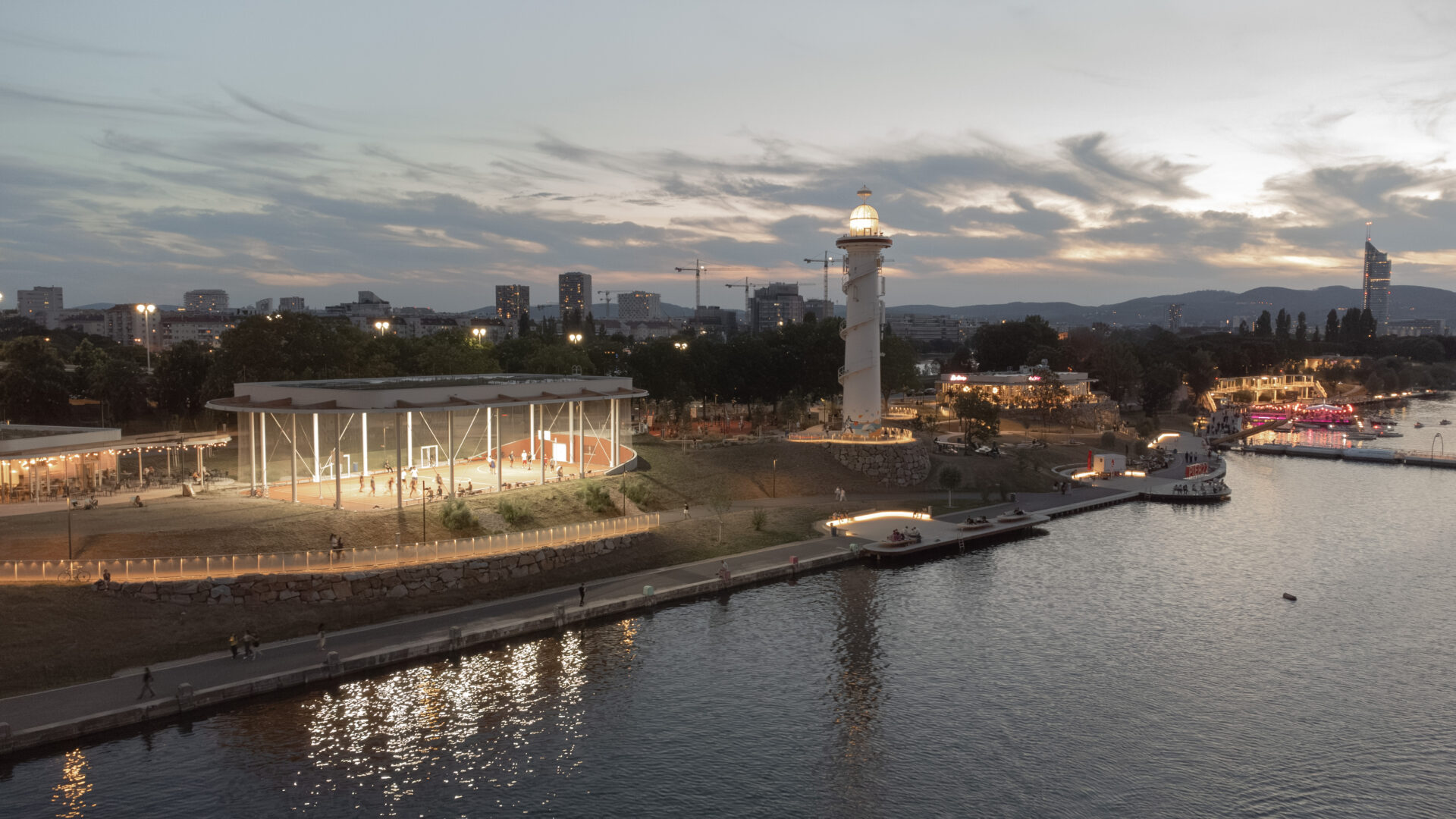
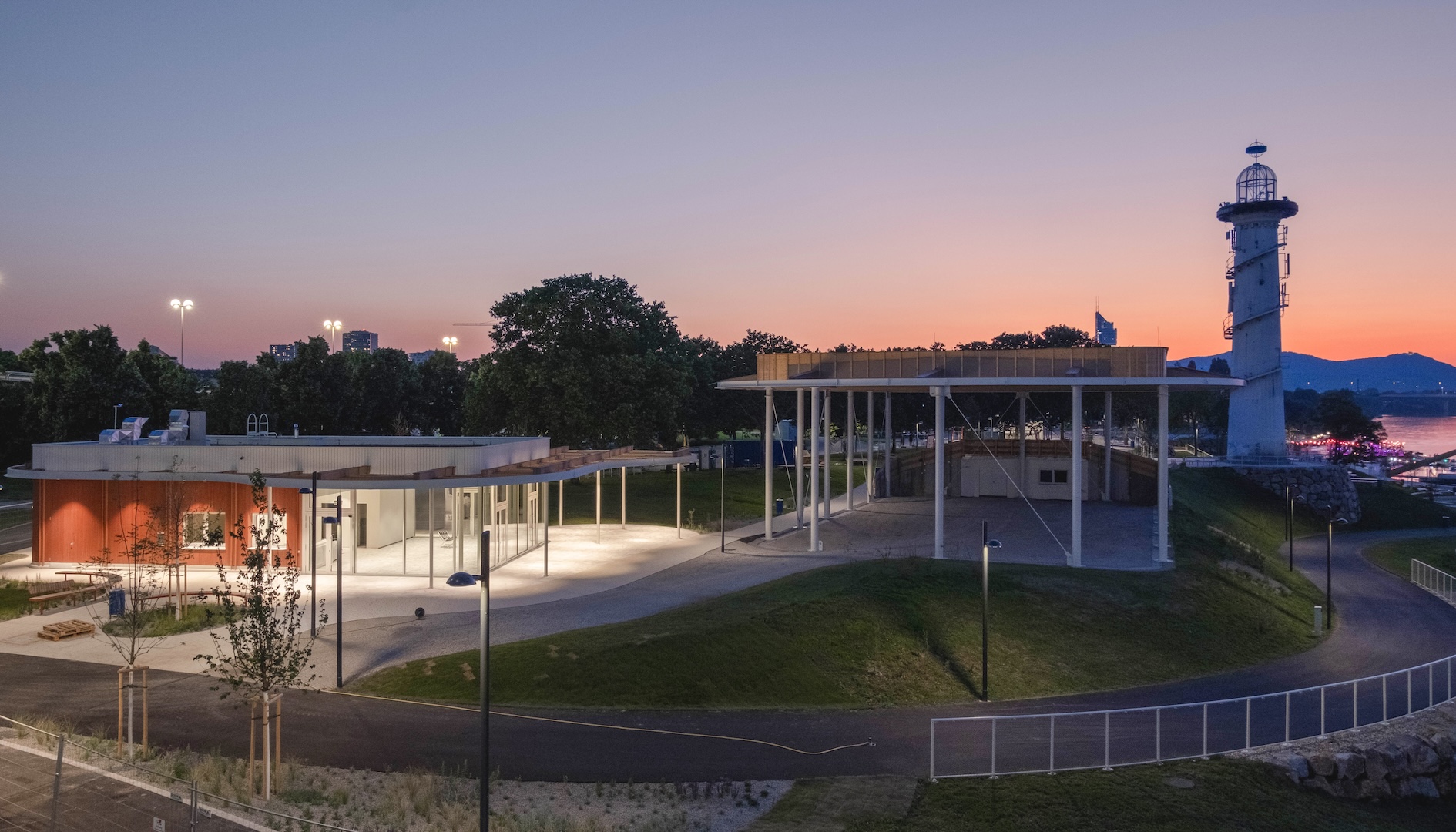
The Pier 22 Café and the adjacent Multifunctional Sports Field together form the central hub of the Body zone. The curved roof structures of both buildings visually overlap, establishing strong spatial connections between the café terraces, the sports field and the surrounding fitness landscape. Positioned outside the flood-risk zones, the ensemble creates a year-round meeting point for sports and recreation at Pier 22.
Overlapping roof structures connect the café and sports field into a shared public hub for sports and gathering at Pier 22.
Pier 22 Café
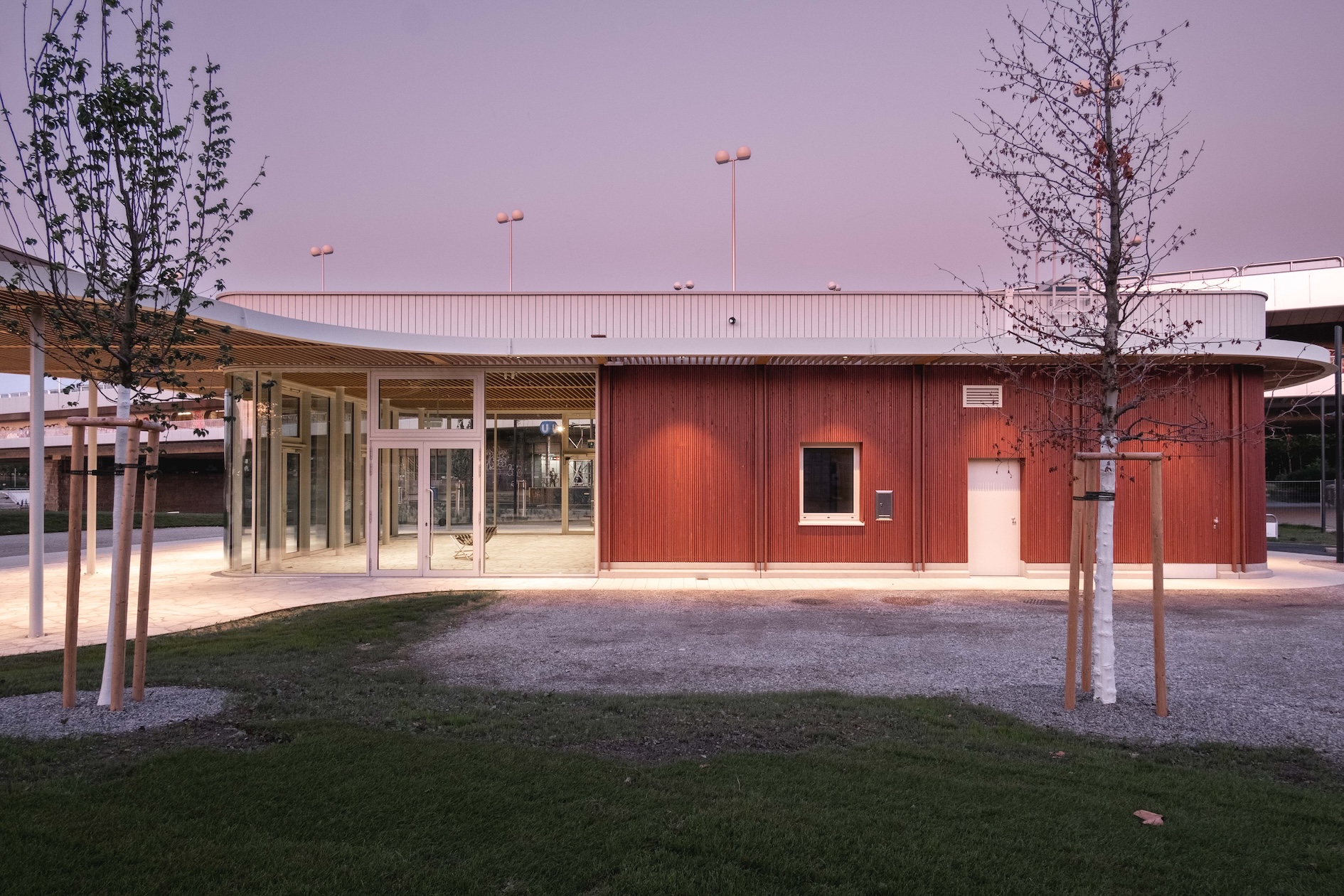
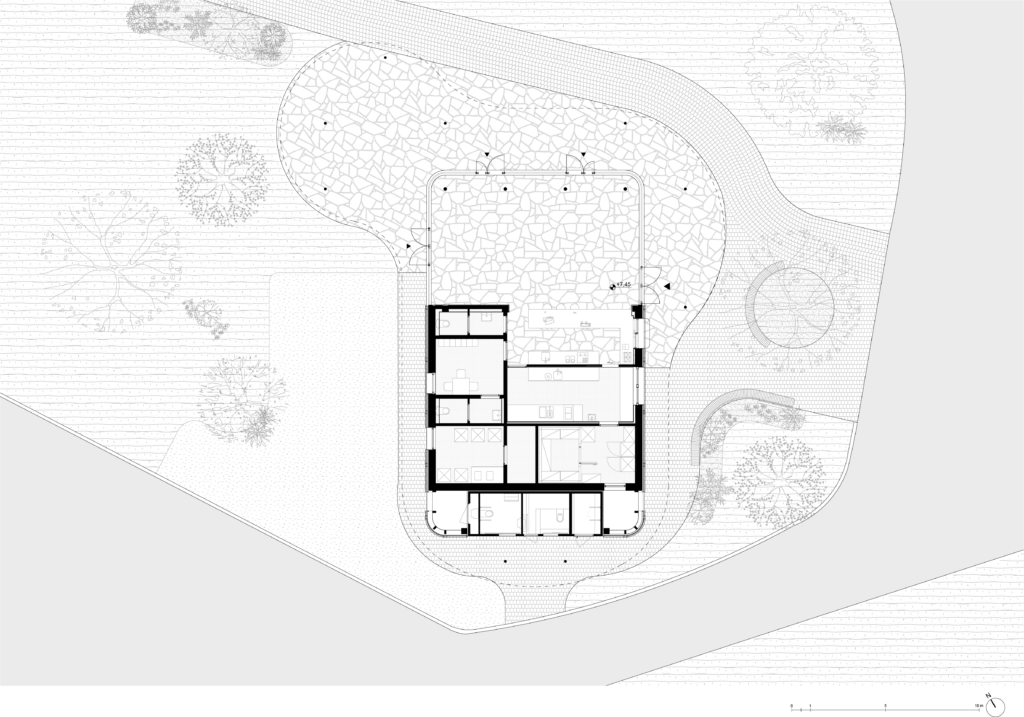
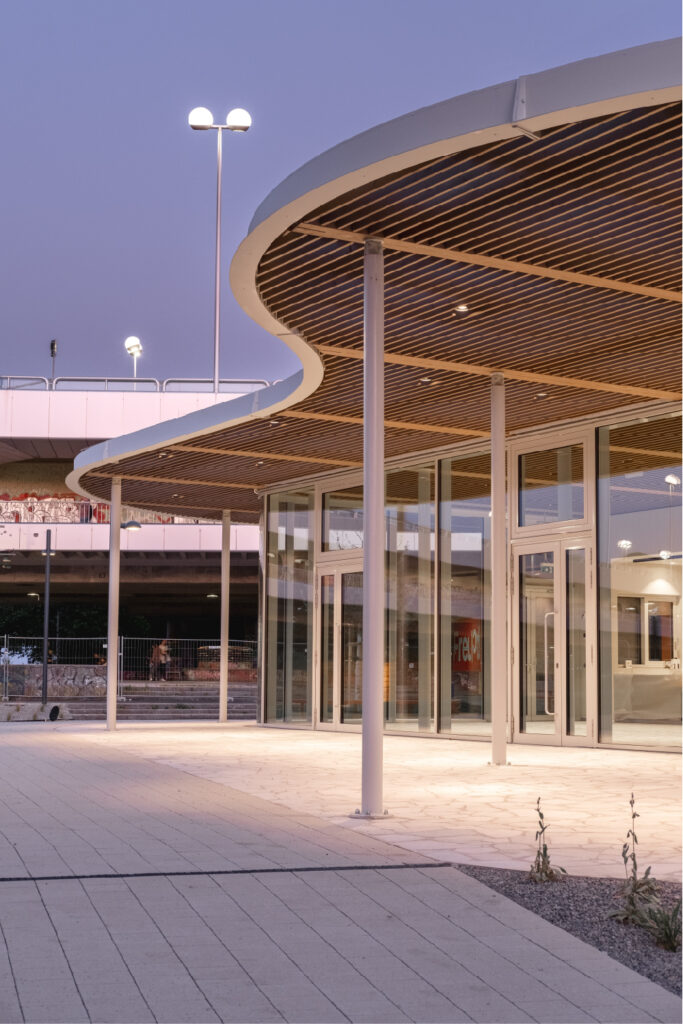
Similar in its architectural language to the Inselrestaurant, the Pier 22 Café is designed as a hybrid structure of mass timber and slender steel columns with a warm red-toned timber façade. Rounded glass façade elements and curved pergolas open the building towards the Danube and the Vienna skyline, while continuous timber lamella elements connect the interior spaces with the surrounding terraces. Positioned directly beside the multifunctional sports field, the café provides gastronomy and public infrastructure for the Body zone. The overlapping roof structures of the café and sports field create a shared architectural identity and strengthen the connection between spectators and sportspeople.
Multifunctional Sports Field
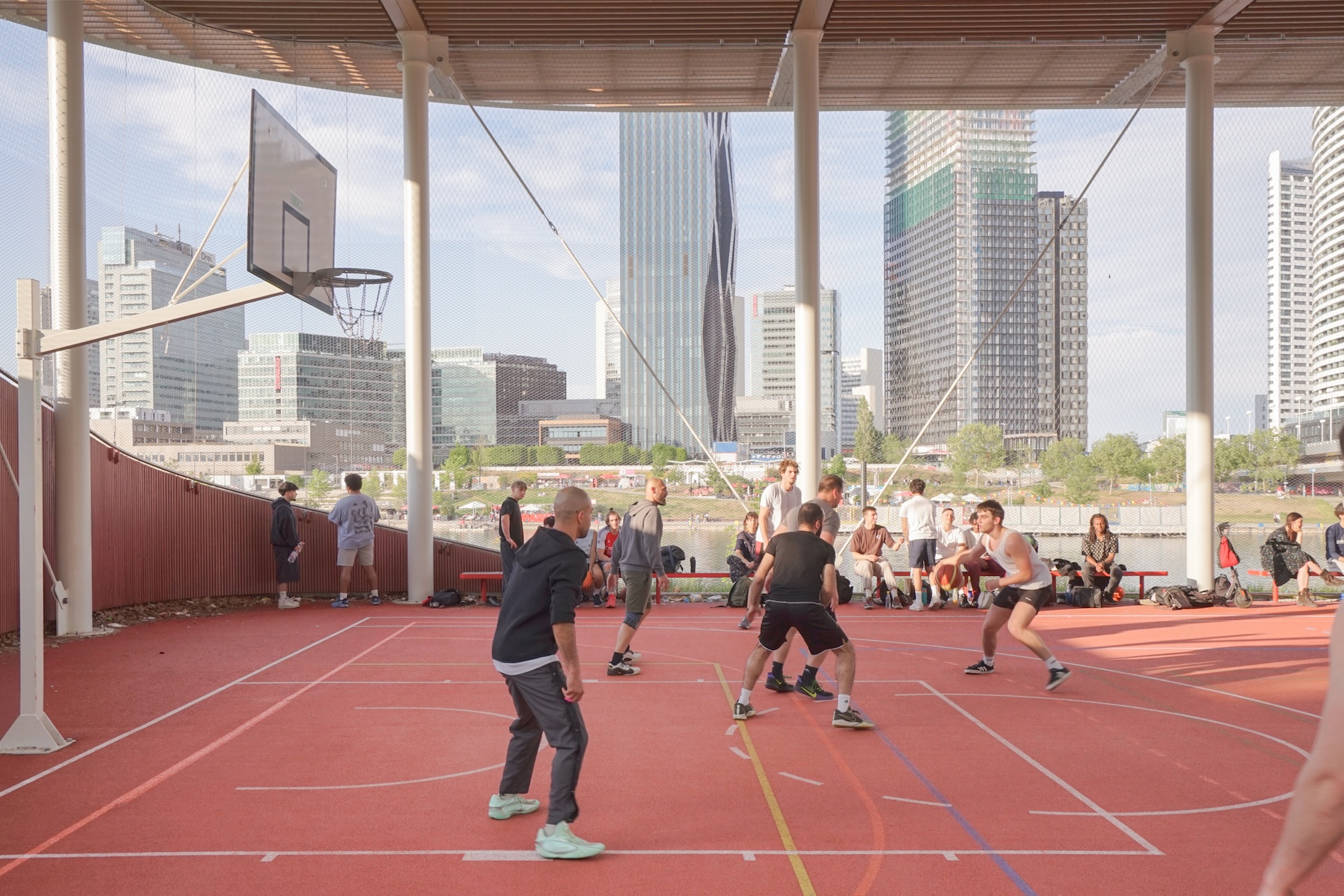
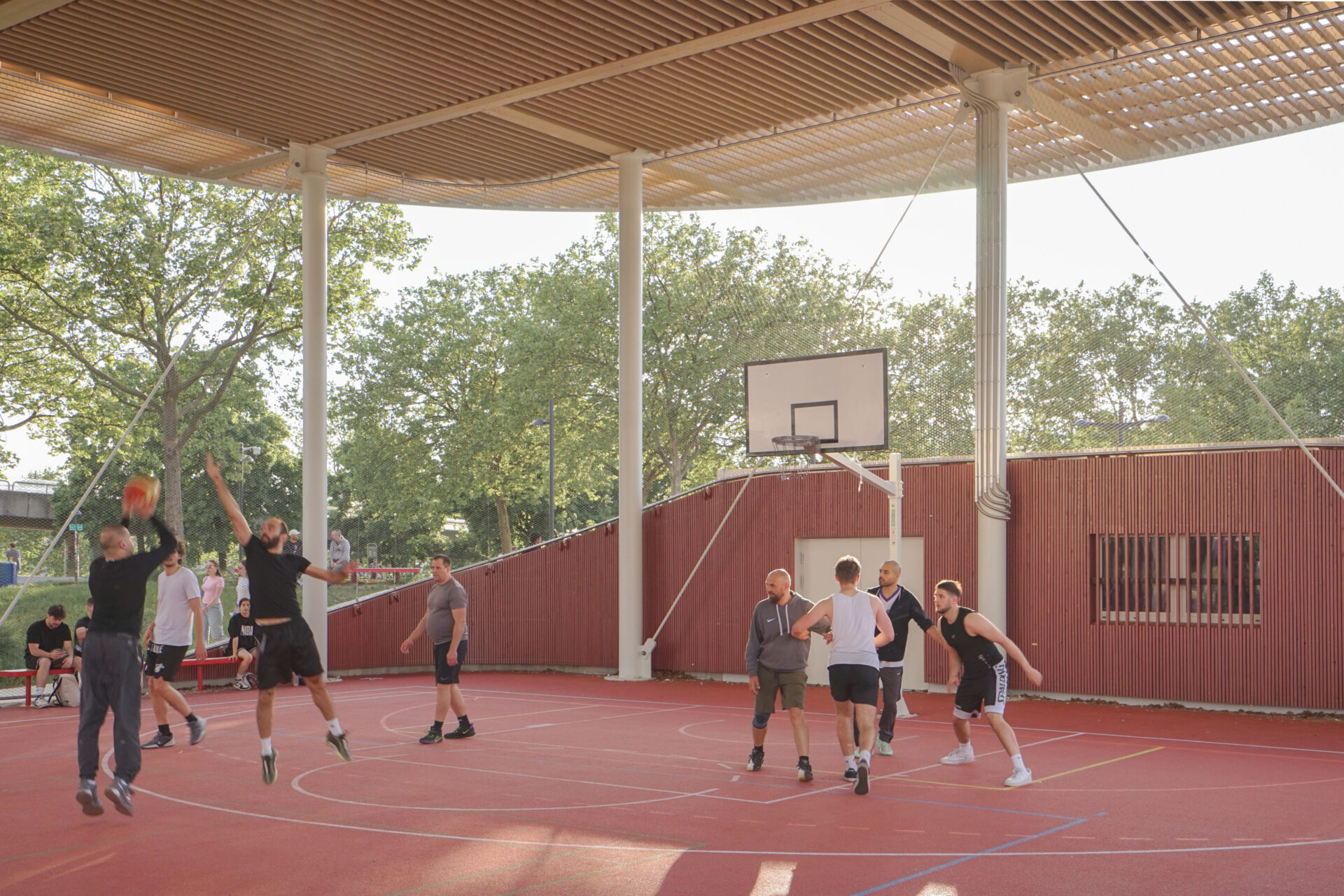
Directly adjacent, the weather-protected sports field is sized for a full tournament basketball court or two 3×3 courts and remains fully barrier-free and accessible at ground level. Right after the opening in fall 2025 it has become a lively meeting point for the local basketball community. A roof structure of 26m long glulam timber beams and steel supports shelters the playing area, while transparent ball-stop nets maintain the views across the landscape.
Integrated lighting allows evening use and extends activity into colder seasons, while waiting benches and a spectator terrace above the recessed storage space create informal gathering spaces around the court. PV panels and green roofs generate local energy and support on-site rainwater retention through planted gravel infiltration systems integrated into the landscape.
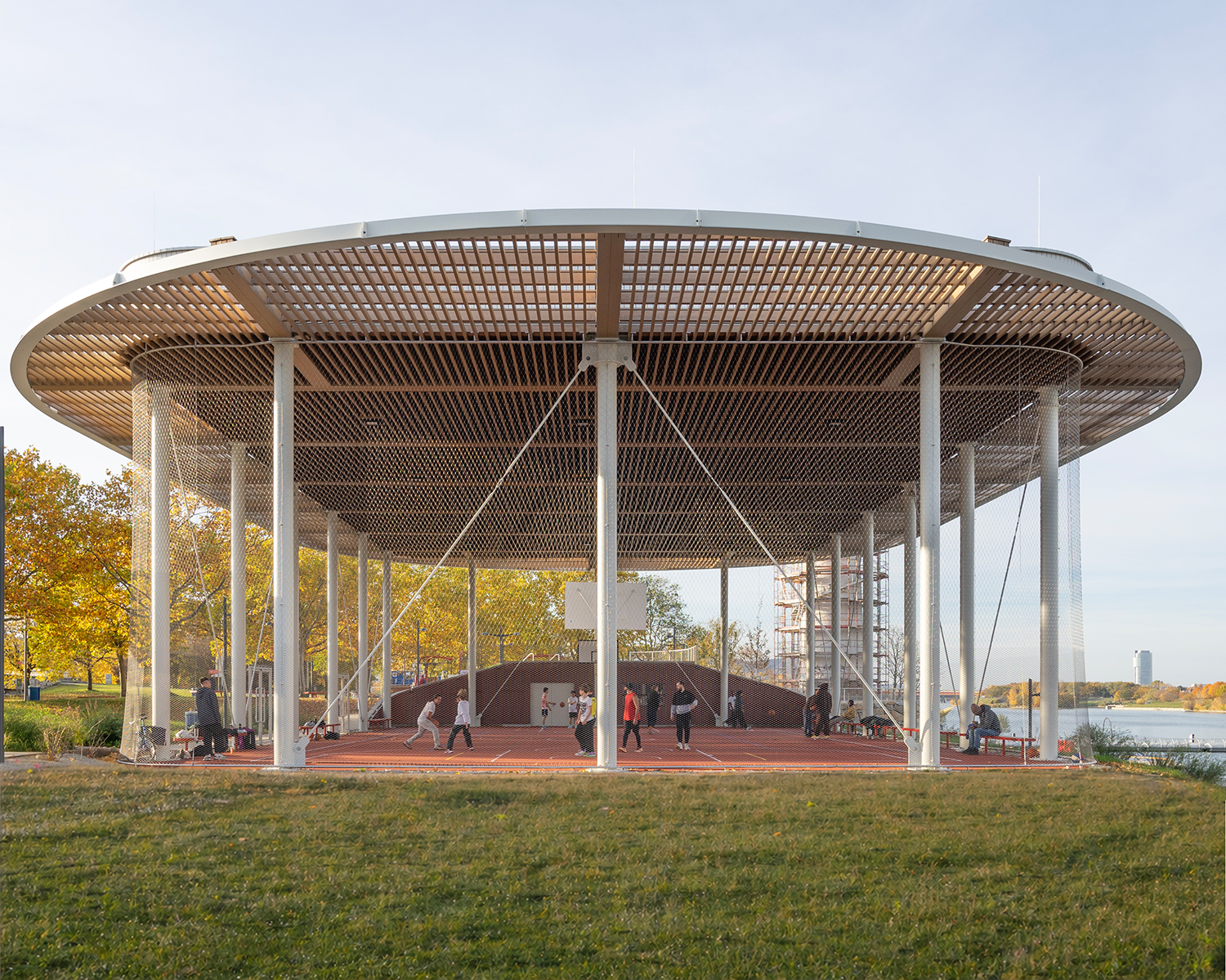
The Multifunctional Sports Field is a generous, year-round public activity space.