Spähikel
Principal use: Wildlife watching, Outdoor Lab + Exhibition Space
Year: 2020-2021
Commission: Austrian Federal Forests
Design and Development: DI Michael Perfahl
Research: TRIALE – Michael Moser, Ulrich A. Reiterer, Tobias Kestel, Michael Perfahl
Finite Element Simulation: Adam Orlinski / Bollinger & Grohmann
Static Proof: Clemens Preisinger / Bollinger & Grohmann
CNC Milling/Cutting and Frame Assembly: Leidorf
Final Assembly: Alexander Krainz
The “Spähikel” is a research lab, exhibition space, and room for wildlife watching for the Austrian Federal Forests. They wanted wood to be used as a high-tech material.
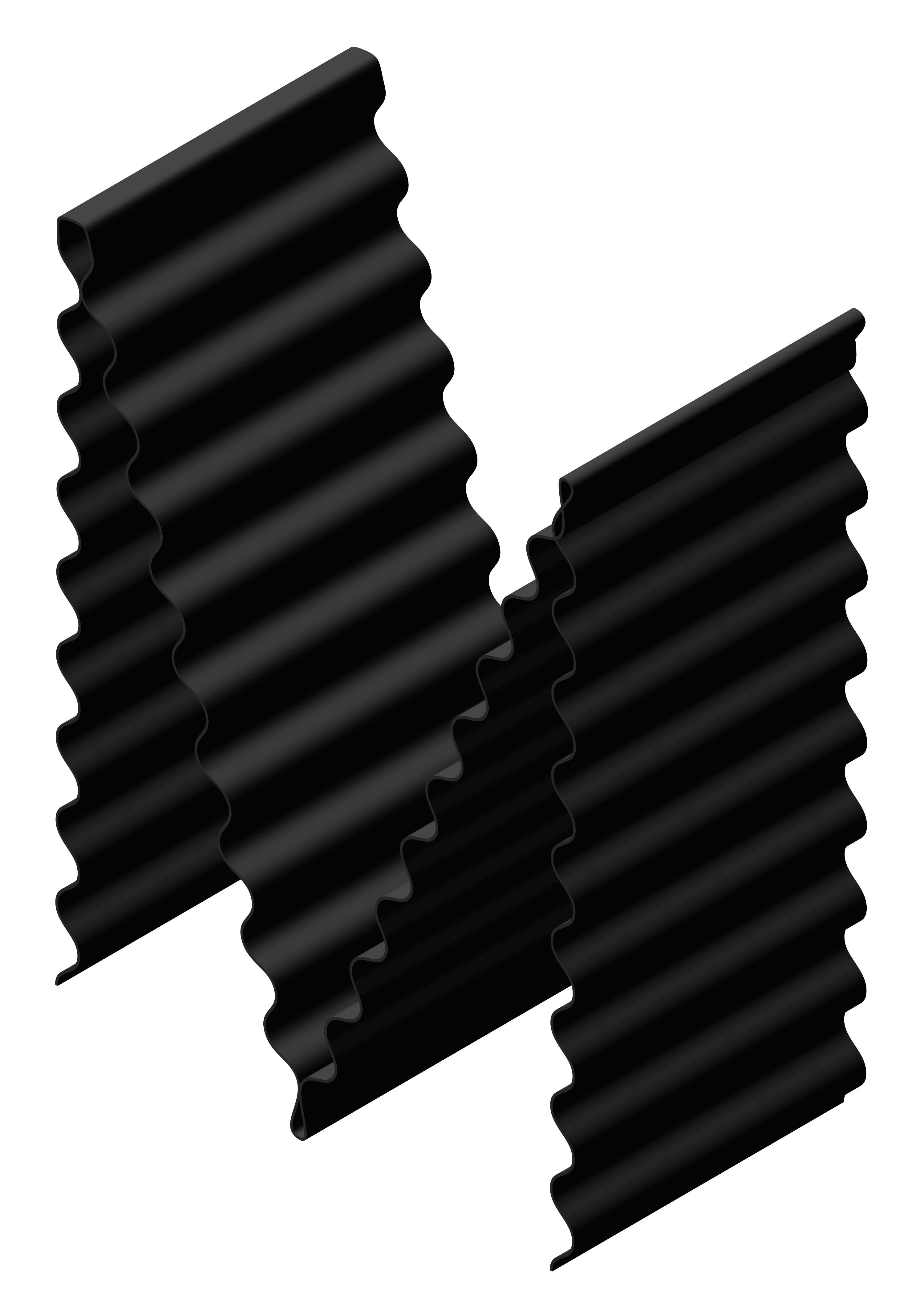
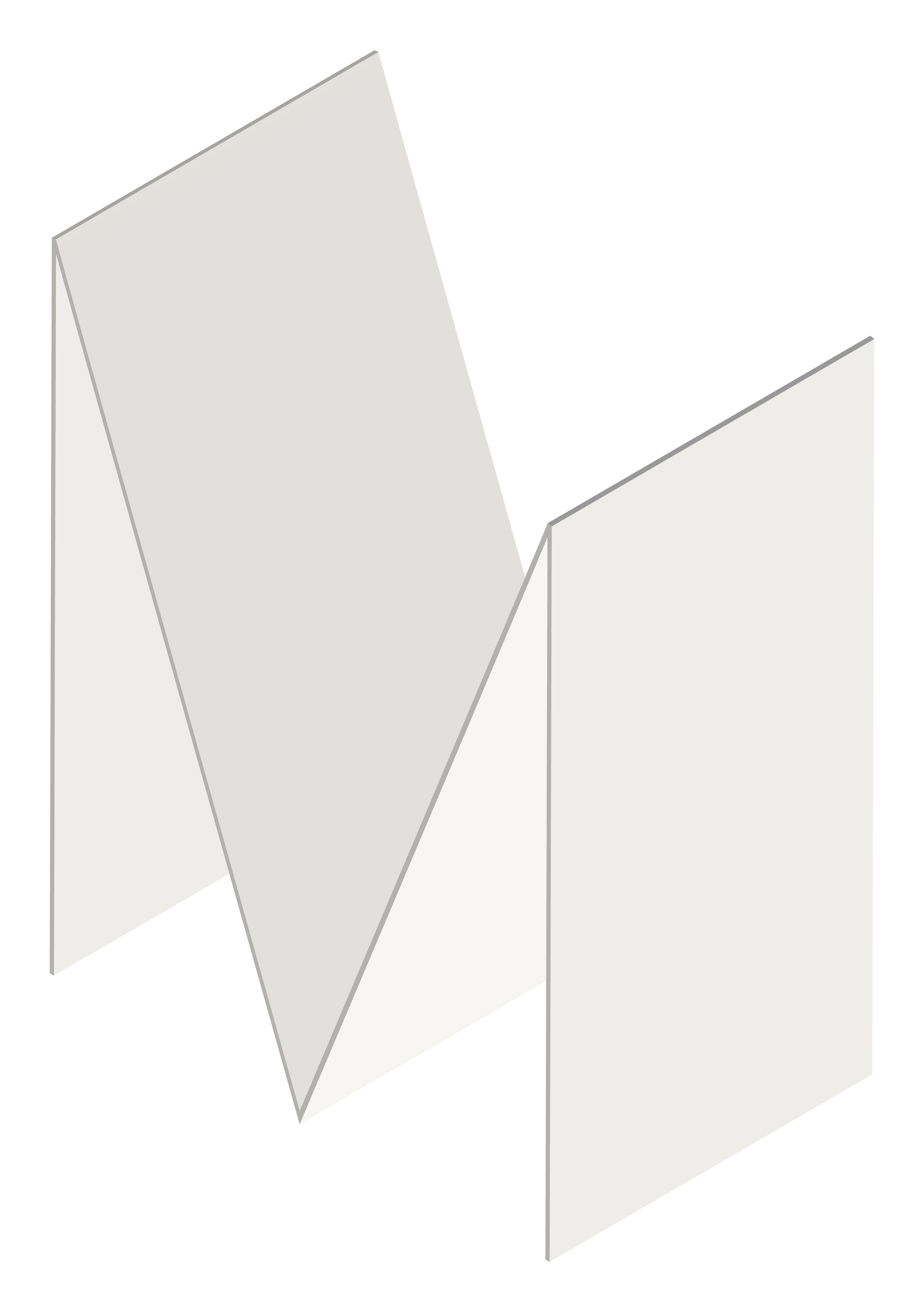
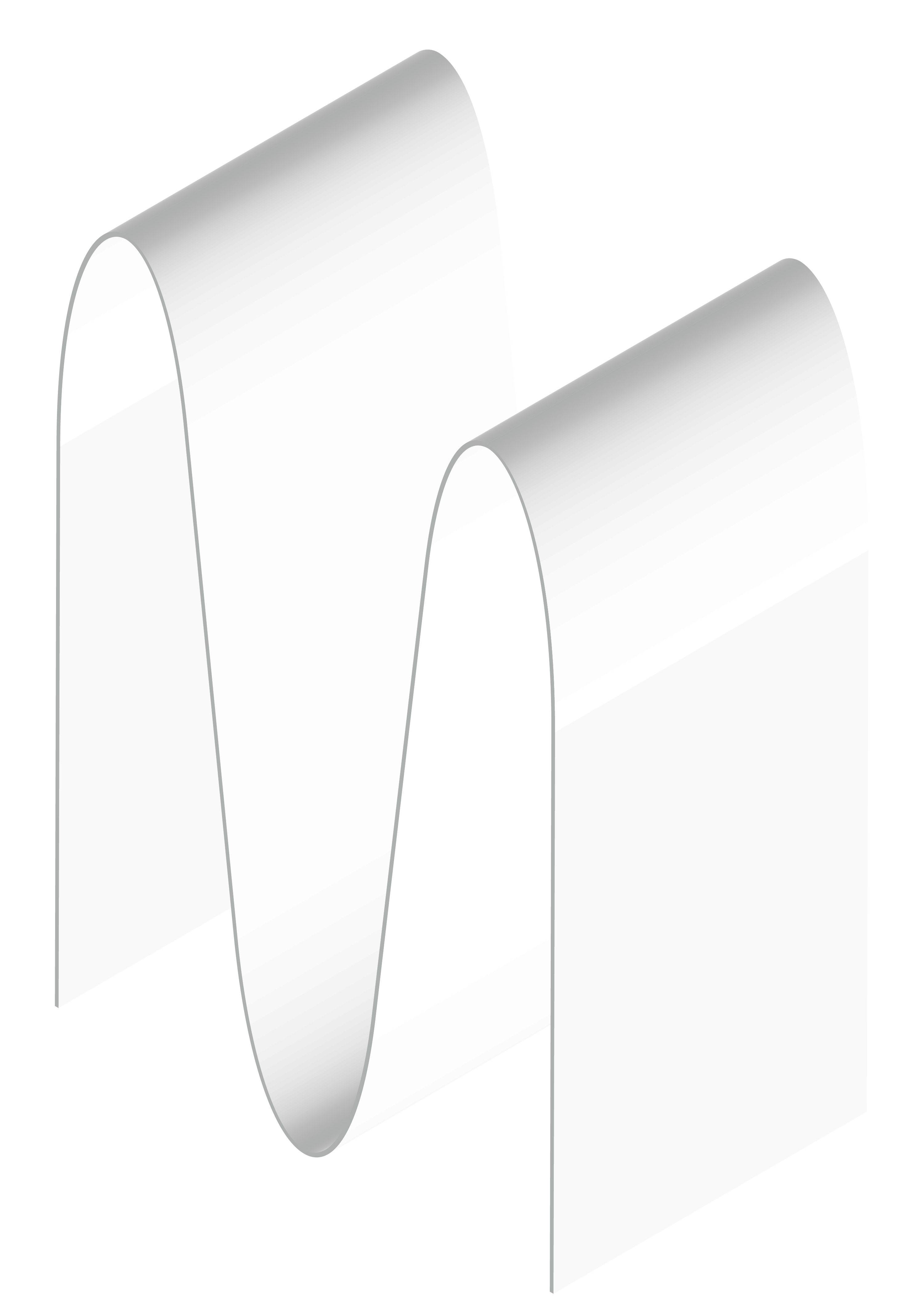
The inner construction is cut out of three LVL boards with a robotic arm and glued together using a screw-press technique. The structure mimics leaf branches and is simulated with a finite element method. The outer shell is made of thin translucent panels, extruded from a bio-plastic granulate developed by the German company Tecnaro.
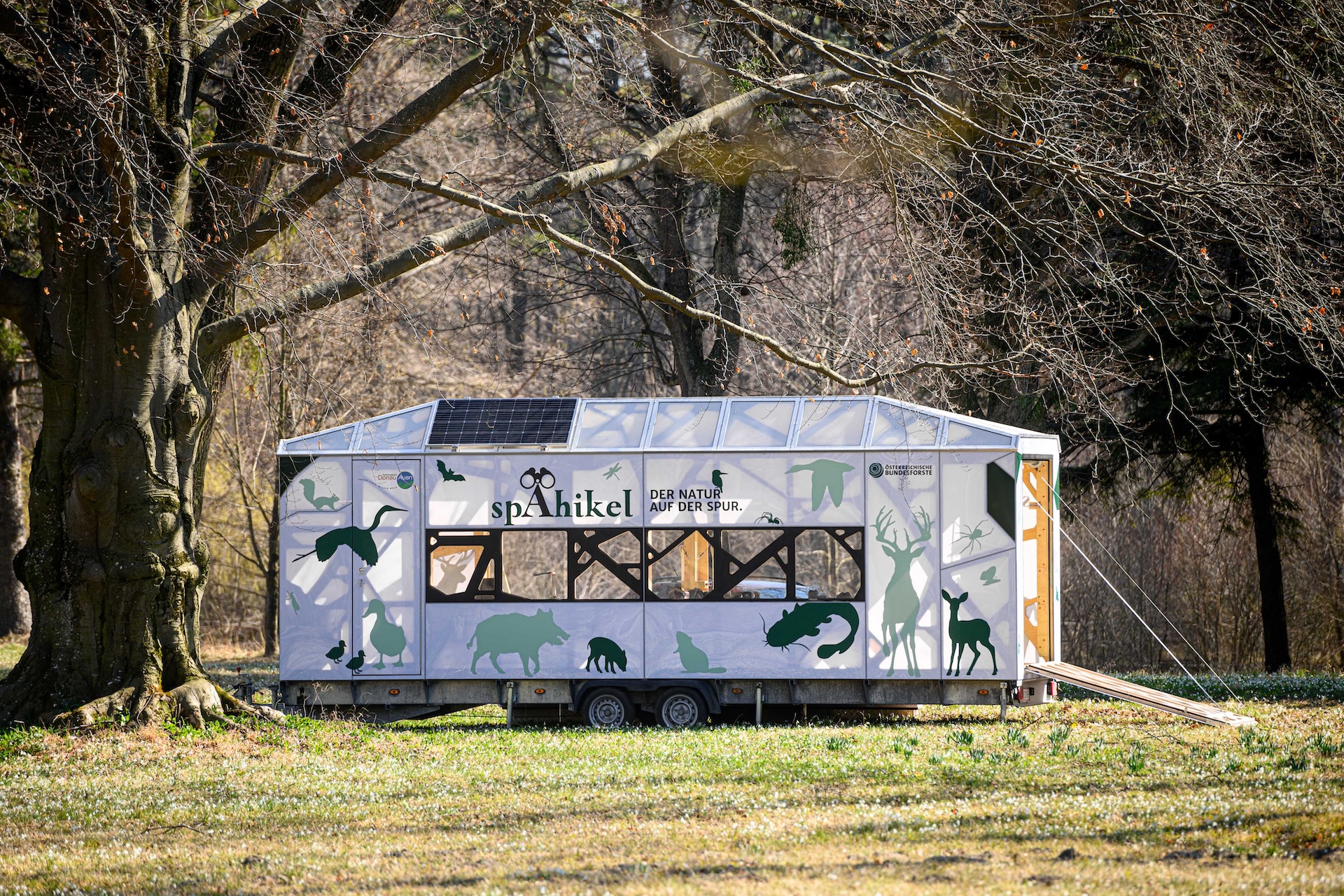 backside view - in the wild
 The first brief from the Austrian Federal Forests was to design a mobile, lightweight, silent trailer for multi-purpose use. Wood was to be used as a high-tech material, and the shell had to be translucent. This was quite a lot to start with, but they supported every experiment to create a truly innovative product. This support was appreciated by all the other players, and so the journey began.
A lot of thought went into the transparent panels, and we discovered the company Tecnaro, known for their “Liquid Wood” Arboform made from lignin. This would be a perfect fit for the Austrian Federal Forests. The problem was that they only sell granulate for the plastic industry with a minimum order of 1 ton, and no company could extrude panels from that granulate under a minimum of 10 tons due to the size and speed of the machines. Smaller research facilities like Wood-Plus in Austria helped us a lot, but their machines only produce panels with a maximum width of 10 cm.
Luckily, Tecnaro found one company that could produce the panels for us, and we got lucky. In the end, we could only use them on the roof because of the strong thermal expansion. For the next project, we would mix small fibers into the granulate to stabilize the thermal behavior.
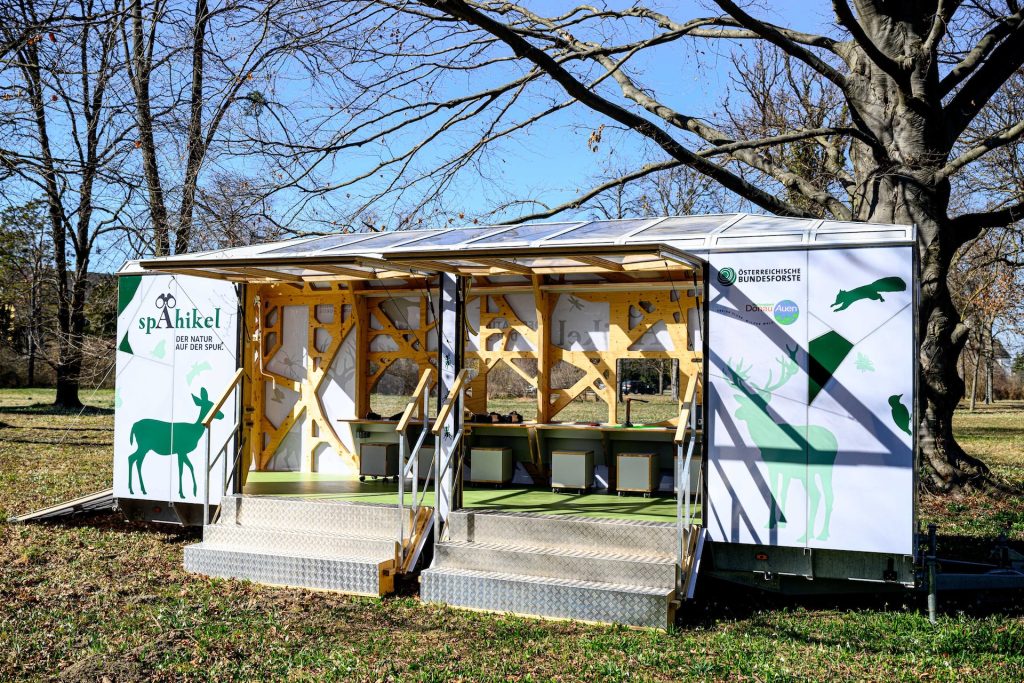 frontside view - open
 Another challenge was to try a simulation called finite element analysis to mimic the growth of trees. Adam Orlinski of Bollinger & Grohmann Vienna tackled the task because they wanted to try this method. In theory, this method could provide all the static information we needed, but because it is a new method, it could not be used as the static proof, so they had to reverse-calculate the whole structure with classic calculations.
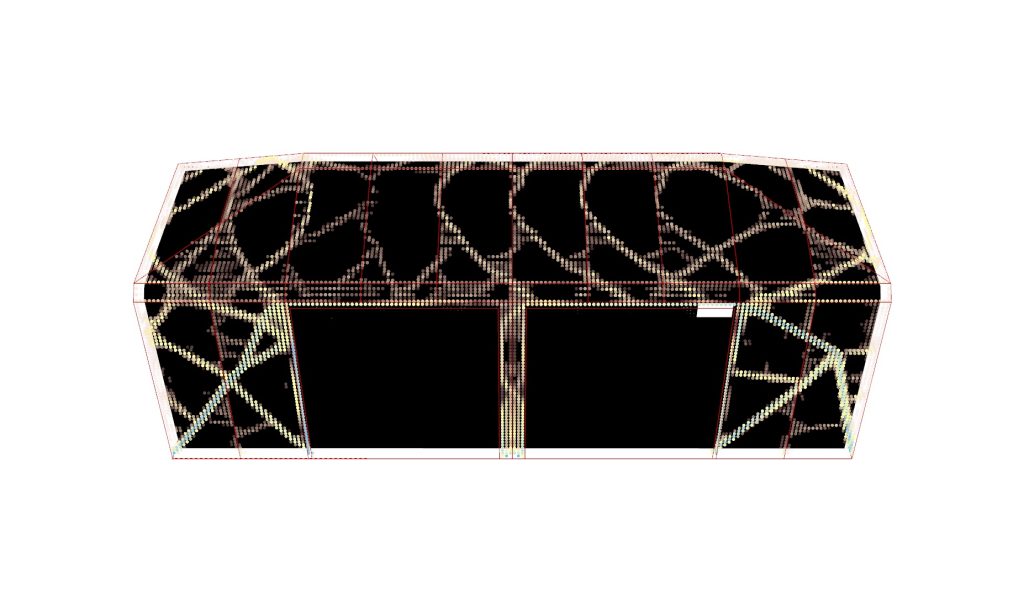 simulation by Bollinger+Grohmann
 One more non-standard approach was the use of a robotic arm for milling and cutting the large panels (14 by 2.5 meters). Only one Austrian company took the risk and supported us with the idea. Alexander Leidorf (Leidorf) helped us tackle tolerances with this new method and again with the joinery. Because we did not want to use metal parts for reinforcement, we used a technique called screw-press gluing. A similar glue to that used for laminating the LVL was used, and to get the needed pressure, we had to screw the parts together.
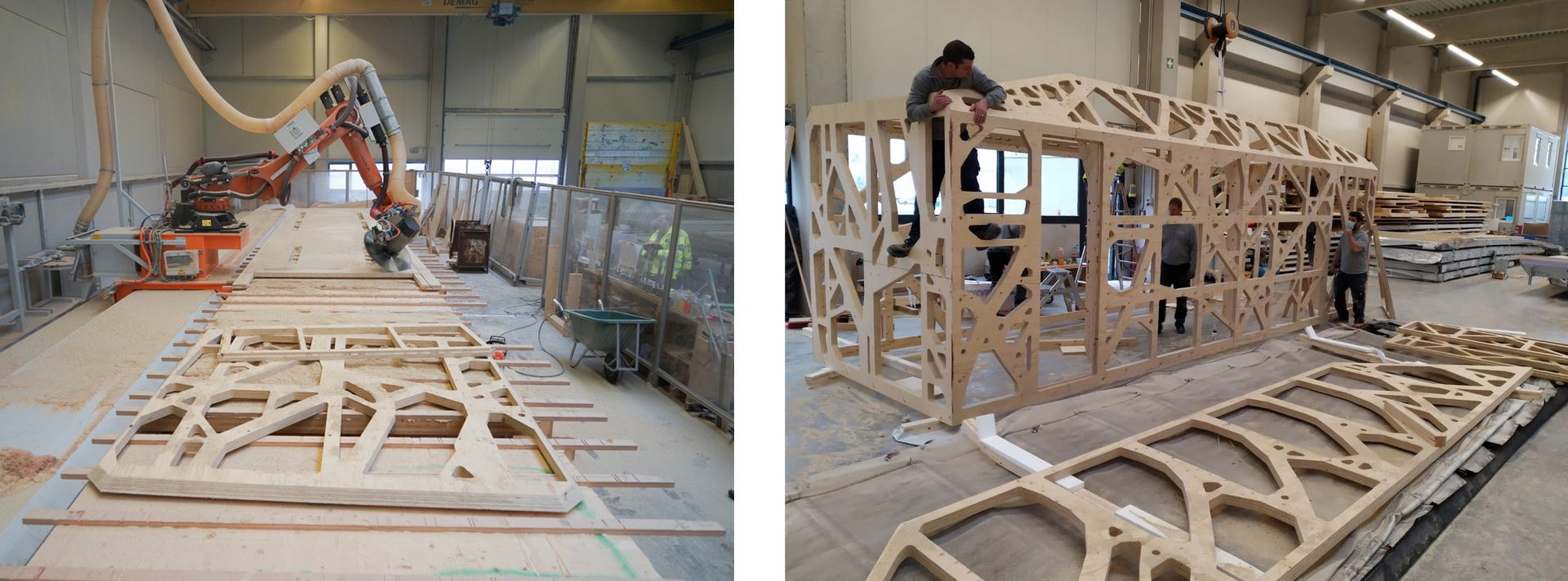 milling, cutting and assembly at Leidorf
 All this was only possible because of the belief in innovation outside of industry standards from all involved parties and the special use case of a mobile trailer, as there we do not have the strict regulations of standard architecture.
There is more to tell, like experimenting with thermoforming the panels with the help of Emanuel Gollob/Creative Robotics Linz, but I am running out of time and space here…
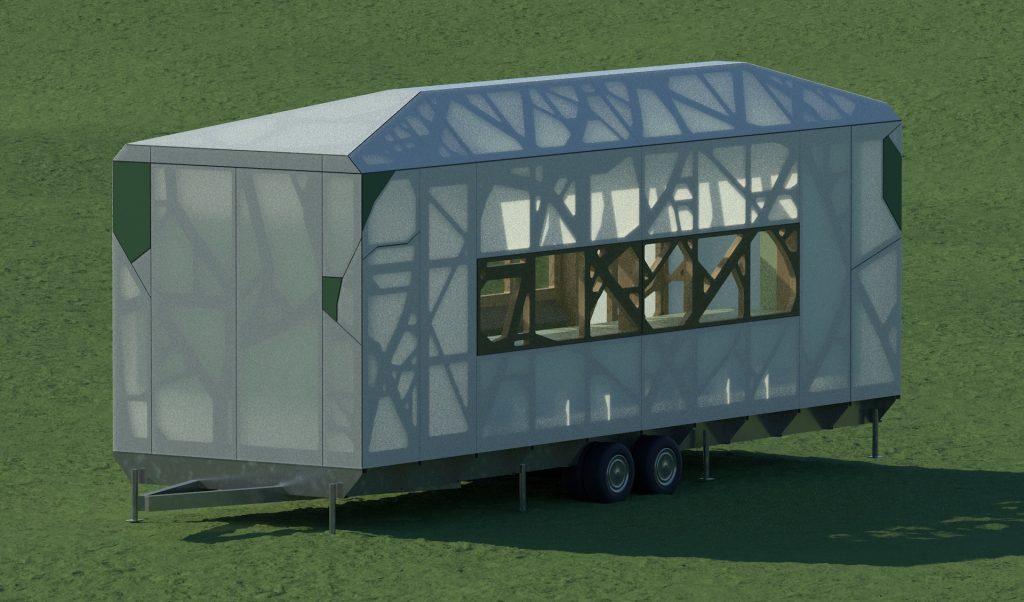 translucent panels made from lignin
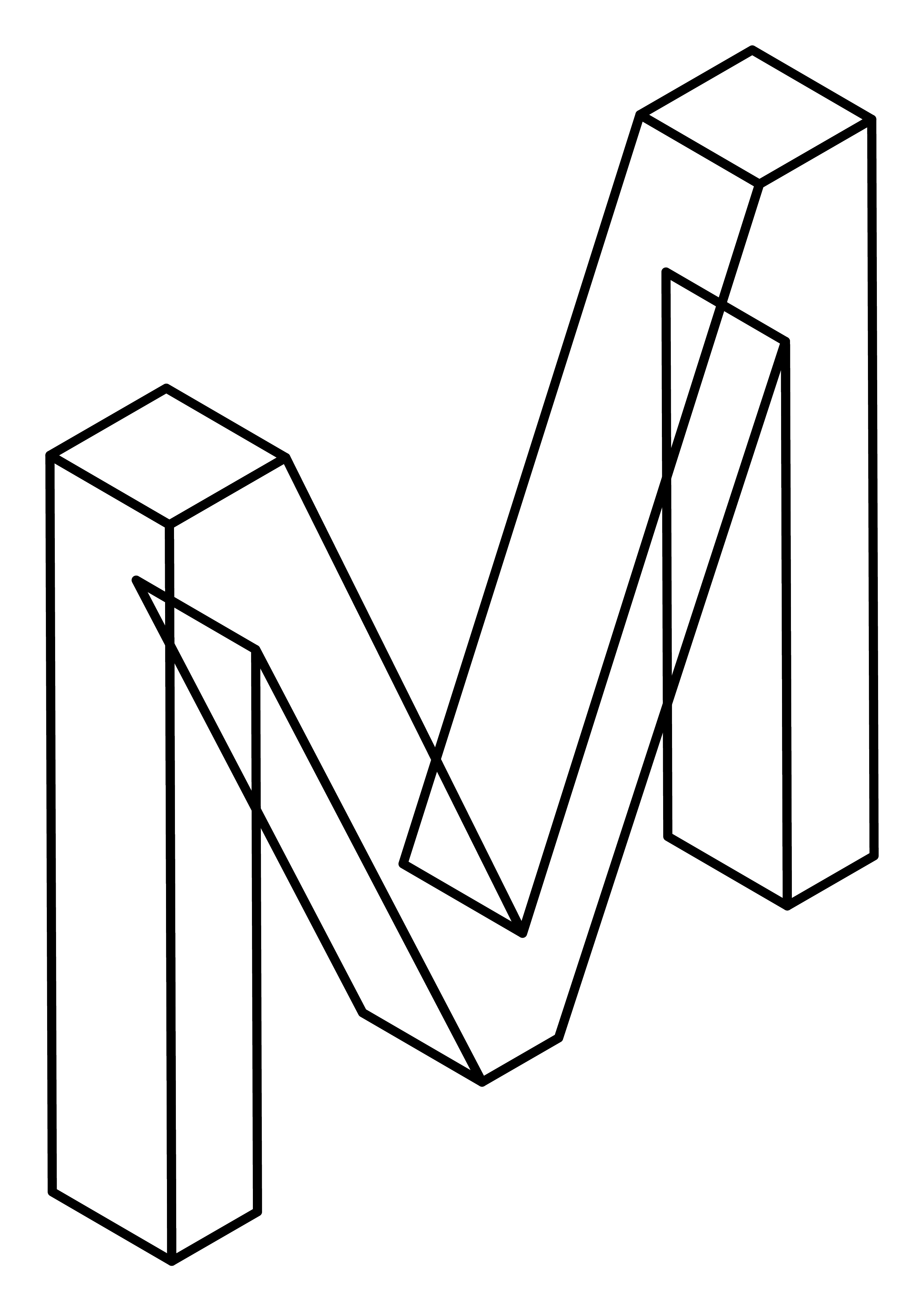
 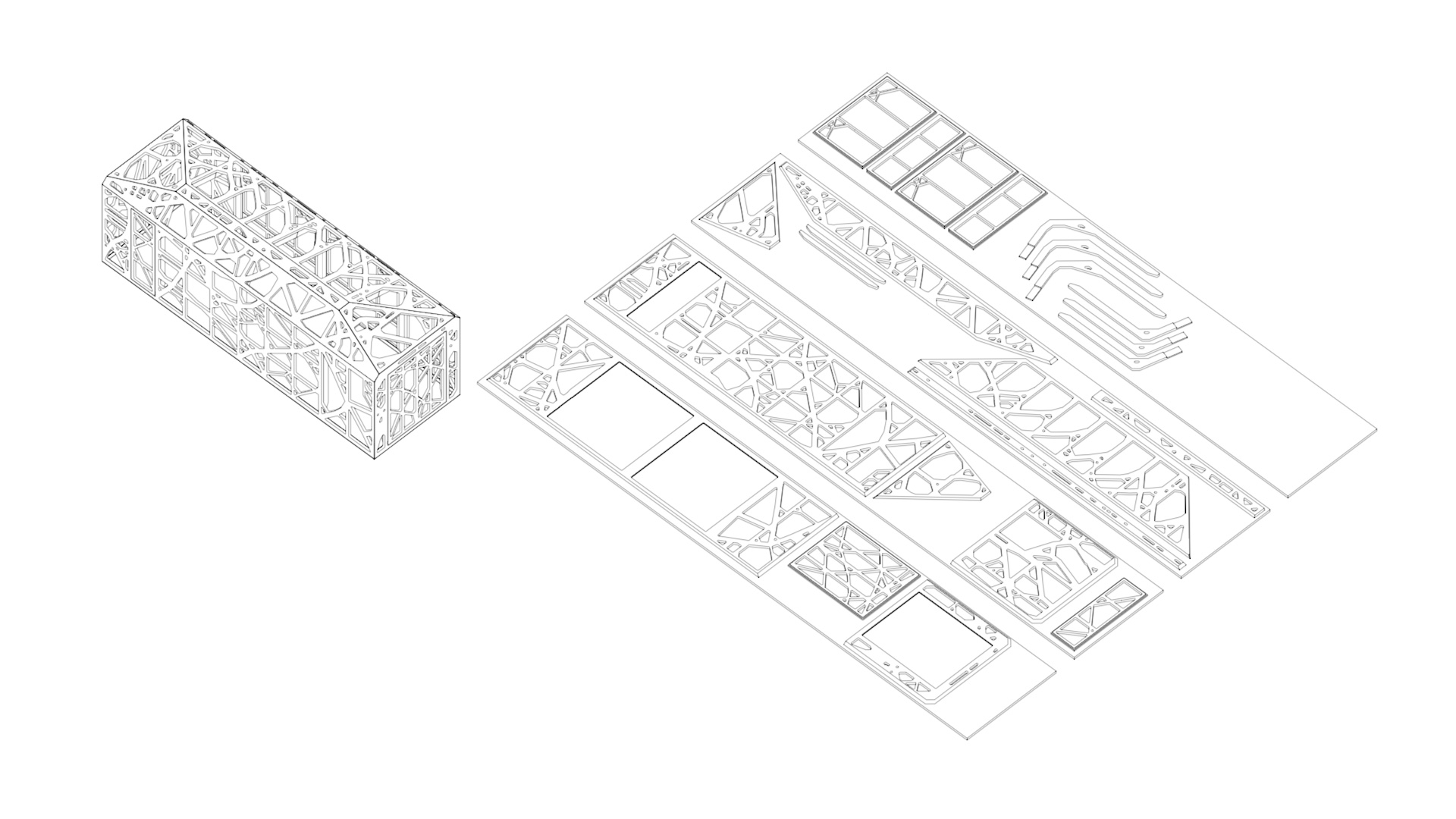 3d plan for milling