Competition Franz-Jonas-Platz
| Location | Vienna, Austria |
| Principal use | Public Space |
| Year | 2025 |
| Project lead | simzim Ingenieurbüro für Landschaftsarchitektur |
| Design team Mostlikely | Christian Höhl, Mark Neuner |
| Competition entry | |
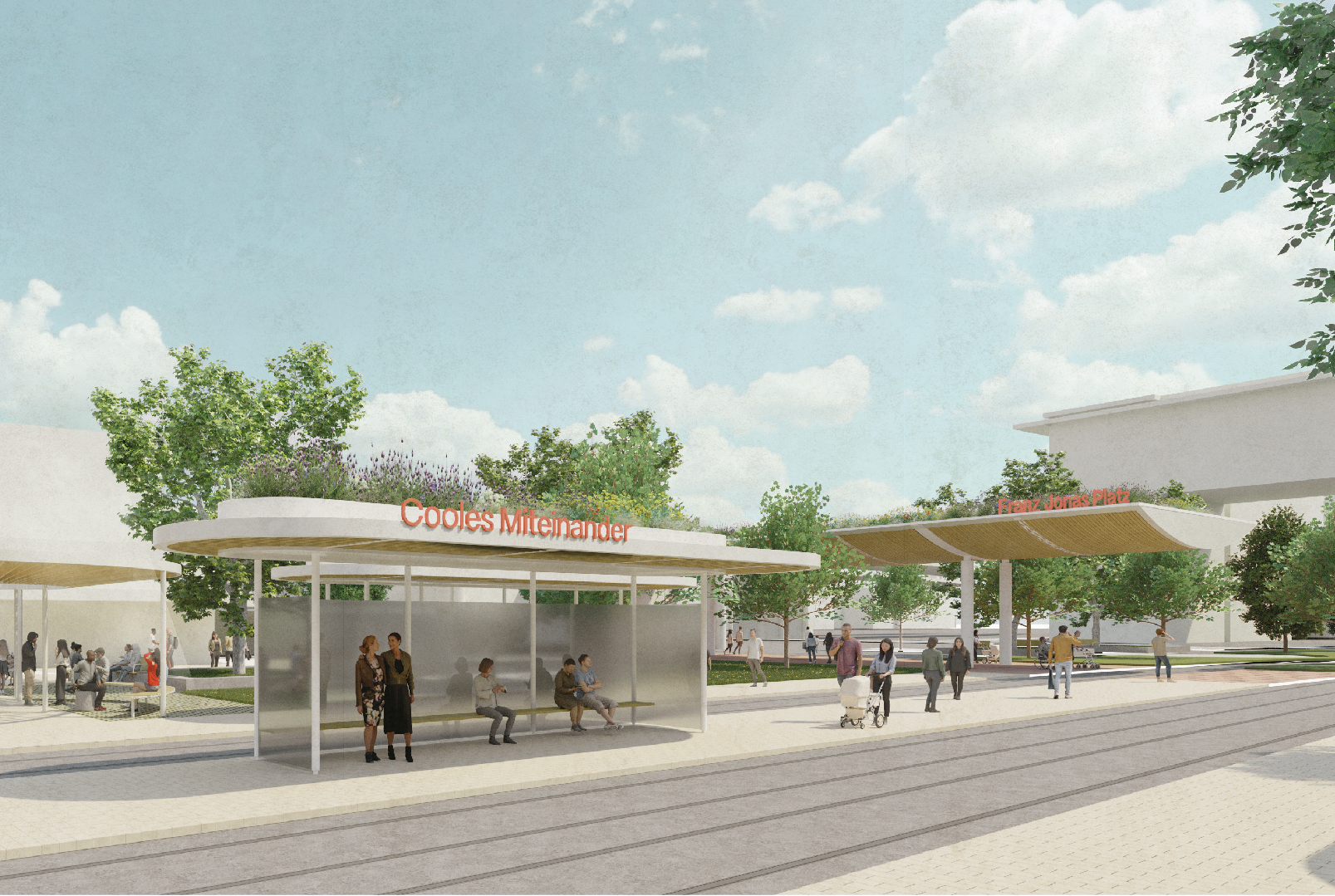
Franz Jonas Platz is a busy urban hub that is primarily defined by its role as a transport interchange. Tram and bus stops, traffic infrastructure and a small number of mature plane trees shape its character. While highly connected, it offers only limited opportunities to pause, meet or spend time, with a lack of shaded spaces and comfortable public seating.
The project reimagines Franz-Jonas-Platz as both a place of transit and a high-quality place to stay.

Common Space Franz-Jonas-Platz
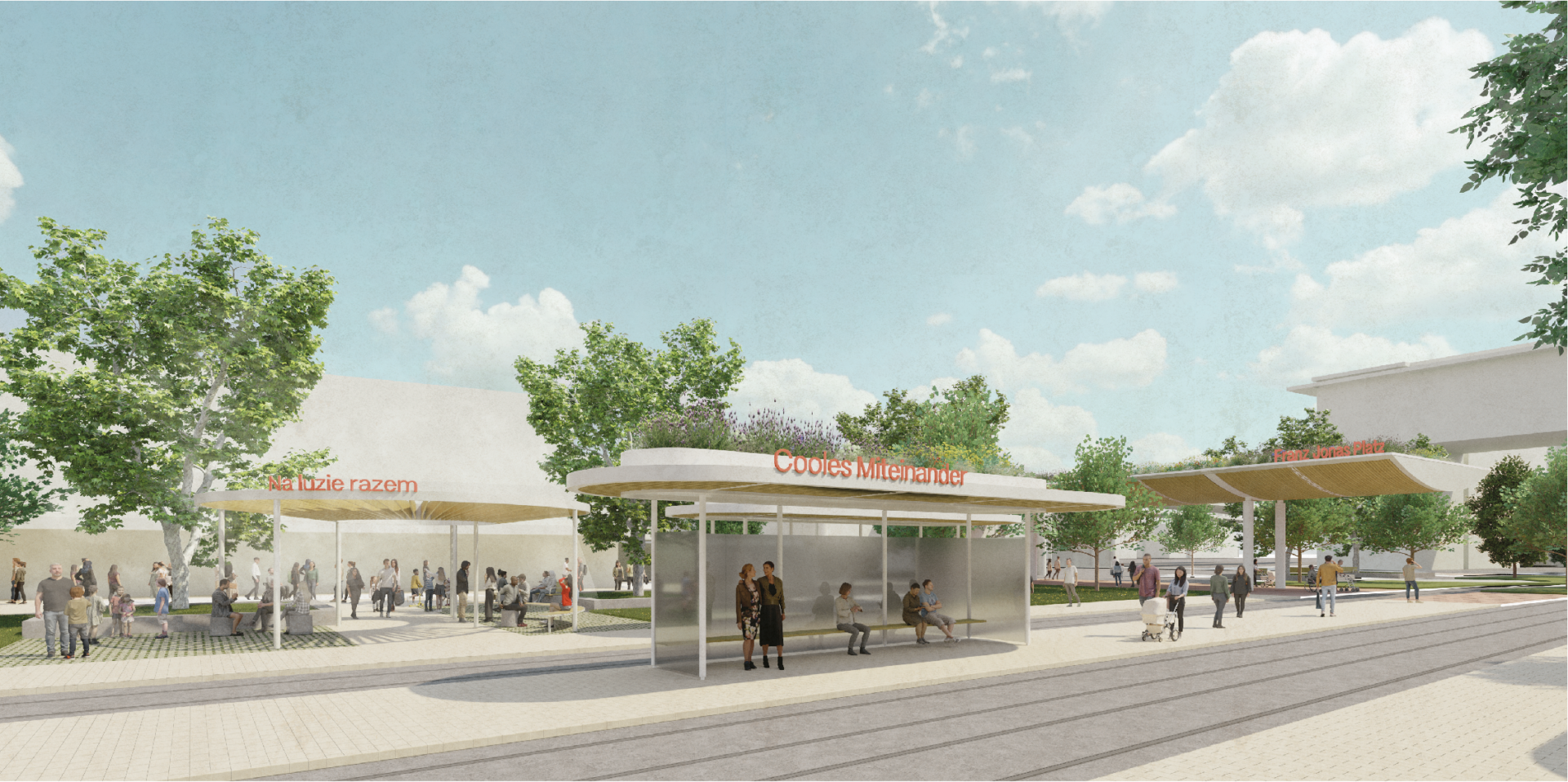
As a common space, Franz-Jonas-Platz has an impact beyond its immediate surroundings, enhancing the area as a vibrant, climate-resilient urban space. In the sense of fostering a lively neighbourhood, the station becomes a social hub with a wide range of uses. The square is transformed from a mere transit point into a high-quality urban space where movement and lingering are given equal consideration.
A continuous green belt extends the existing tree islands, which are home to plane trees, and transforms them into cool places to linger through carefully chosen planting and street furniture. Water features, drinking fountains and misting nozzles improve the microclimate, ensuring pleasant conditions even on hot days.
High-quality, inviting furniture creates a wide range of possible uses and enhances the visitor experience. Text panels in various languages commemorate Franz Jonas and give the site a sense of identity.
Circular Materials
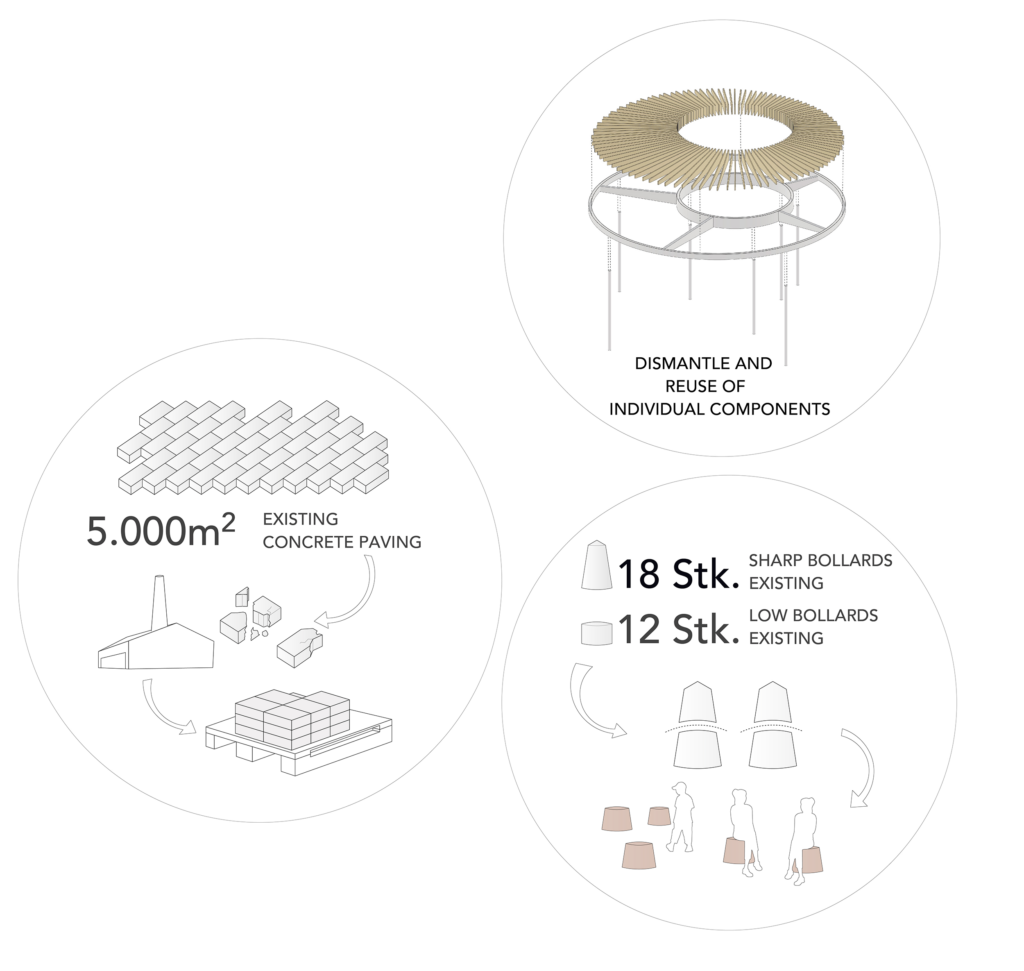
The concept of reuse plays a central role in the choice of materials – for the flooring, the roof structures and the furnishings alike. The new paving stones are made from recycled materials. The existing paving is not disposed of, but broken up and reused for new projects.
Green roofs as blue-green infrastructure
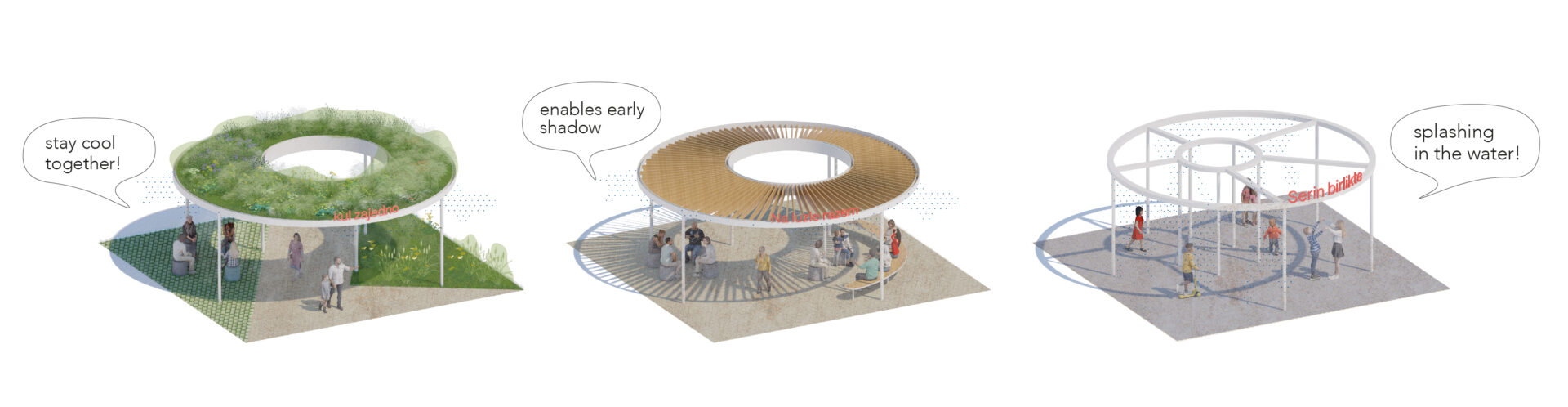
Regenerative roofs are a central element of the design. There are three distinct types: pergolas, bus shelters, and the large existing canopy covering the main station entrance. These structures create shaded, cool recreational areas by extending green spaces to an elevated level, using intensively landscaped roof areas; creating cooling through evaporation with mist and water features; providing targeted shade with wooden slats; integrating high-quality seating to define areas where people can relax; using light as a design element; and giving Franz-Jonas-Platz its own distinct identity.
 Pergolatypes for different outdoor living experiences
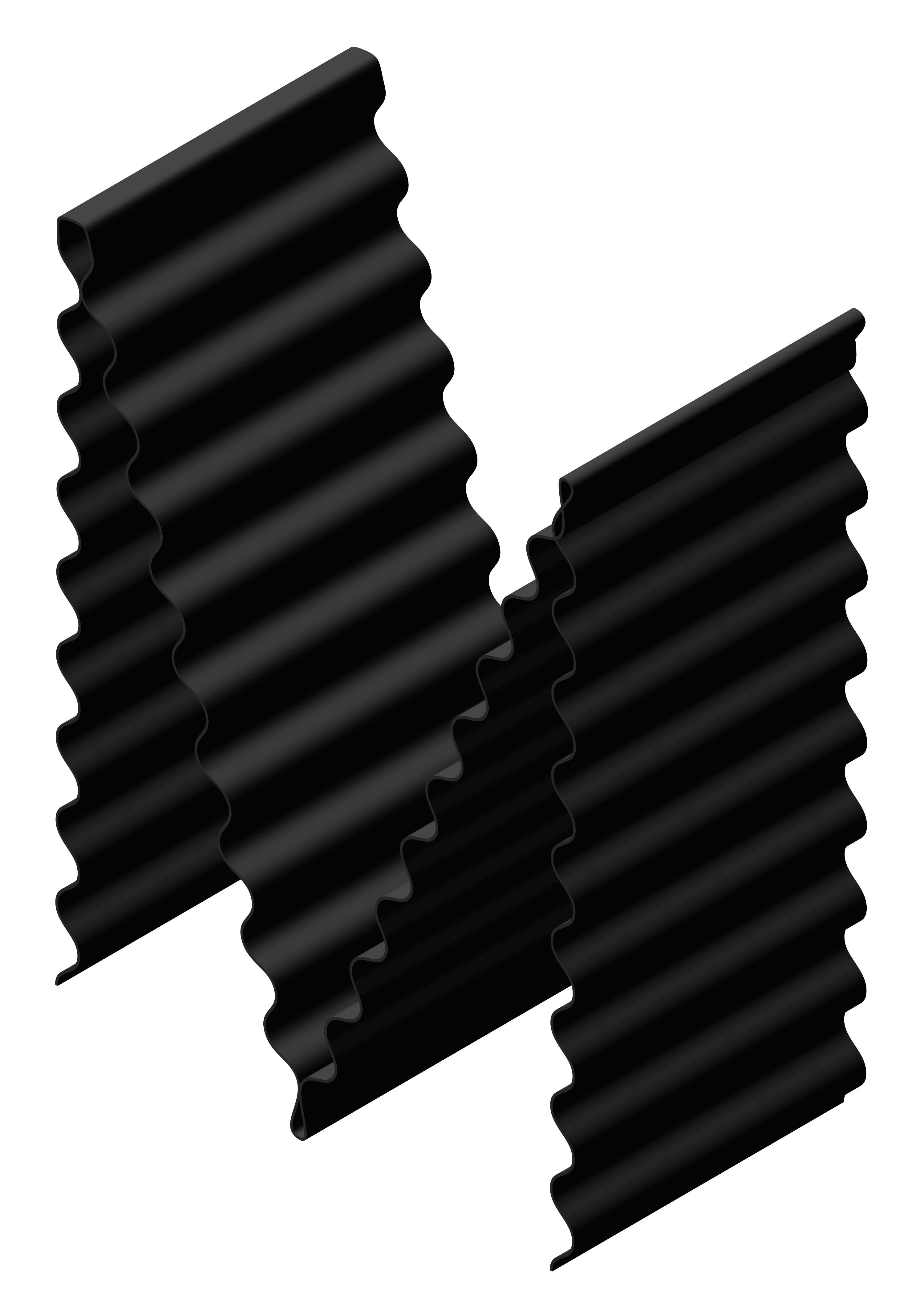
 Various types of pergola are used to create a variety of outdoor experiences: green roofs to promote biodiversity, wooden slats to provide shade, and integrated water features, such as waterfalls.
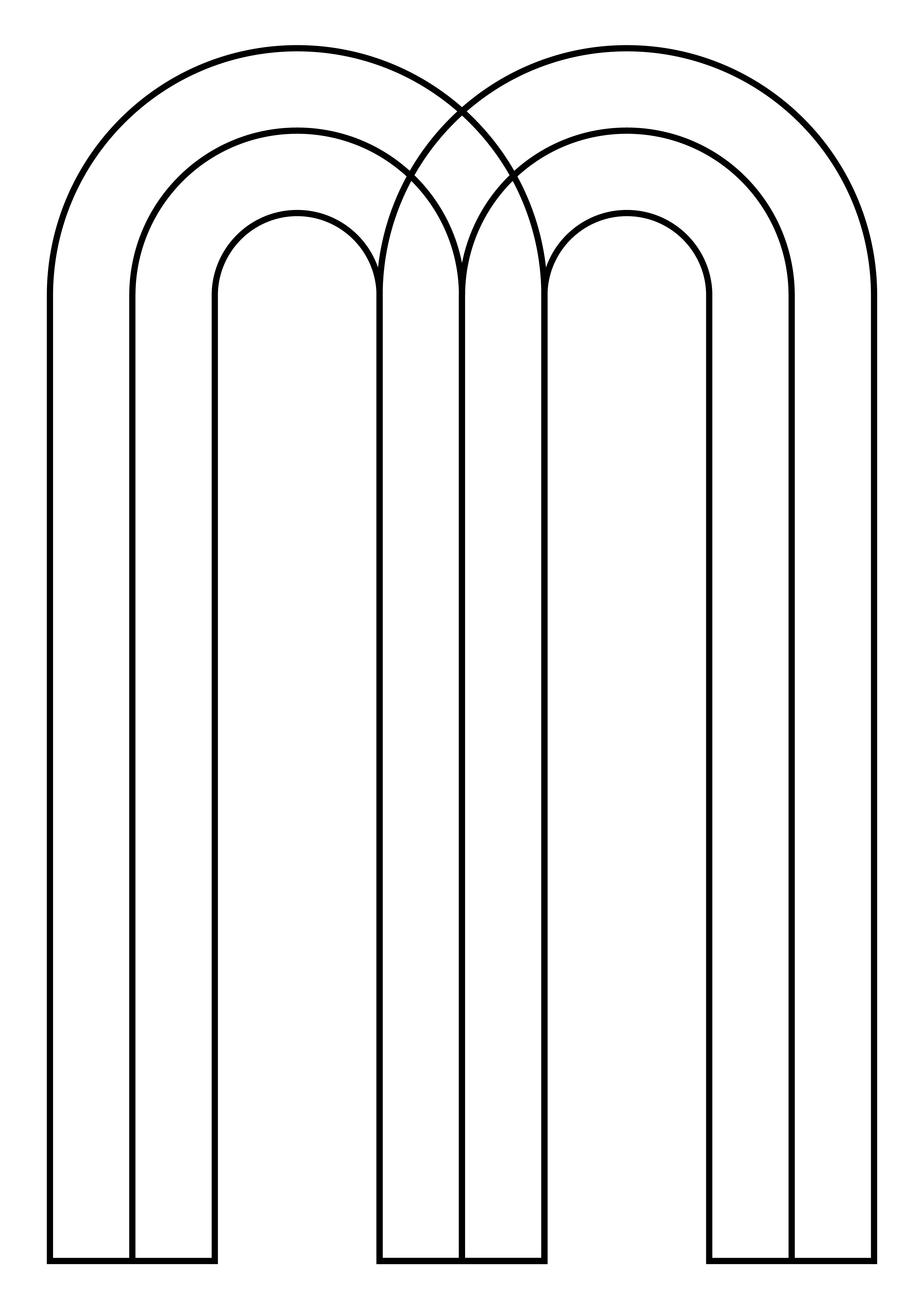
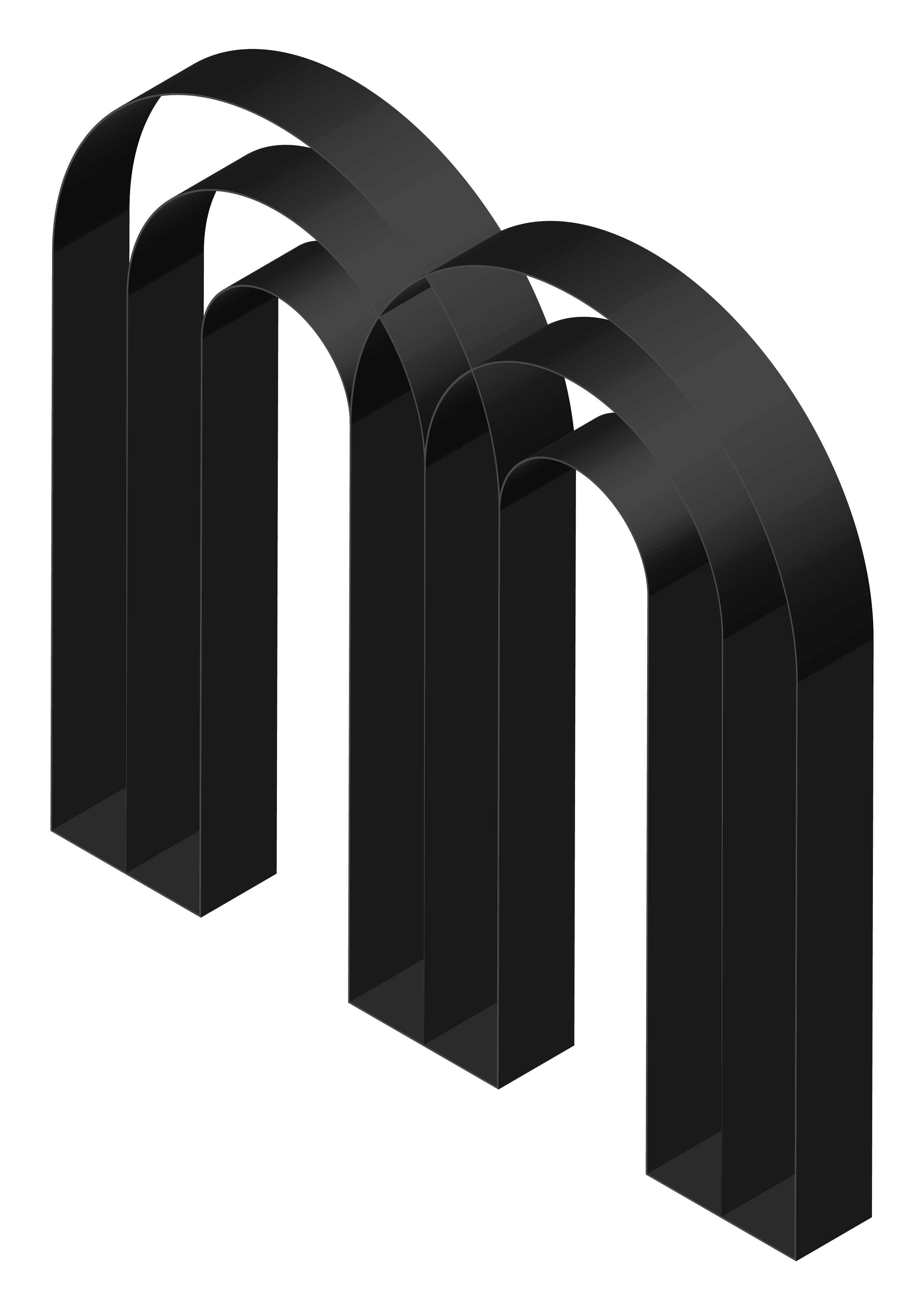
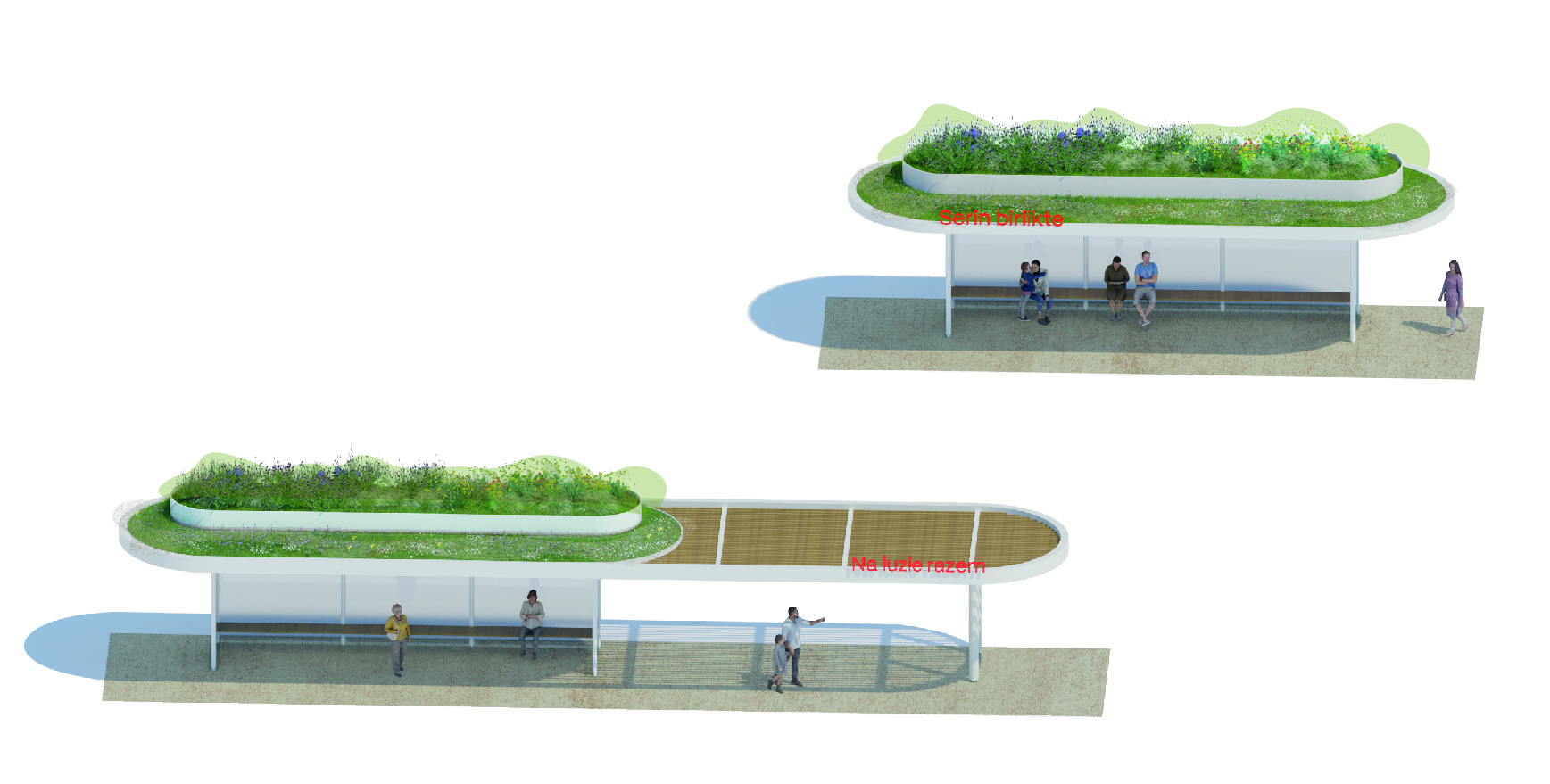 Bus shelters – Sleek steel structures, Green roofs, Sturdy seating
 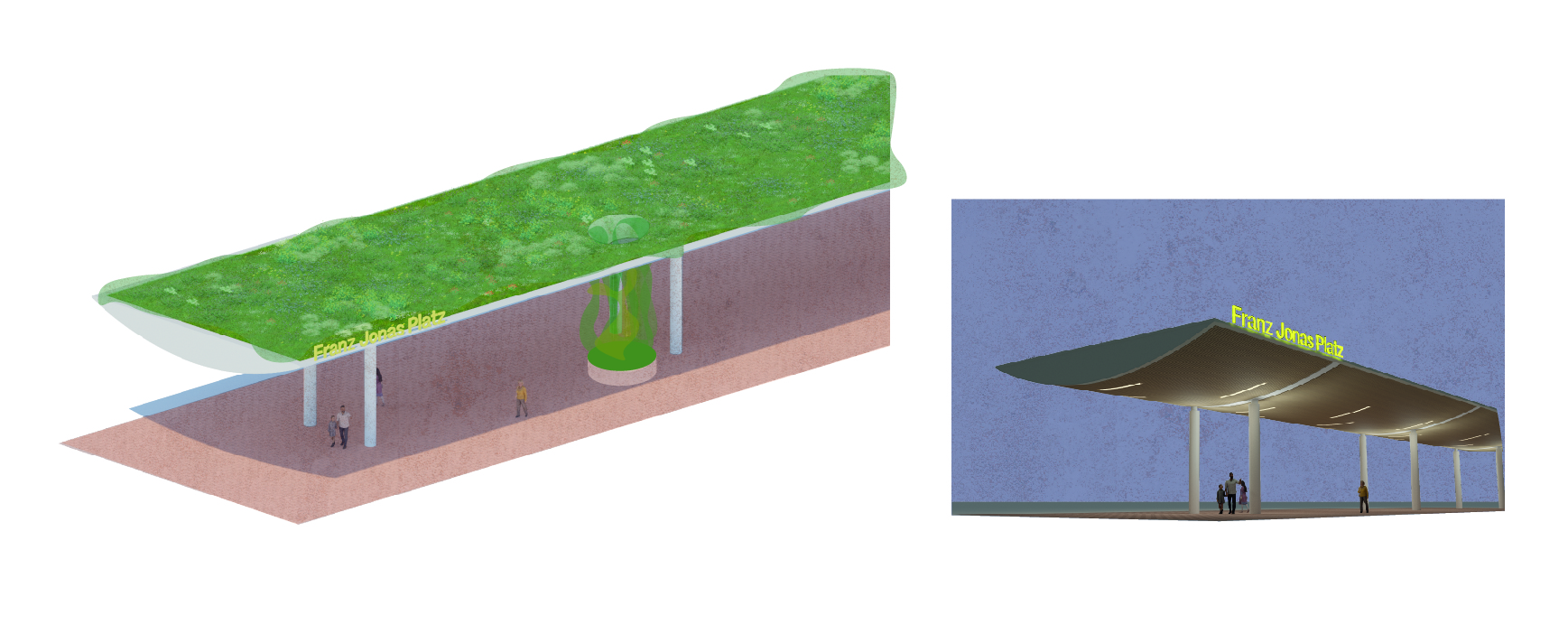 Existing roof – Main entrance