Marktraum am Naschmarkt
| Location | Naschmarkt, Vienna |
| Principal use | Market and public space |
| Year | 2023-2025 |
| Status | Marktraum and Naschpark: completed, Multifunctional space: ongoing |
| Design team – Mostlikely Architecture | Mark Neuner, Marc Werner, Christian Höhl, Marlene Lötsch, Fabian Haslinger, Felix Redmann, Irina Nalis, Xinxin Qiu, Karla Kar, Mal Ballata, Soryun Lee, Gil Grassmann, Sabine Schertler, Soňa Langová, Ritger Traag |
| Landscape Planning | D\D Landschaftsplanung |
| Structural engineering | Bollinger + Grohmann |
| Infrastructure | Axis Ingenieure |
| Traffic planning | FCP Verkehrsplanung |
| Building Physics | Bauklimatik |
| Electrical Planning | Allplan |
| Client | MA 59 / WGM / Stadt Wien |
| General Contractor | Porr |
| Photos & Graphics | Mostlikely Architecture and D\D Landschaftsplanung, Patrick Johannsen Fotografie |
| Competition | 1st prize Mostlikely Architecture with D\D Landschaftsplanung and Buero de Martin |
| Awards | BIG SEE Architecture Award 2026, Winner for Public, civic and administration buildings |
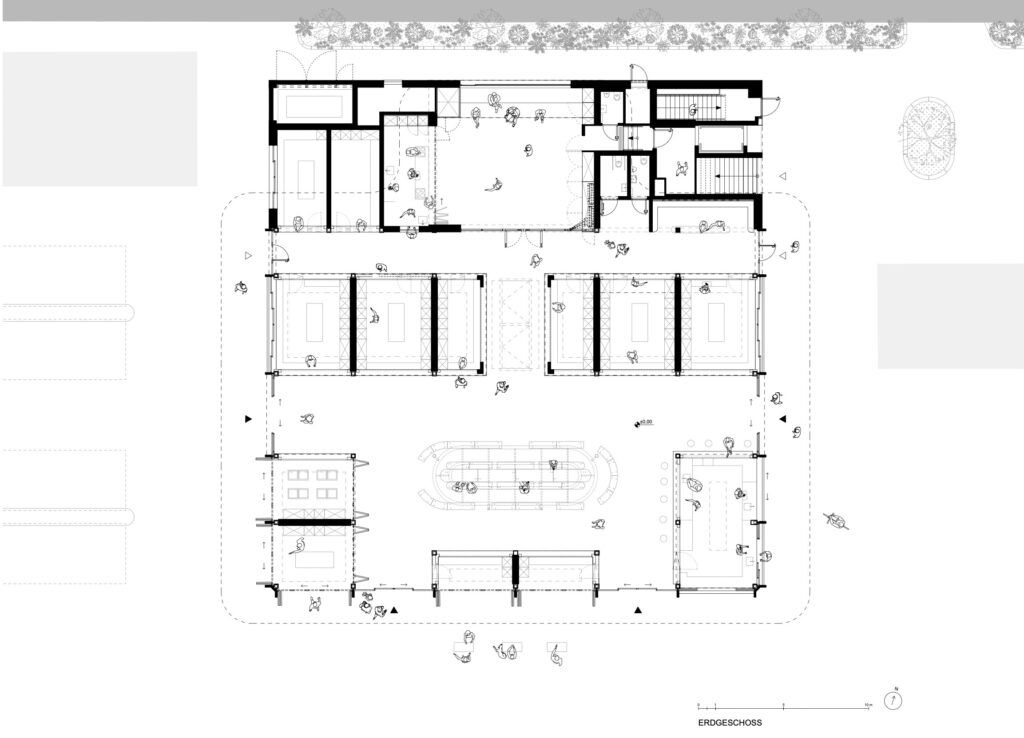
As a hybrid market structure built above the Wienfluss vault, the Marktraum establishes a new centre for the Naschmarkt. Based on the Common Space City model, it extends the Bauernmarkt through a covered structure that combines regional produce with a communal kitchen and rooftop terrace as spaces for exchange and collective learning.
Its open and permeable structure, including a public passageway, connects market, neighbourhood and public realm into one coherent urban space.
As a spatial hub, the Marktraum contributes to the climate-active transformation of the Naschmarkt.
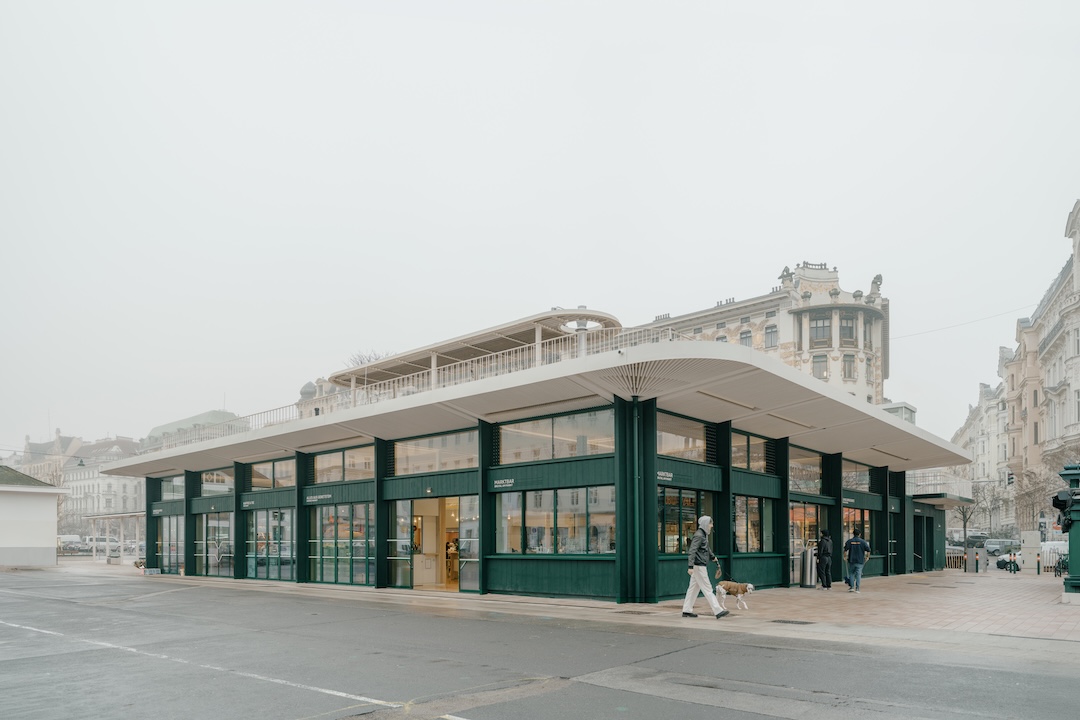 Photo by Patrick Johannsen Fotografie
 Common Space Marktraum
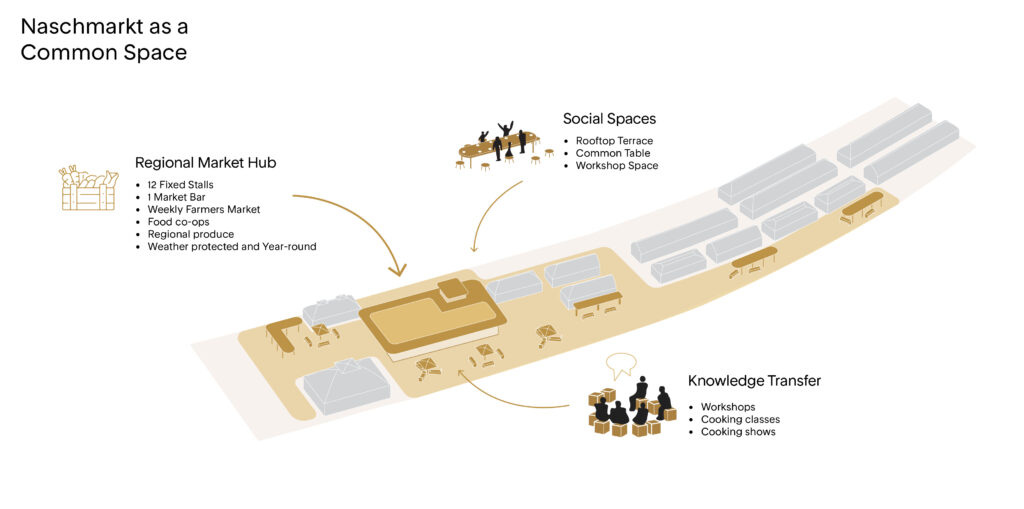
The Marktraum extends the Naschmarkt beyond its role as a marketplace.
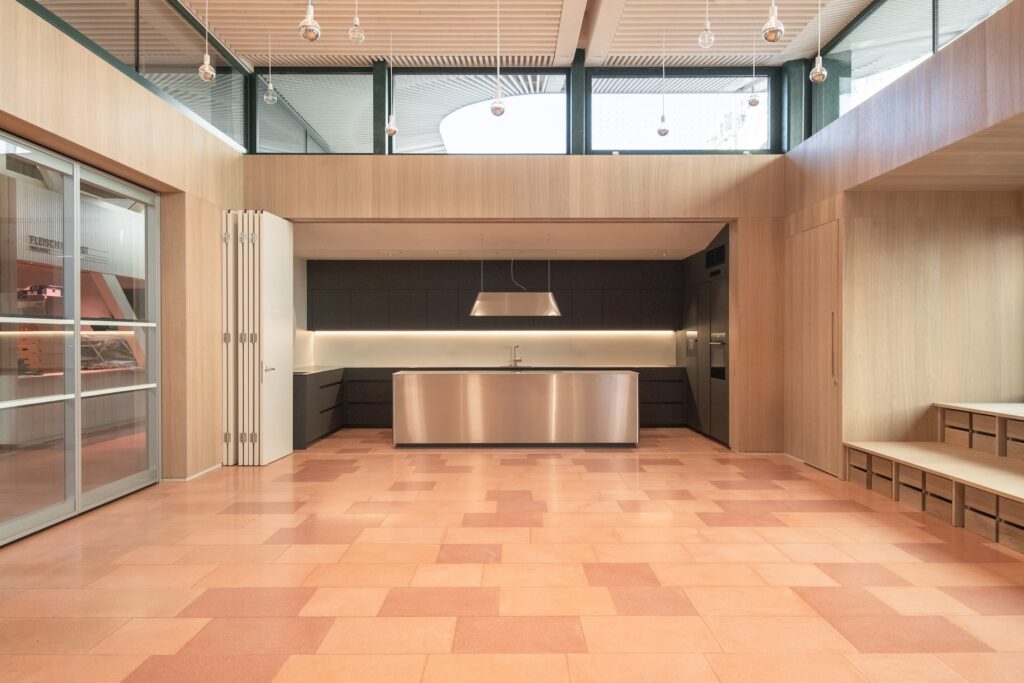
Based on the Common Space City model, it combines regional food culture with spaces for gathering, learning and collective use. Twelve market stalls, a long communal table, a flexible workshop space and a publicly accessible rooftop terrace create opportunities for trade, exchange and knowledge sharing. By connecting local producers in twelve market stalls, neighbourhood communities and urban life, the Marktraum establishes the Naschmarkt as a shared social space.
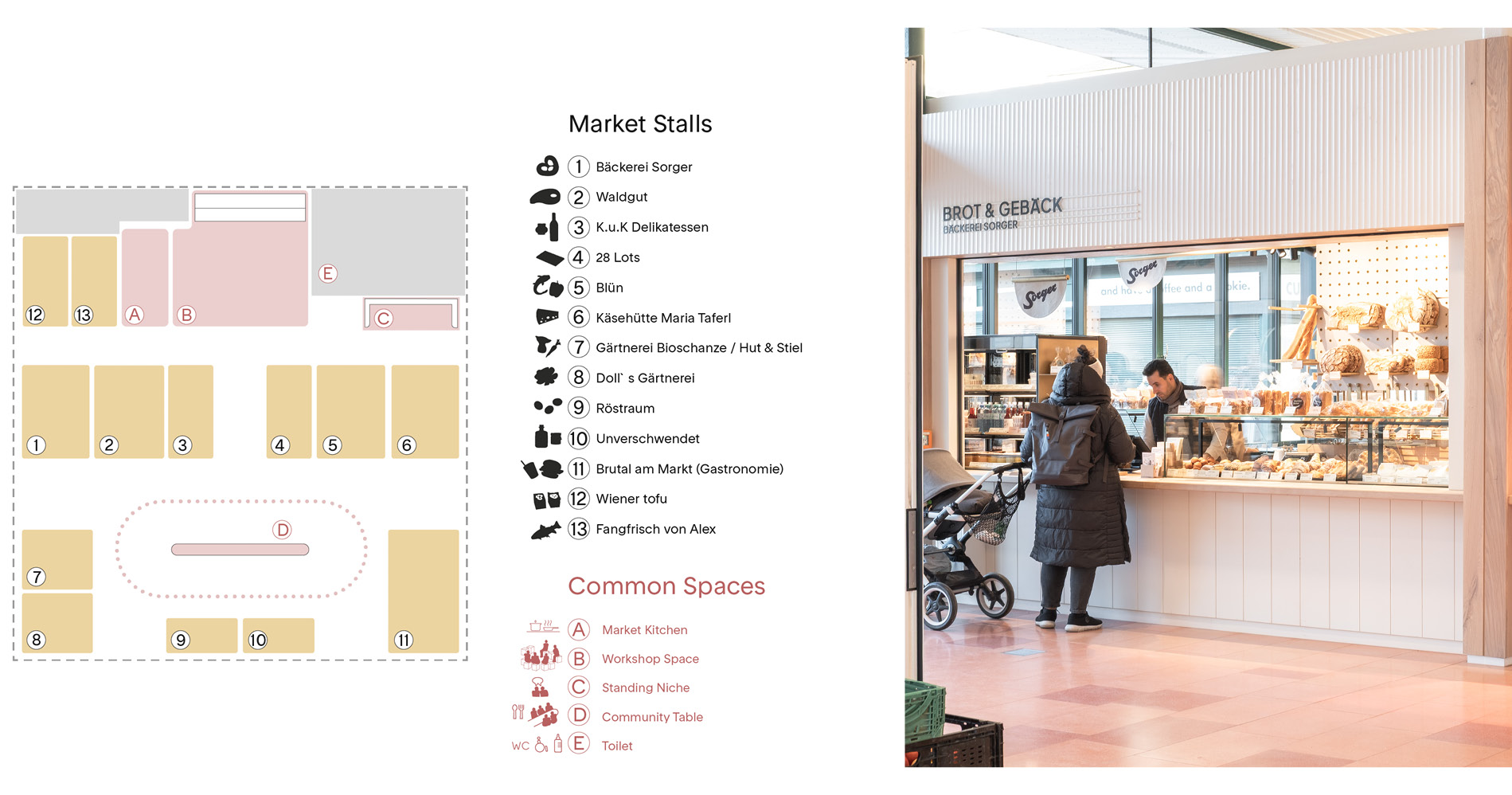
Twelve market stalls offering regional products, together with a market bar, support everyday shopping while creating a high-quality public environment.
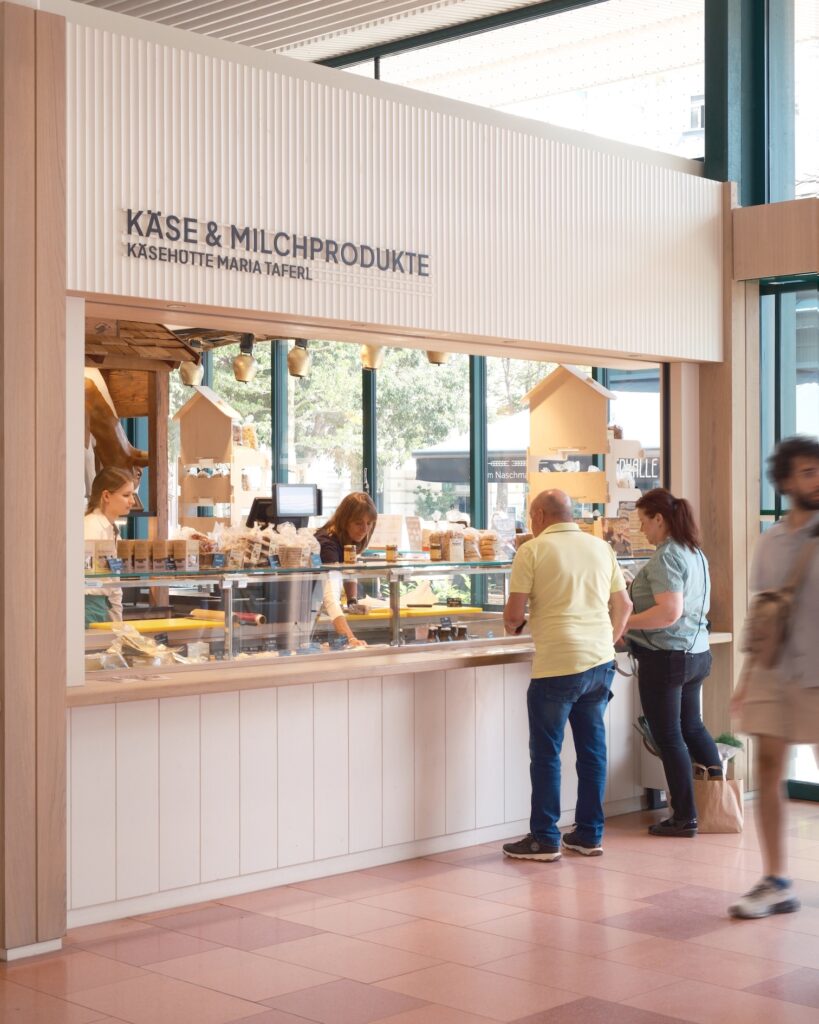
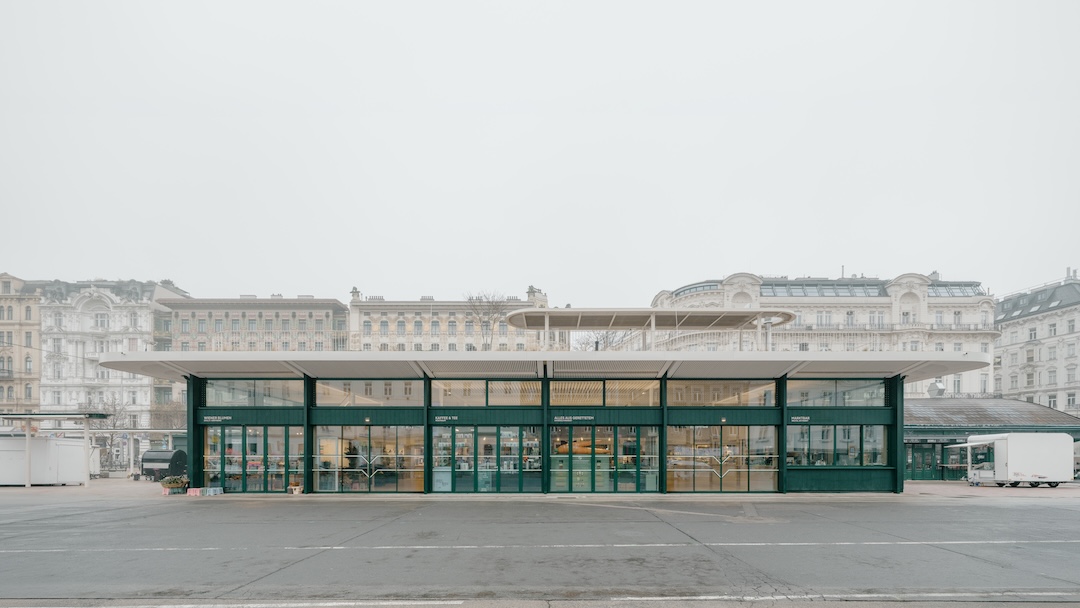 photo by: Patrick Johannsen Fotografie
 Design Language
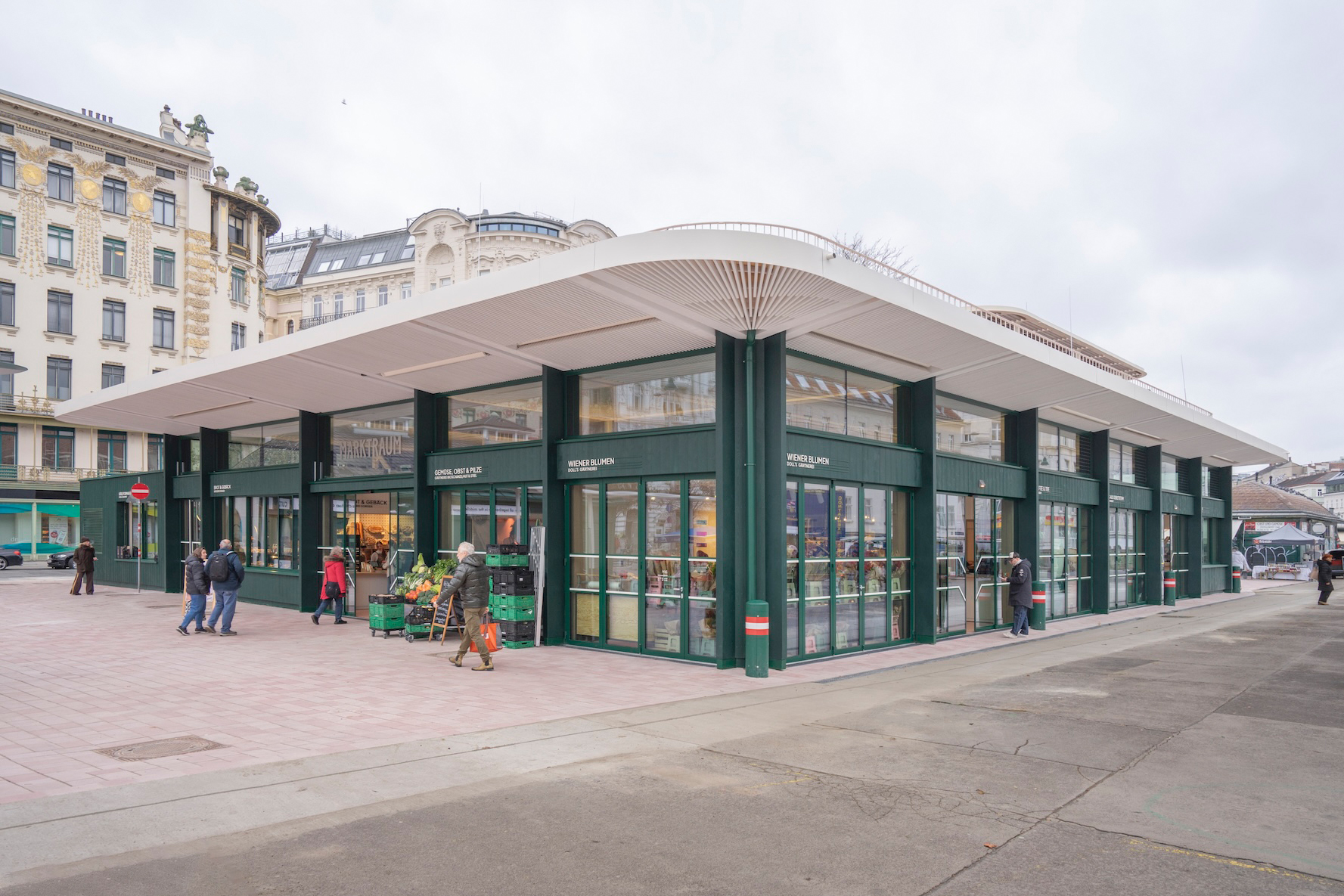
Together with the adjacent square, the Marktraum establishes a clear entrance situation. A continuous floor surface and the rhythmic arrangement of lamellas and market stalls create a coherent space beneath an open roof, deliberately dissolving the boundary between interior and exterior.
The façade reinterprets the characteristic colour and structure of the market through folding, sliding and rotating elements as well as roller shutters, allowing the building to open flexibly towards the public realm.
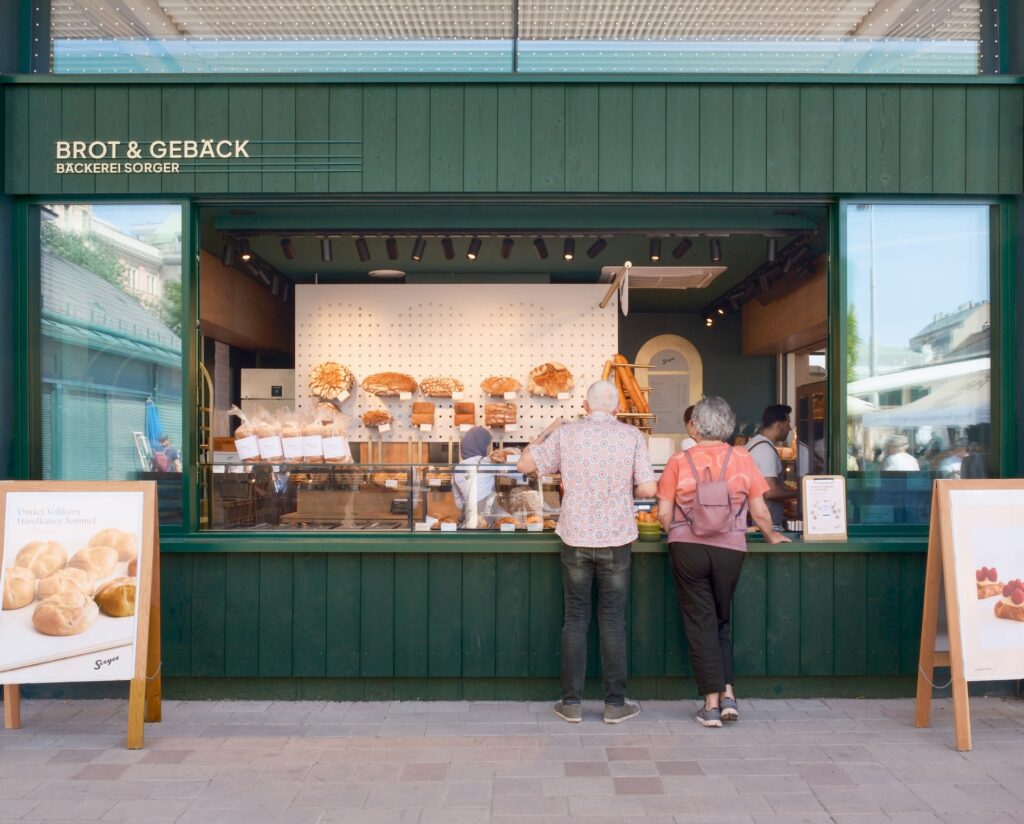
A continuous floor surface and the rhythmic
arrangement of lamellas and market stalls create a coherent space beneath an open roof, deliberately blurring the boundary between interior and exterior.

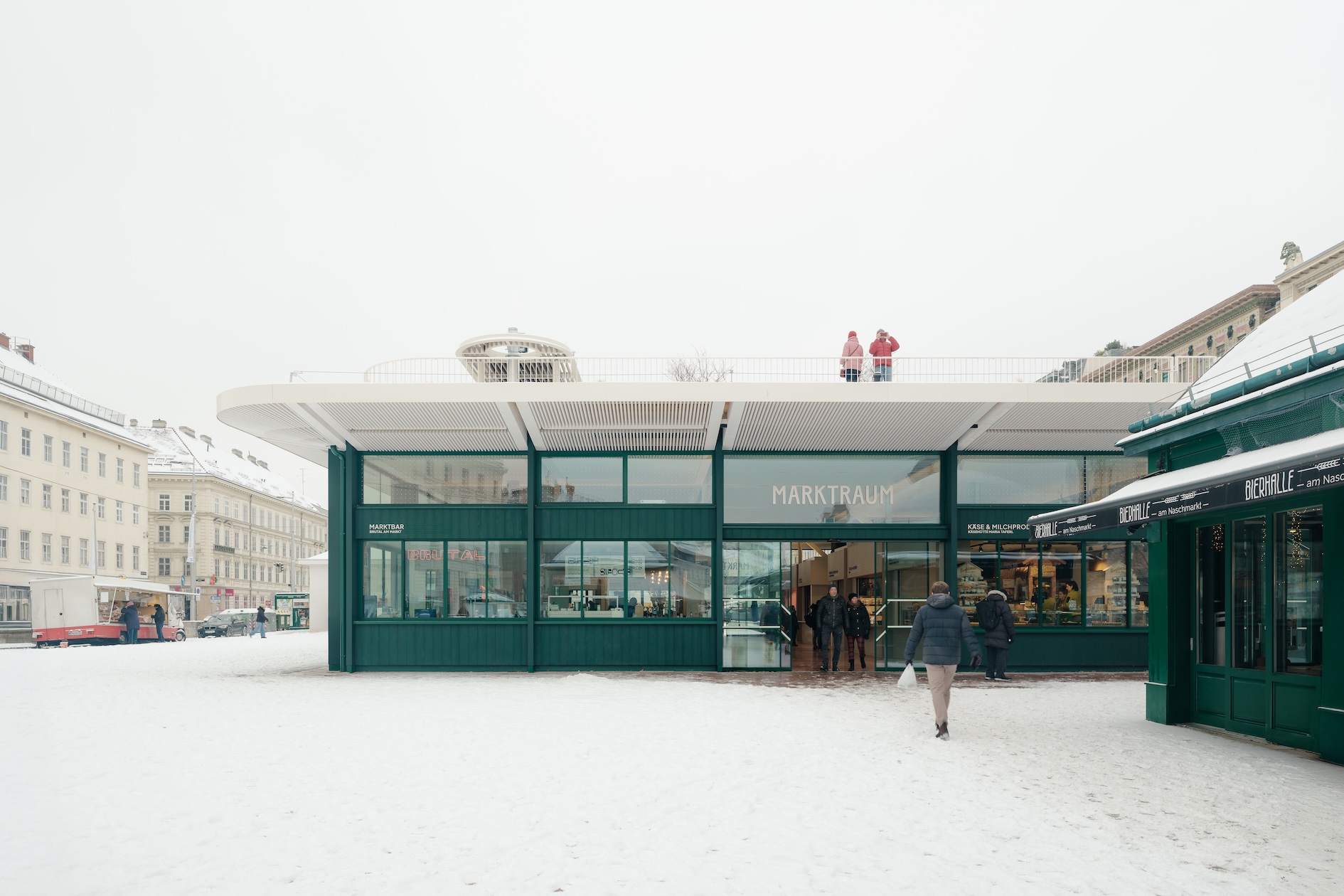 Photo by Patrick Johannsen Fotografie
Inside, the long communal table, 12 market stalls and an open, flexible kitchen create a permeable market atmosphere oriented towards everyday shopping and informal exchange.

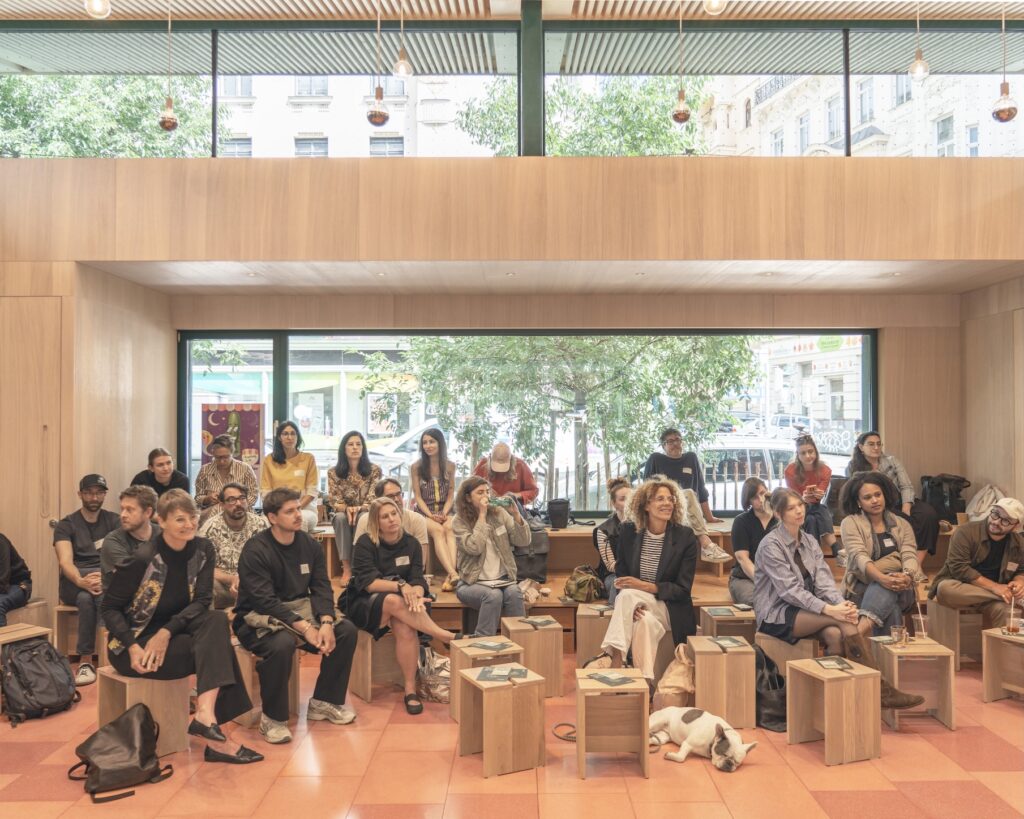
How can the Naschmarkt become a social meeting place?
Rooftop garden
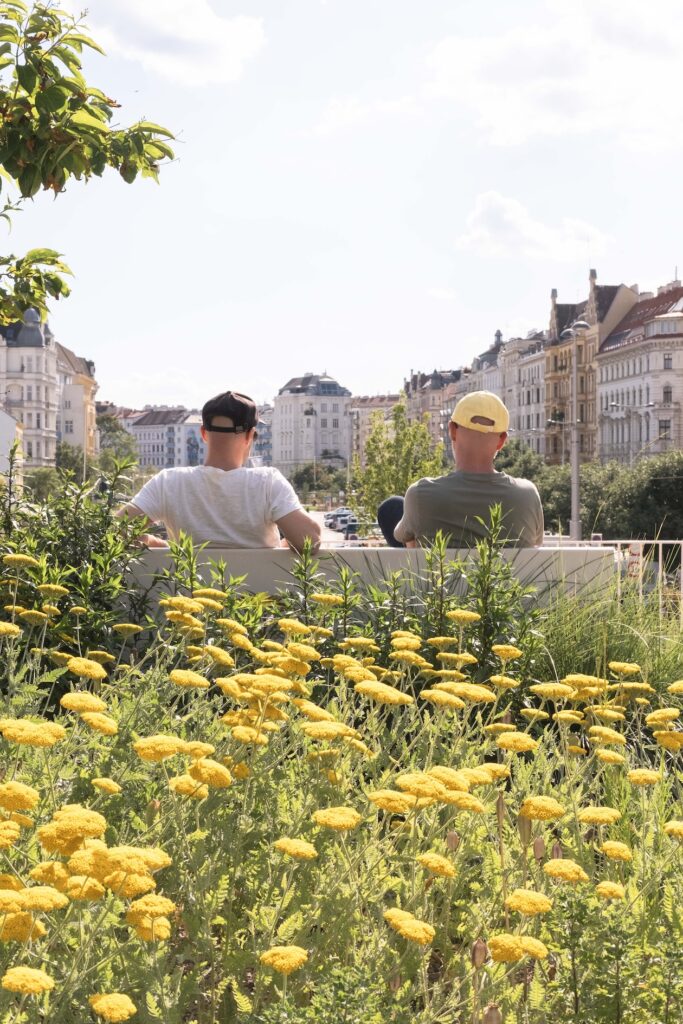
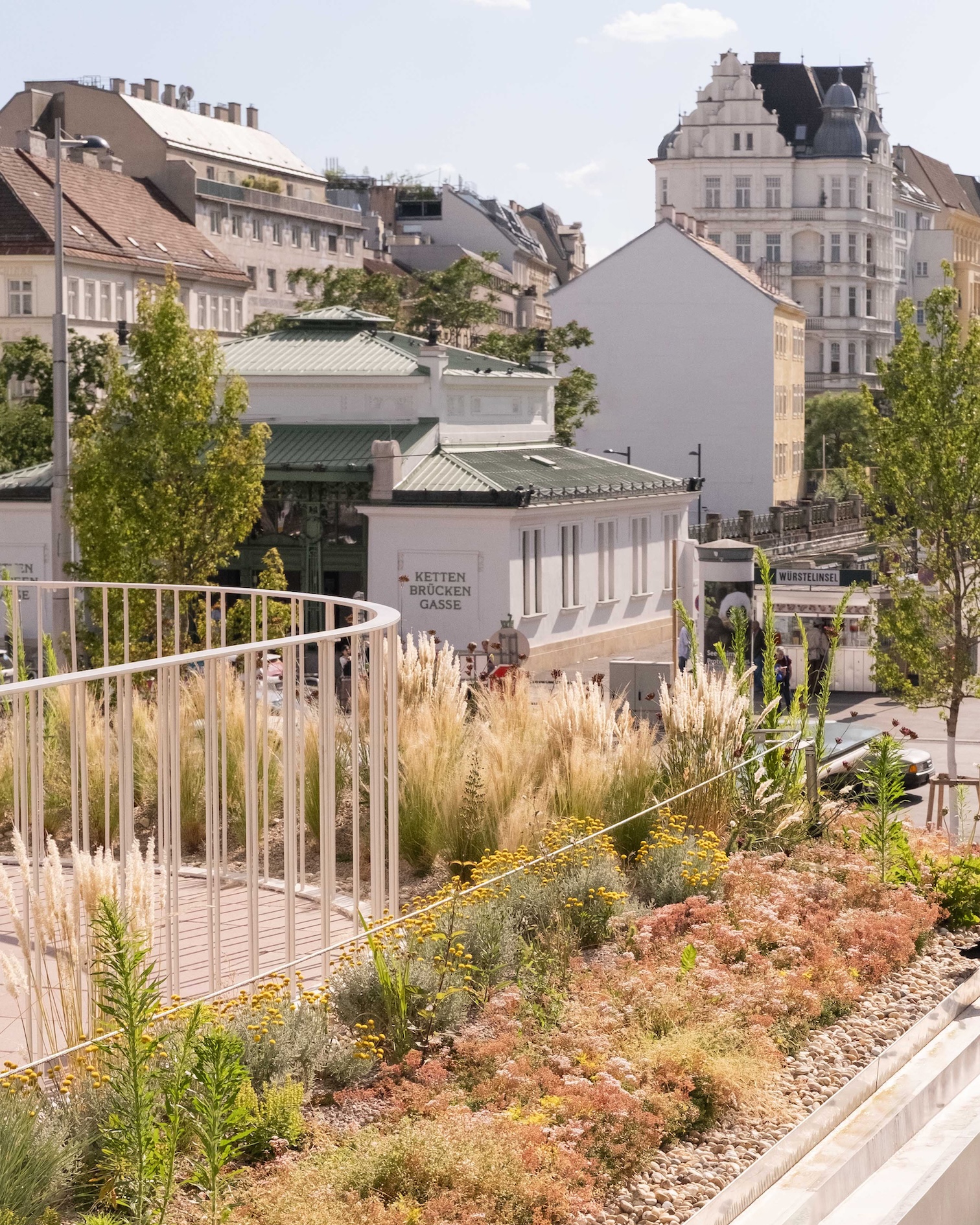
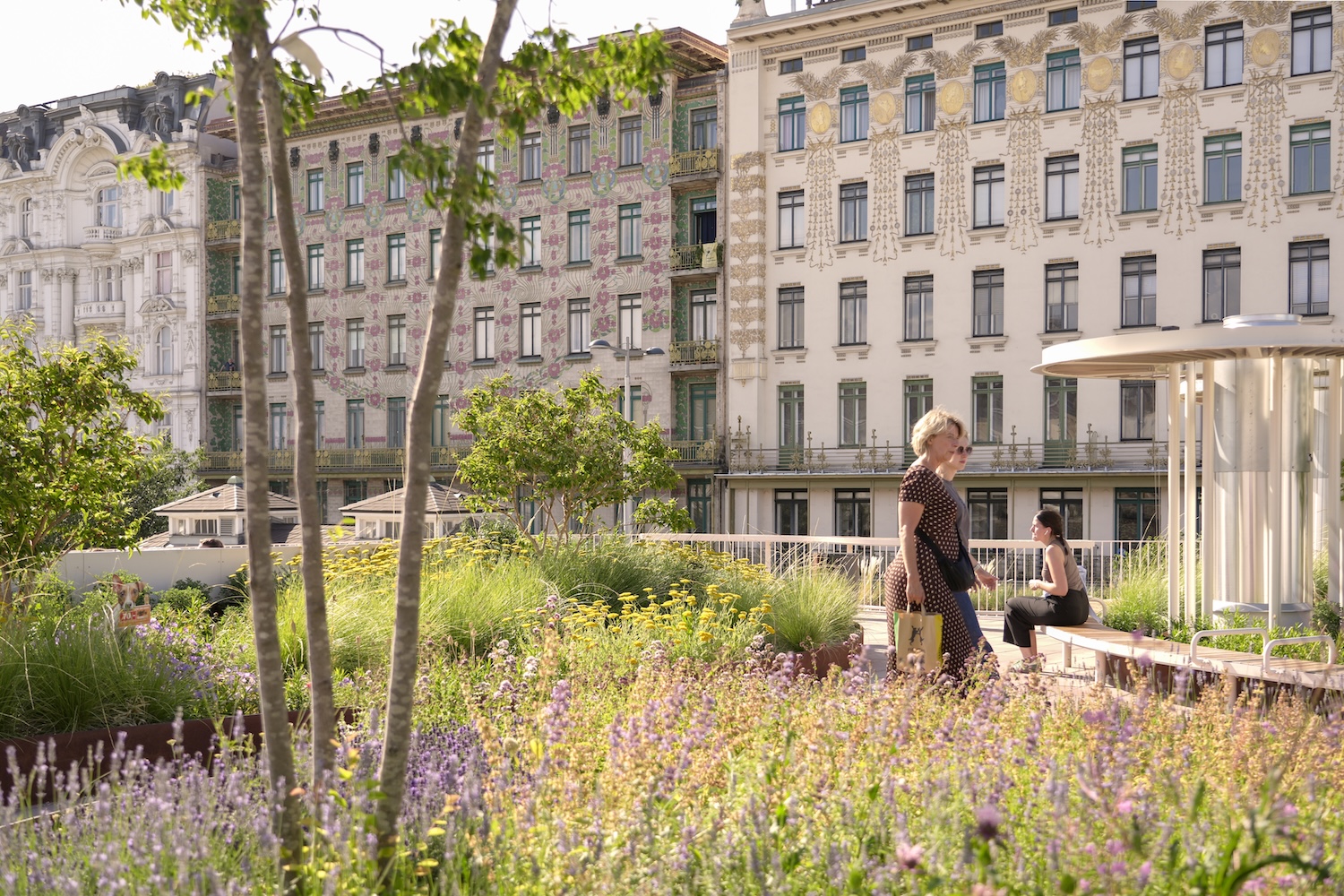
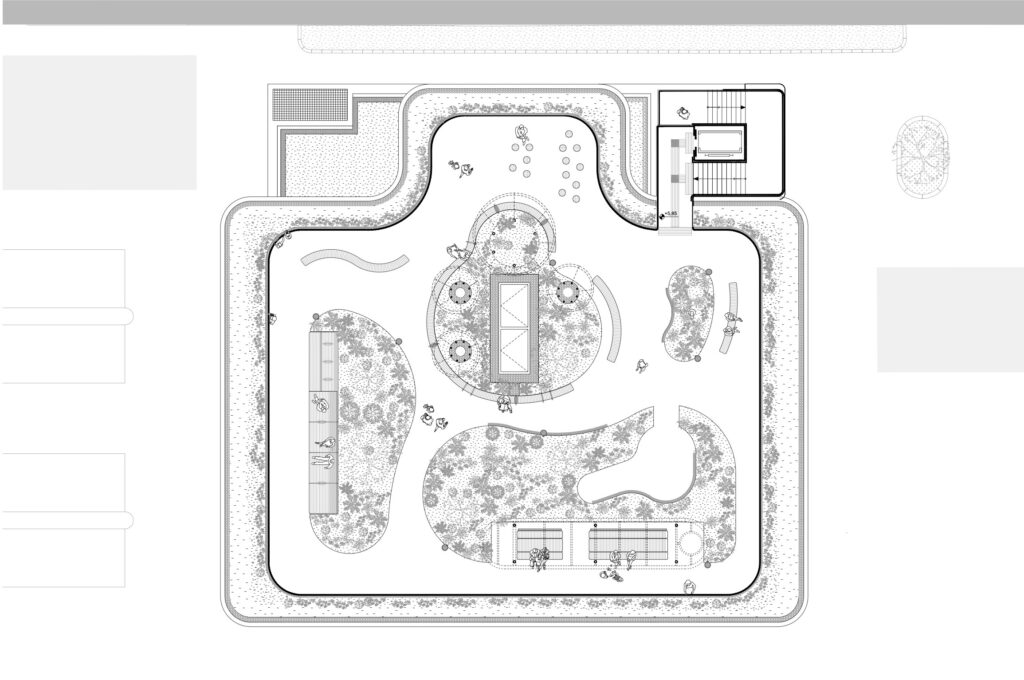
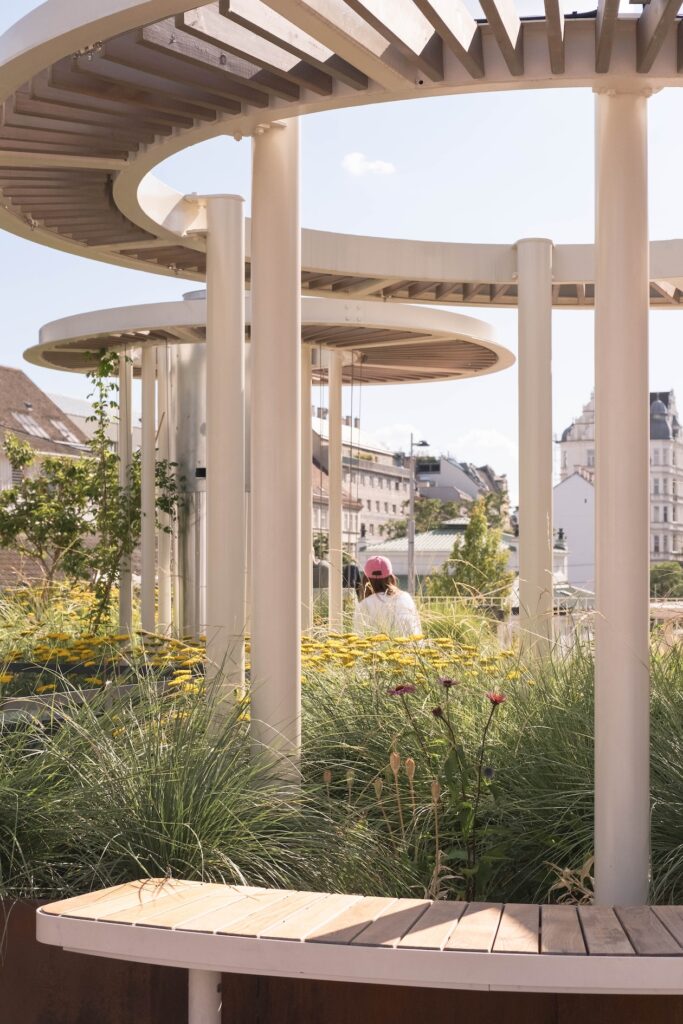
The rooftop garden is conceived as a public space for collective gathering above the market. Specially designed furniture elements, including picnic tables beneath shaded pergolas, long curved benches, standing tables, seating steps and sun loungers, structure the space and provide different settings for staying, eating and informal interaction for up to 200 people.
Generous planting beds with a year-round climate-resilient planting concept and an integrated herb garden create ecological and atmospheric quality. Framed views across the city and the evening sun give the rooftop garden a distinct spatial identity and establish it as an elevated public space within the Naschmarkt.
The rooftop garden establishes an elevated public space for collective use above the Naschmarkt.
Low Tech Building Systems
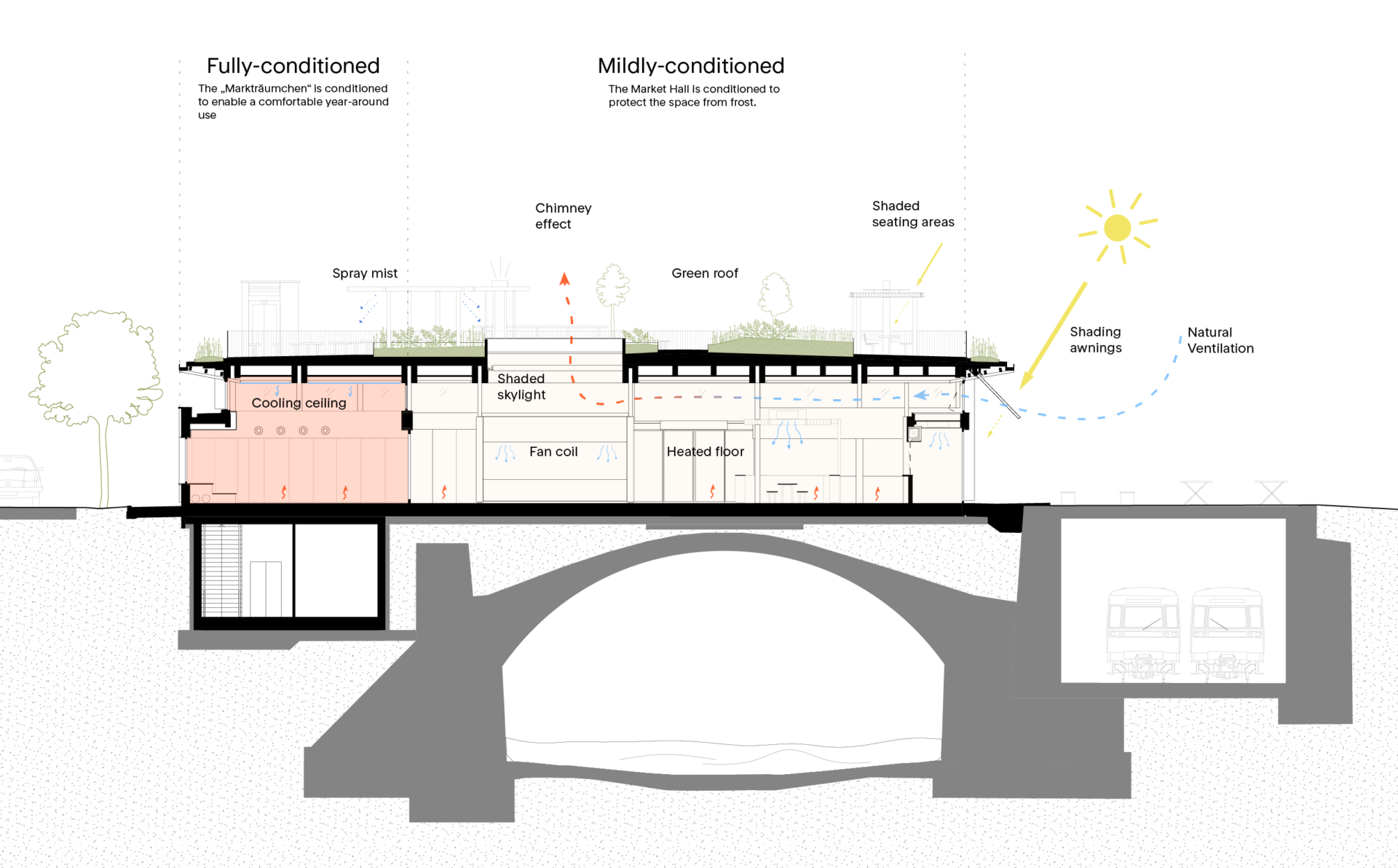
The building systems concept of the Marktraum follows a low-tech approach. It aims to minimise the energy demand by only lightly conditioning the open market hall, while fully conditioning selected enclosed areas such as the workshop space. Thermal regulation is primarily achieved through a thermally activated floor slab and supplemented by localised fan coils where required.
Potential summer overheating caused by the southern orientation and large glazed surfaces is reduced through an overhanging roof, retractable awnings and automated natural ventilation making use of the chimney effect.
Energy is supplied by an air-source heat pump, while a central and flexibly distributable ventilation system for the market stalls enables demand-based operation with reduced air volumes and minimal technical complexity.