Circular Architecture
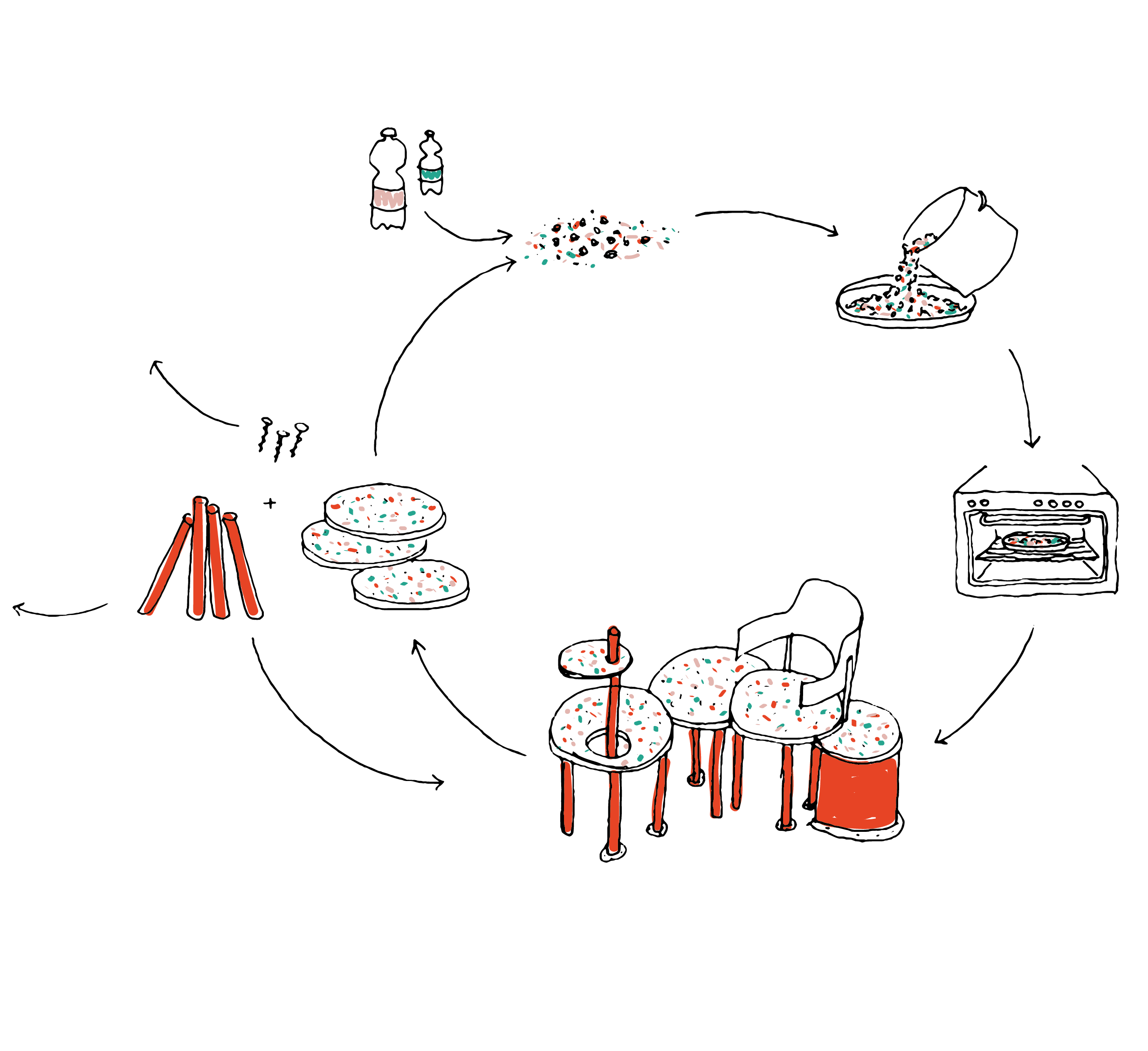
To transform our environment into a more resilient and inclusive one, we have developed three strategies: Circular Architecture, Co-Creation and Common Space.
Our Circular Architecture strategy is focused on the shift from linear economic patterns (produce-consume-waste) to the greatest possible circular logic.
We aim to build with pure materials, design demountable constructions and energy saving buildings. Our Circular Architecture guideline serves as a self-imposed standard for our futureprojects. In all our projects, we try to meet as many of the criteria as possible.
Circular Architecture Guideline
Step 1 – From problem to potential
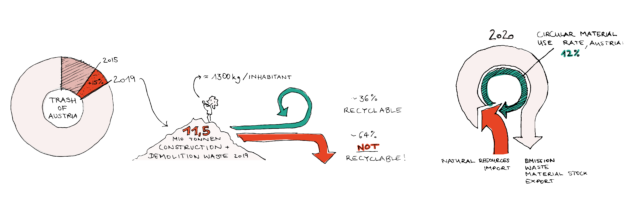
Linear business models generate high levels of waste, rely on the intensive use of finite resources and fossil fuels, and cause substantial CO₂ emissions during production. At the same time, there is growing pressure to shift from linear to circular systems: renewable energy is a fast-growing sector, and AI-supported waste systems help keep materials in the loop. These developments open up new potentials for circular architecture.
Step 2 – Circular design rules
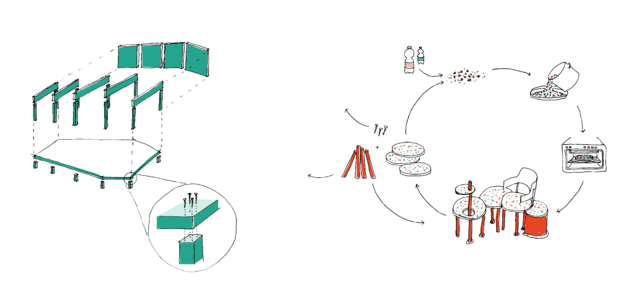
Circular design means working with reusable and recyclable or renewable and biodegradable materials, using detachable connections and pure-of-sort components. Modular construction and standardised elements support flexible reconfiguration, while prefabrication helps to avoid waste from the outset.
Step 3 – Circular infrastructure
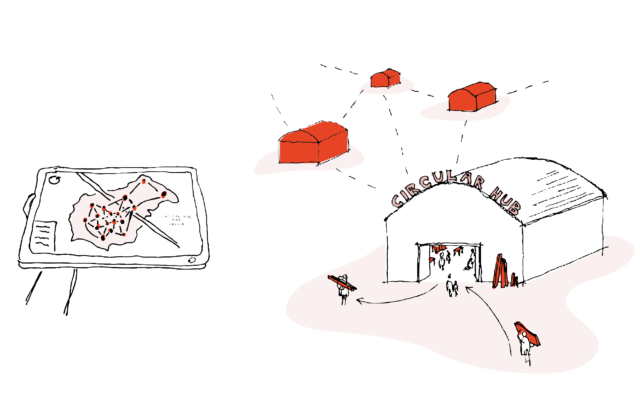
Circular Architecture requires dedicated infrastructures: Circular Hubs for recycling and reprocessing, spaces for storage and sorting of dismantled components, and points of sale for reused materials. Digital databases for the construction industry enable actors to exchange, reserve and purchase components and materials.
Step 4 – Material passport
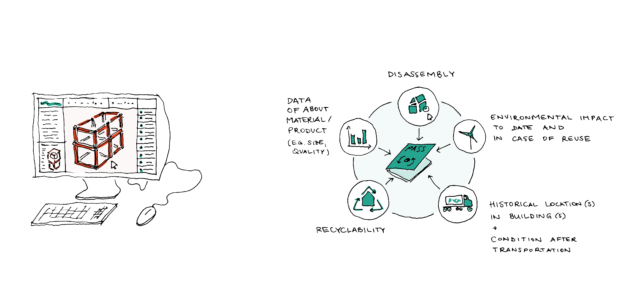
Designing with circular BIM includes the creation of a material catalogue that documents components, their location and potential reuse. A material passport records information on individual elements and provides instructions for replacement, repair and further use of installed components.
Step 5 – Deconstruction manual
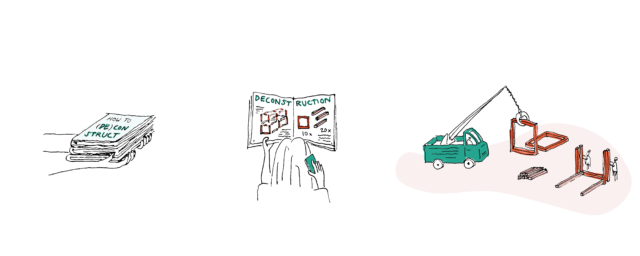
A deconstruction manual (disassembly certificate) defines how a building can be dismantled and how components can be recovered. A financial deposit as part of the submission can cover dismantling costs, while the material passport informs about the return and reuse of materials.
Step 6 – Creating awareness
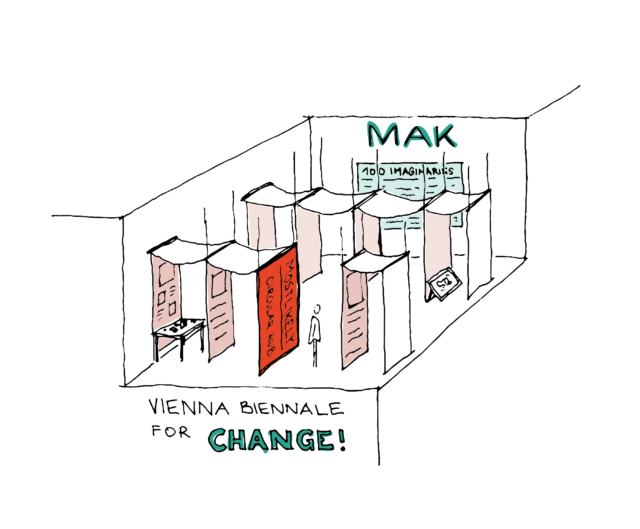
Public prototyping and exhibitions make circular strategies visible, communicate their potentials and help to anchor circular architecture in public discourse and professional practice.
Our Circular Architecture mission is focused on the shift from linear economic patterns (produce-consume-waste) to the greatest possible circular logic.
We have already implemented our Circular Architecture Guideline in two projects. The Plauderecken demonstrate how urban furniture can be rethought using recycled materials — their colourful seating surfaces are made from reused shampoo caps. For the Cultural Pavilion for Kultursommer.Semmering, we developed a fully demountable concert hall whose untreated wooden surfaces can return to the material cycle.