Common Space

To transform our environment into a more resilient and inclusive one, we have developed three strategies: Common Space, Circular Architecture, and Co-Creation.
Our Common Space strategy builds on the idea of the city as a shared resource. It aims to create well-equipped spaces and infrastructures that support cooperative forms of working and socialising, enable flexible and affordable access, and strengthen wellbeing and creative development.
Through Common Space, we explore how shared infrastructures can contribute to a resource-efficient way of life, provide meeting points for social exchange, and use digital tools and innovative models to create broader positive change.
Mostlikely is organised as a flexible platform for architecture, design and research. Work emerges in different constellations — from classically organised teams to interdisciplinary collaborations and open associations.
We created the Common Space project to promote inclusive and supportive urban environments. An interdisciplinary team from architecture, urbanism and social sciences develops methods and models that make access to space more transparent, affordable and community-oriented.
Through institutional collaborations, exhibitions, teaching formats and workshops, we continuously deepen the concepts and practices behind Common Space. With our Common Space Services, we also support clients directly — offering analyses, programmes and participatory processes that help initiate, design and manage shared spaces.
These activities are complemented by our Common Space Guideline and the Common Space Design Principles, which together form a growing framework for developing Common Spaces across different contexts and scales.
Common Space Guideline
Our Common Space Guideline provides a framework for transforming spatial challenges into shared potentials and for developing resilient and inclusive infrastructures.
Step 1 – From problem to potential
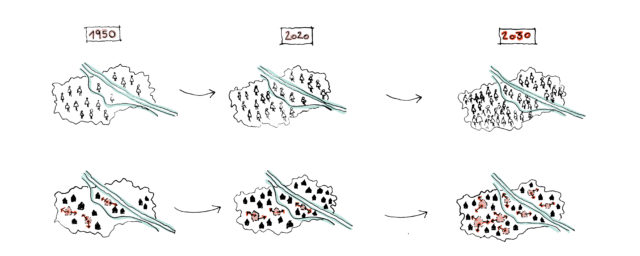
Increasing density and rising spatial costs require new approaches to access and use. Digital tools and a culture of shared infrastructures enable multiple use, more flexibility and improved accessibility.
Step 2 – Innovative programme
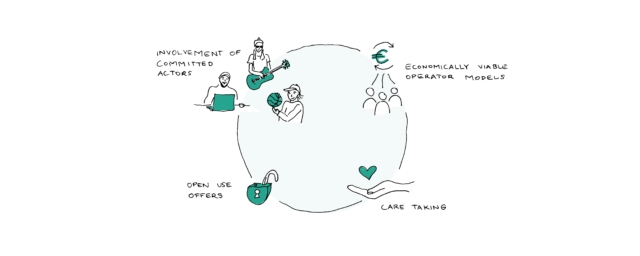
We involve committed actors, develop business models that create public value, organise maintenance and care work, and define open use offers that support long-term viability.
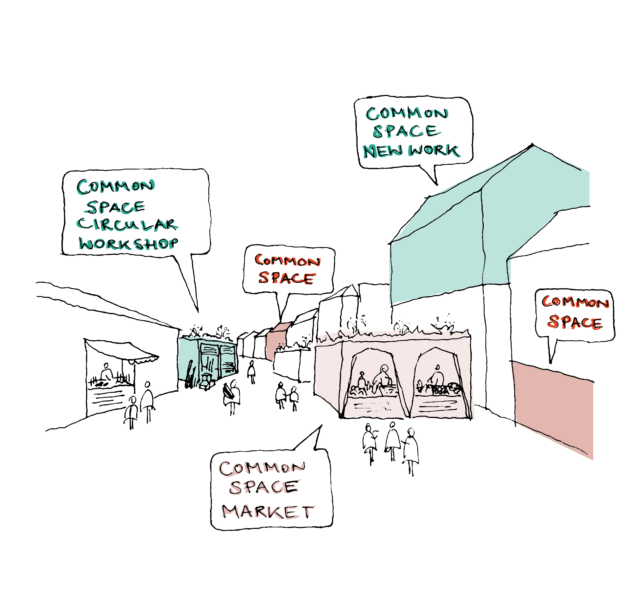
Step 3 – Re-program typologies
We add a new layer of public infrastructure and shared spaces that foster personal and creative development, create social connection points, offer flexible and affordable access, and support resource-saving lifestyles.
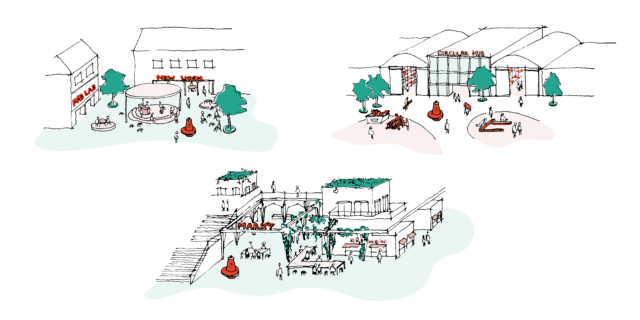
Step 4 – Interconnect
We make local infrastructures accessible both offline and online, create physical information points and integrate digital platforms for exchange, reservation and booking.
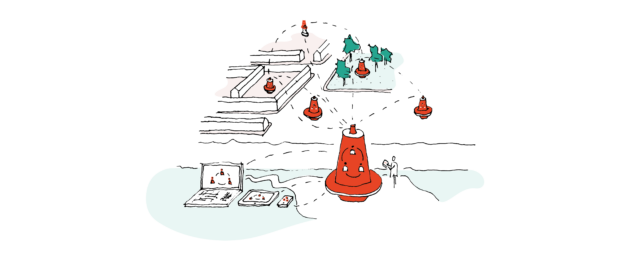
Step 5 – Design resilience
We create robust, sustainable and low-maintenance spaces with controllable access, high security, affordable or consumption-free use, and socially and technologically innovative features.

Step 6 – Create awareness
Through exhibitions, workshops and publications, we embed the Common Space concept in public discourse, strengthen networks and support long-term cultural engagement.
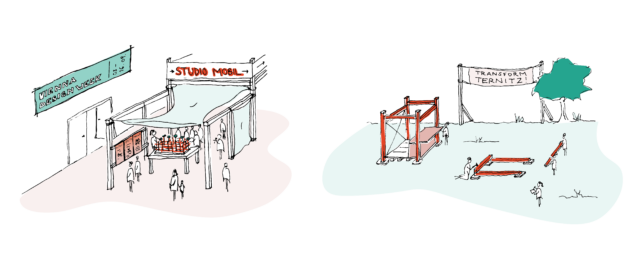
The Common Space Model
The Common Space Model is based on the idea that the city is a shared resource. It asks a central question: How can we create a lively, resilient city together? The answer lies in acknowledging urban space as something we build, use and care for collectively.
By sharing spaces and infrastructure, the Common Space Model creates flexible, affordable access to environments that support personal and creative development. Instead of repeatedly investing in individual solutions, resources are pooled — resulting in higher spatial quality that remains accessible and adaptable.
The model also uses the window of opportunity offered by digitization to enable broader, positive change. Digital tools make shared infrastructures easier to access, organise and manage, allowing communities to shape their environment more directly.
At the same time, the Common Space Model supports a resource-saving lifestyle and creates new forms of social interaction. Shared tools, production spaces, cultural and educational infrastructures bring people together and allow them to participate in shaping the city. Common Spaces evolve through active engagement — Common Spaces need commoning.
In practice, the model helps develop architectural and spatial strategies that are more adaptable, user-centred and socially anchored. It informs both theoretical investigations and concrete design decisions in our work, from case studies to built projects.
The mission of the Common Space Project is to establish sustainable places for the common good!
Following the idea of the Commons, the Common Space model conceives our cities as common property.
Design Principles
Common Spaces are based on four design and organisational principles that ensure long-term accessibility and usability:
High-quality spatial design
Welcoming, robust and flexible spaces with modular structures, adaptable layouts and circular construction approaches.
Multiple uses
Shared digital and analogue infrastructure for a broad, open group of users — expanding public space with new possibilities for making, learning, producing and socialising.
Community-oriented organisation
Clear terms of use oriented toward the common good, low-threshold access and shared equipment support collective use and strengthen community involvement.
Quality control
Stable operational models and hybrid financing ensure long-term quality — following the principle: Public Money for Public Good.
Common Space Typologies
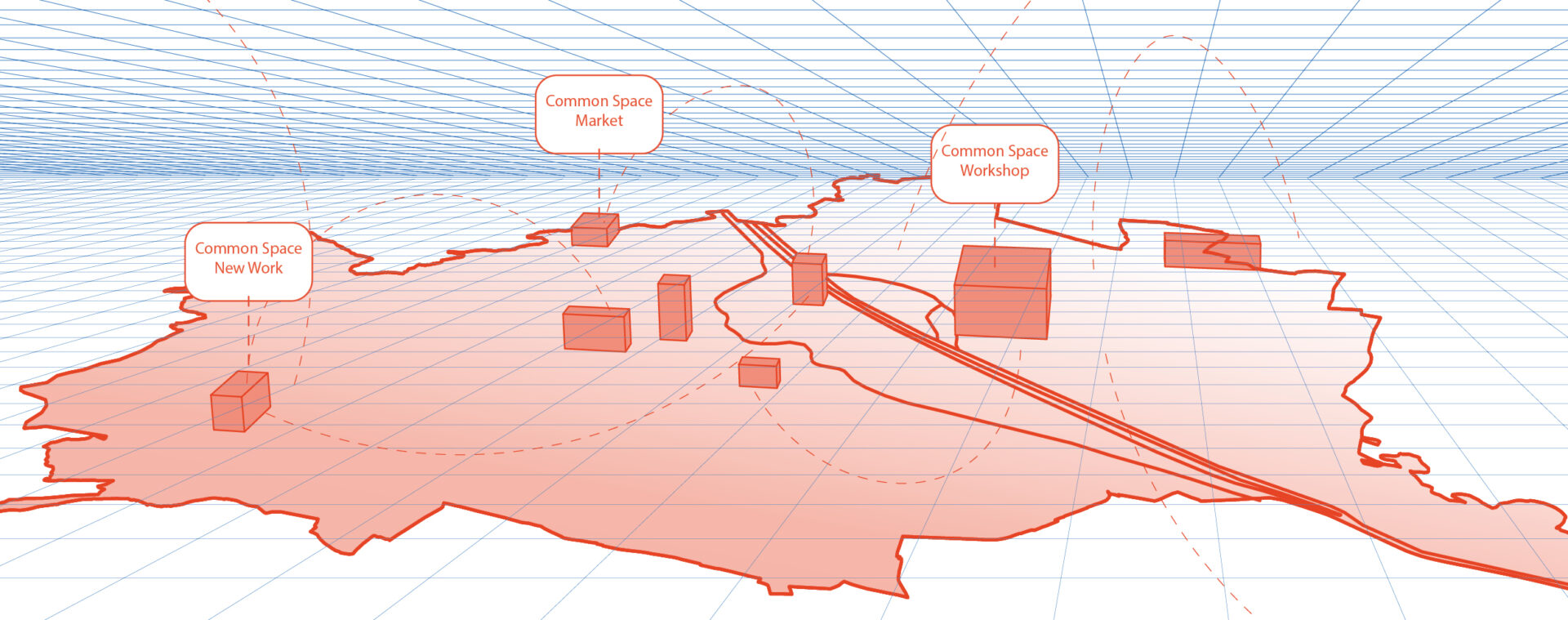
To investigate how Common Spaces can be integrated into the existing city, we developed three typologies based on theoretical case studies in Vienna. They show how these ideas can inform real architectural and urban design processes — both in new buildings and in existing structures.
Common Space Market
A public market typology that supports local producers, strengthens food systems and creates social exchange. It expands the idea of the market as a shared, low-threshold infrastructure.
Common Space Center for New Work
A combination of shared workspaces and educational facilities that makes flexible, well-equipped work environments accessible across the city — beyond high-priced, centralised co-working models.
Common Space Circular Hub
A network of well-equipped, accessible workshops and production spaces that support DIY culture, repair practices and circular-economy initiatives.
These typologies were explored through case studies in Vienna and inform our architectural work. Elements of the Common Space approach already shaped our competition-winning design for Pier 22 and are reflected in projects such as the new market space at the Naschmarkt, with features like the community kitchen and communal table.