Marktraum am Naschmarkt
| Location | Naschmarkt, Vienna |
| Principal use | Market and public space |
| Year | 2023-2025 |
| Status | Marktraum and Naschpark: completed, Multifunctional space: ongoing |
| Design team – Mostlikely Architecture | Mark Neuner, Marc Werner, Christian Höhl, Marlene Lötsch, Fabian Haslinger, Irina Nalis, Xinxin Qiu, Carla Kar, Mal Ballata, Soryun Lee, Gil Grassmann, Sabine Schertler, Soňa Langová |
| Landscape Planning | D\D Landschaftsplanung |
| Structural engineering | Bollinger + Grohmann |
| Infrastructure | Axis Ingenieure |
| Traffic planning | FCP Verkehrsplanung |
| Building Physics | Bauklimatik |
| Electrical Planning | Allplan |
| Client | MA 59 / WGM / Stadt Wien |
| General Contractor | Porr |
| Photos & Graphics | Mostlikely Architecture and D\D Landschaftsplanung |
| Competition | 1st prize Mostlikely Architecture with D\D Landschaftsplanung and Buero de Martin |
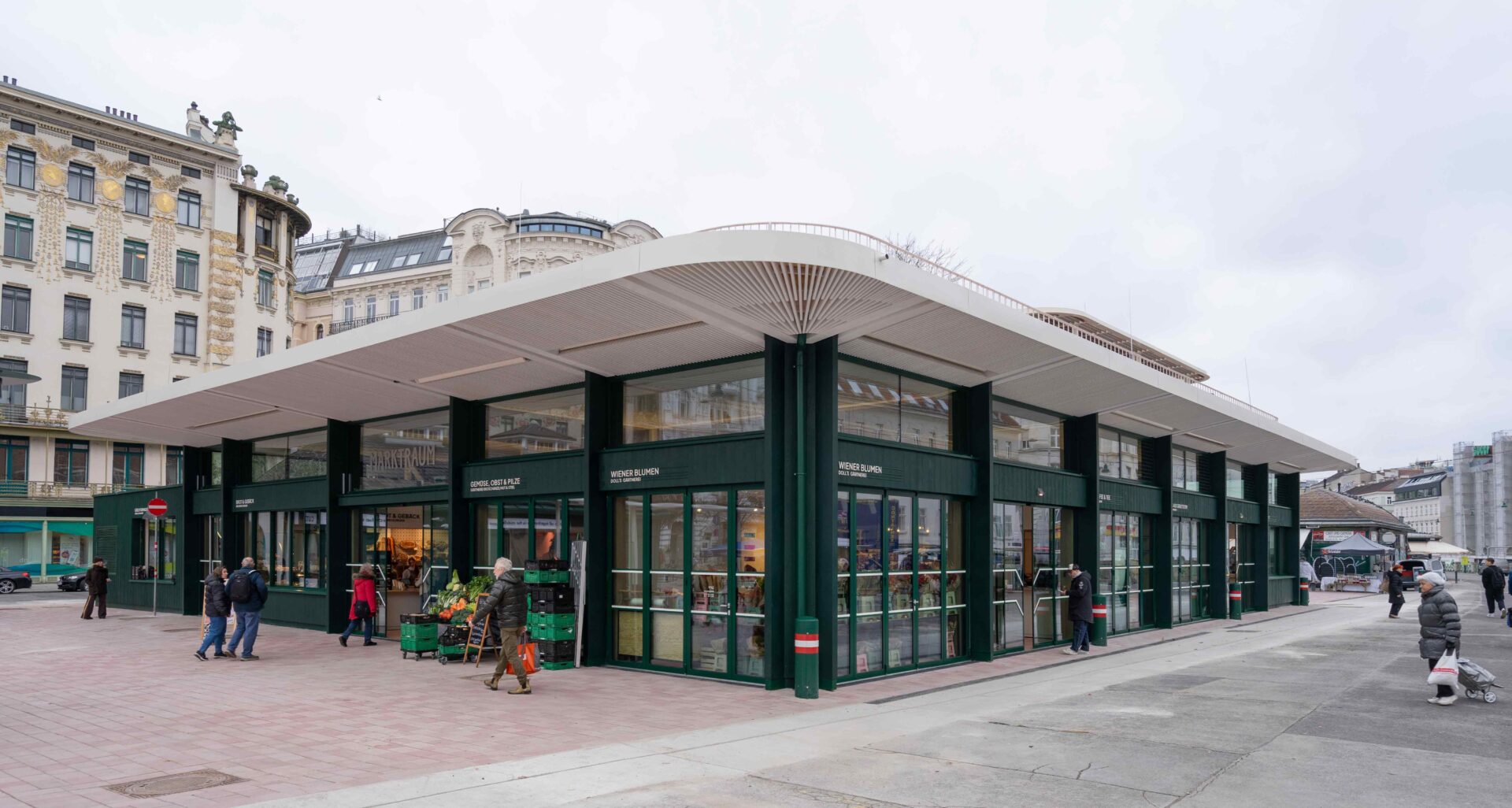
The new Marktraum is an open, adaptable timber structure that connects the market, the city, and its people, creating a new heart for the historic Naschmarkt.
With its green-glazed façade and warm wooden surfaces, the architecture continues the familiar language of the Naschmarkt.
It creates a space for trade, encounter, and everyday life – where quality of life and quality of food come together, carrying Vienna’s market culture into the future.
The Marktraum Naschmarkt stands for an architecture that connects – rather than divides – city and everyday life, climate and culture, people and markets. For us, it is the expression of a long-standing engagement with the market as a social space.
Pier 22 Donauinsel
| Location | Donauinsel, Vienna |
| Principal use | Public space, Park-working, Sports- and Cultural Facilities |
| Year | 2021-2025 |
| Status | Building phase 1: completed, Building phase 2: ongoing |
| Design team | Mark Neuner, Marlene Lötsch, Christian Höhl, Felix Redmann, Paul Feustel, Xin Xin Qiu, Ritger Traag |
| Design Consultant | Quirin Krumbholz |
| Landscape Planning | D\D Landschaftsplanung |
| Structural engineering | Bollinger + Grohmann |
| Infrastructure | Axis Ingenieure |
| Building Physics | Bauklimatik |
| Electrical Planning | Allplan |
| Kitchen planning | Sarah Holzer |
| Furniture Design | Mostlikely Architecture |
| Client | MA 45 / WGM / Stadt Wien |
| General Contractor | Porr / HABAU Group |
| Photos & Graphics | Mostlikely Architecture |
| Nominations | Archdaily Building of the Year, 2025 |
| Rewards | Monocle Design Awards 2024, Best public space |
| Competition | 1st prize Mostlikely Architecture with Quirin Krumbholz and Common Space Team |
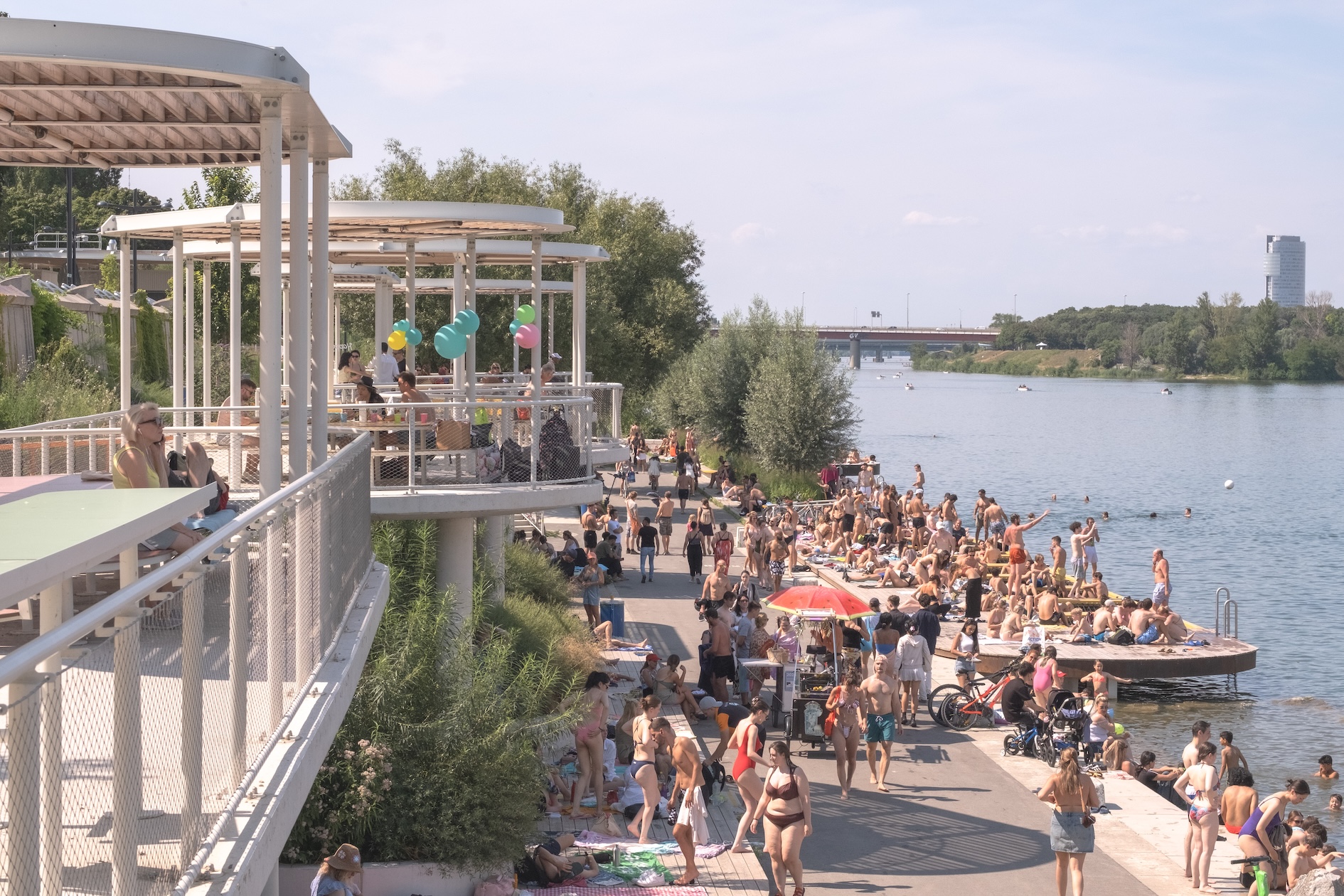
Pier 22, formerly known as Sunken City, is a modern and multifaceted public space within a natural park landscape.
Architecturally and atmospherically, a new centre on the Danube Island is being created. Thanks to its excellent connection to the U-Bahn, it functions as a citywide, connective place.
The program of Pier 22 focuses on a new quality of public space: high amenity value, free public offerings, robust yet high-quality materials, and a wide range of possible uses. The result is a year-round recreational landscape for Mind, Soul and Body — inclusive architecture that democratizes luxury through amenities that are elsewhere often reserved for exclusive club members.
Weitsicht Cobenzl
| Location | Cobenzl, Austria |
| Principal use | Event location |
| Year | 2018-2022 |
| Status | Completed |
| Design team – Mostlikely Architecture | Mark Neuner, Bernhard Stubenböck, Maik Perfahl, Wolfgang List, Nikolaus Kastinger, Christian Höhl |
| Design team Realarchitektur | Petra Petersson, Christopher Leitner, Bea Perez, Hennig Watkinson |
| Fotos & Graphics | Mostlikely Architecture and Mato Johannik |
| Competition | 1st prize, in cooperation with Realarchitektur |
Many Viennese people associate the Cobenzl with fond memories. They have met here, danced, celebrated. Many have fallen in love and some have even married. In recent years, however, the once glamorous place has become quieter and quieter, until it has been almost completely forgotten.
When the international architectural competition was published in 2018, it quickly became clear that there was great potential for combining history with contemporary architecture. From then on, the Viennese office Mostlikely Architecture by Viennese architect Mark Neuner cooperated with the Berlin office Realarchitektur by Swedish architect, professor and dean of architecture at Graz University of Technology, Petra Peterson.
Kulturpavillon Semmering
| Location | Grand Hotel Semmering, Lower Austria |
| Year | 2022 |
| Principal use | Mobile Concert Hall |
| Status | Completed |
| Design team | Mark Neuner, Christian Höhl |
| Client | Kultur Sommer Semmering |
| Nominations | ZV Bauherr:innenpreis 2023, EU Mies Awards, 2024, Holzbaupreis Niederösterreich 2023 |
With panoramic views of the picturesque Semmering mountain backdrop, the Kulturpavillon Semmering, designed in modern minimalism, playfully blends into the surrounding forest landscape. Large panoramic windows offer a view over the forests almost as far as Vienna. Already in its first season, the Kulturpavillon has welcomed up to 380 guests.
Mark Neuner and Christian Höhl from Mostlikely Architecture, as well as the renowned timber construction company Obermayr, were commissioned to implement this vision in just four months.
Copa Beach Pavilion
| Location | Copa Beach, Vienna |
| Principal use | Bike rental shop |
| Total floor area | 100m2 |
| Year | 2019 – 2021 |
| Status | completed |
| Design team | Mark Neuner, Maik Perfahl, Marlene Lötsch, Karl Kühn |
| Wood building company | Graf Holztechnik |
| Construction company | Leyrer Graf |
| Steel structure | Unger Stahlbau |
| Locksmith | Schinnerl |
| Tinsmith | DWH |
| Plumber | Seifried Sanitär Heizungstechnik |
| Electrician | Redl |
| Concrete floor | Epron & Reko |
| Windows and doors | Wicona |
| Structural engineer | Luggin |
| Building physics | Bauklimatik |
Copa Beach Pavilion – a landmark for Vienna’s Danube Island.
Across from the Danube Island – Vienna’s popular recreational area on a 21km-long artificial island built in the 1970s – a newly created recreational area called Copa Beach has been constructed. This area includes a small, modular pavilion used as a bicycle rental facility.
Modular system
The pavilion and roof are based on a simple modular system that can be freely combined. The pavilion module has 3 different front sides: as a seating niche, with a large free glazing or with a sliding sunshade made of wooden slats. The roof module is available in two versions: as an open roof with lamellas or as a closed, waterproof roof.
The wooden slats shield the interior from strong sunlight. On cloudy days, they are pushed to the side to let in light and air. The seating niches attached to the facade provide spontaneous places to sit and rest or enjoy the view of the Danube.
Markterei im ehemaligen Wasserbaulabor
| Location | Markterei Markthalle im ehemaligen Wasserbaulabor |
| Principal use | Market hall, space for events |
| Year | 2024 |
| Status | completed |
| Design team | Mark Neuner, Paul Feustel |
| Tasks | consultance, floor plan studies, legal submission planning |
| Client | Markterei / Buero de Martin |
| Photos | Markterei |
| Furniture Collection | Derived from the Furniture Collection for Markterei in der Alten Post in collaboration with MO-NI-KA based on the Sudden Workshop principles |
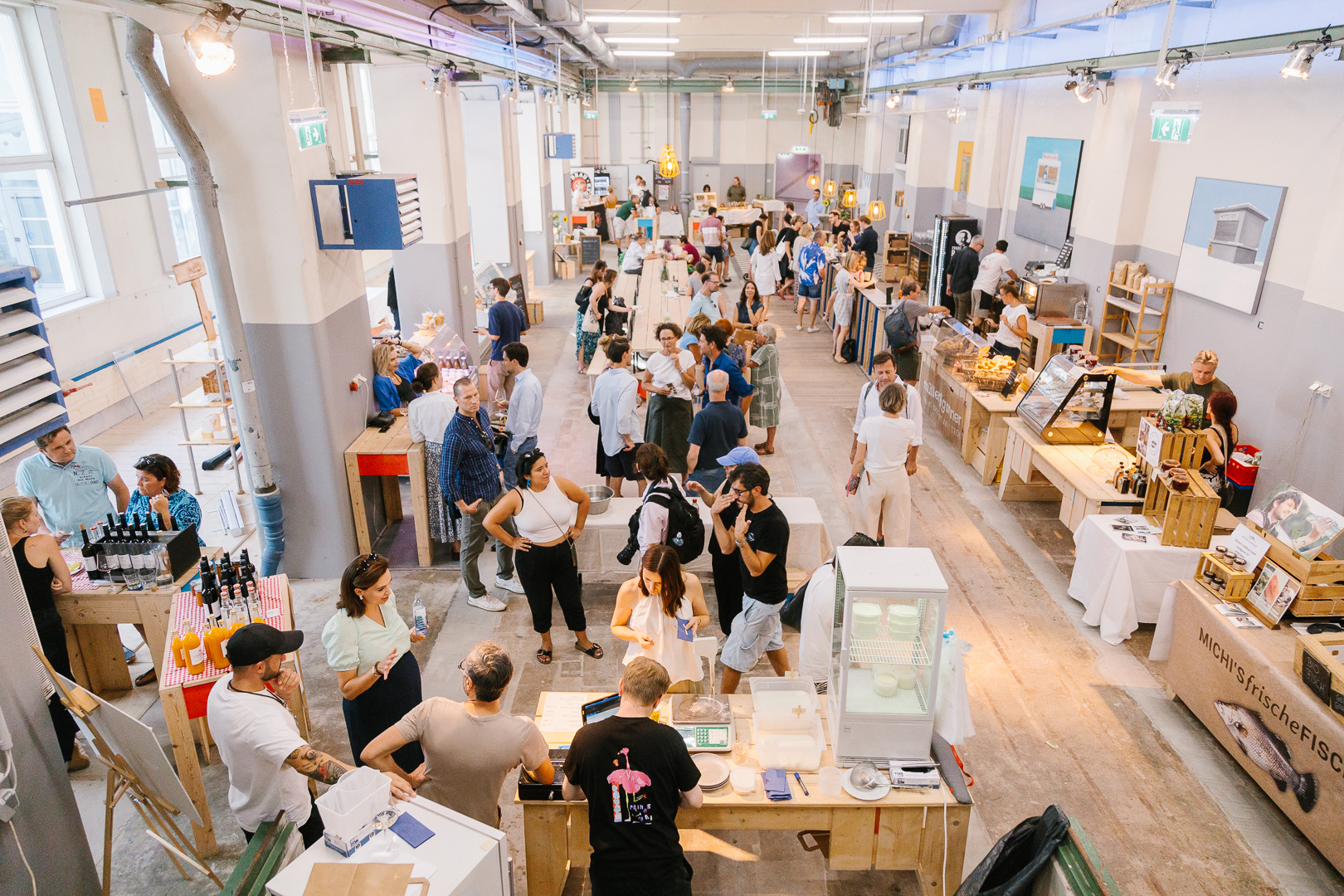
After a long search, a suitable property for Markterei was finally found in the former hydraulic engineering laboratory. Founded in 1913, the Institute for Hydraulic Engineering at Severingasse 7 is one of the oldest hydraulic engineering laboratories in the world. Buero de Martin rented the listed property-consisting of a landscaped courtyard, the testing hall, the workshop, various ancillary rooms on the ground floor, rooms on the 1st and 2nd floors, and a second hall on the mezzanine-and began transforming the building into a unique venue for events, exhibitions, and creative work.
We served as consultants for the Markterei project, offering guidance on how to best approach working with this unique, existing building.
In collaboration with the Markterei team, we conducted several site visits, provided floor plan studies, and helped determine which elements should be preserved or adapted.
Additionally, we supported the team in preparing the necessary legal submissions to move the project forward.
Since autumn 2024, the hall on the ground floor has been transformed into a market hall every Friday and Saturday, becoming a stage for regional producers and their seasonal products. In addition to regular market hall operations, thematic focuses are set through events, special formats, workshops, as well as networking and B2B events to round out the overall experience.
Two houses and a courtyard
| Location | Klosterneuburg, Austria |
| Principal use | Single family house |
| Total floor area | 410m2 |
| Year | 2018-2020 |
| Status | Completed |
| Design team | Mark Neuner, Nikolaus Kastinger, Zarina Belousova |
| Carpenter | Tischlerei Prödl |
| Construction company | Dasch |
| Plumber | Doppler |
| Electrician | Douglas Elektrotechnik |
| Facade | Unfried |
| Locksmith | Riegler Metallbau |
| Tinsmith | L.O.B |
| Concrete floor | Pachler |
| Windows and doors | Josko |
| Structural engineer | Katzkow & Partner |
| Building physics | Bauklimatik |
| Prices | Vorbildliches Bauen in Niederösterreich |
On an elongated plot in Klosterneuburg, a small town north of Vienna, we designed a new house as an addition to an existing, small house. The new house resembles a proportionally scaled volume of the existing house. However, it differs in materiality and atmosphere. Through the addition emerges an intimate courtyard which forms a connecting link between the existing building and the addition.
taste! foodmarket
| Location | Donaukanal, Vienna |
| Principal works | Prefabricated, modular container units |
| Principal use | Hospitality, pop-up spaces, leisure area |
| Total floor area | 250m2 indoor, 1200m2 outdoor |
| Year | 2018–2021 |
| Status | Completed |
| Design team | Mark Neuner, Christian Höhl, Bernhard Stubenböck |
| Steel construction | Techmetall & Brantner |
| Wood construction | Holzbau Neumann |
| Construction company | Dasch Exklusiv Bau |
| Carpenter | Handgedacht |
| Plumber | Doppler |
| Electrician | Douglas Elektrotechnik |
| Kitchen | Lohberger |
| Windows and Doors | Kapo |
| Lightning | Molto Luce |
| Audio | Button |
| Structural engineer | DI Thomas Hanreich |
| Building physics | Bauklimatik |
| MA 36 application | B. Weikl |
| Competition | 1st prize |
The taste! Foodmarket offers two experiences: On the one hand there is taste! Garden, where you can hang out in summer time, drink cocktails from the Swizzle Bar and enjoy street food from Viennas bustling hospitality scene. The taste! Kitchen next door is open all year round and offers a seasonally changing menu, and in addition is a Mecca for all gin & tonic lovers.
For the extensive project, we developed a unique set of design elements: covered pergolas along the back of the quay walls as sheltered seatings, walls with colored gradients and freely distributed, three-dimensional grids that can be used as green landmarks or covered zones, as well as all-round seating steps and benches.
House Going
| Location | Going am wilden Kaiser, Austria |
| Principal use | Single family house |
| Floor area | 360m2 |
| Year | 2010–2012 |
| Status | Completed |
| Design team | Mark Neuner |
The Barn – Staged Authenticity.
To build a single family house in the region of Kitzbühel the team of Mostlikely took a better part of the design process as a research quest on how to build in a contemporary way without neglecting the historic traditions. Questions with great significance in an area where tradition not only weighs heavily on old houses but hardly any new houses that are more daring are to be found at all. This coherent architectural landscape allows for a romantic identity as well as regional authenticity and serves as the basis of the tourism industry in this area. To respect and preserve the substance of the idyllic mountain village Going am Wilden Kaiser (the name of the mountain which literally translates to “Wild Emperor”) Mostlikely chose to stage the well-known and proven in a new way.
Plaudereckn Public Furniture
| Location | 5 different locations in Vienna |
| Principal use | Public Furniture |
| Year | 2020 |
| Status | completed |
| Design Team | Mark Neuner, Marlene Lötsch |
| Client | City of Vienna |
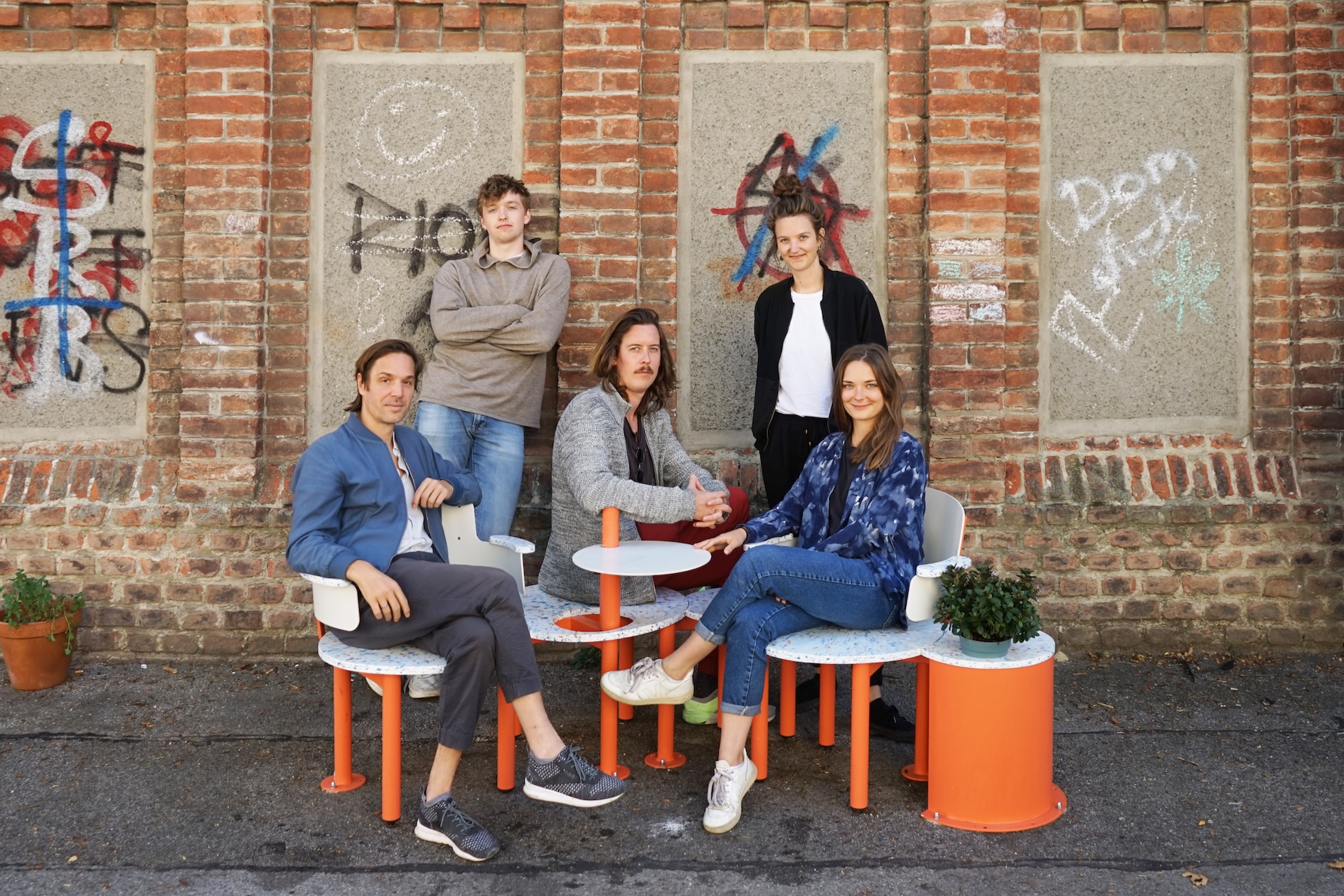
In the middle of the Covid-pandemic, we were commissioned by the city of Vienna to design a public bench. The furniture should stimulate social contacts while helping to comply to the Covid-19 rules.
Our idea was to design colourful and comfortable furniture which invites people to sit down and have a chat. A small side table enables all kinds of activities and to helps to transform it to your outside living room. The bench was equipped with a common flower which someone has to take care of.
The Plaudereckn are also published in the City of Vienna’s Sitzfibel
Housing Pragerstrasse
| Location | Pragerstrasse, Vienna |
| Principal works | Refurbishment, rooftop extension and garden loft |
| Principal use | Mixed housing |
| Total floor area | 500m2 |
| Year | 2018 |
| Status | Completed |
| Design team | Mark Neuner, Nikolaus Kastinger |
In the district of Floridsdorf many construction activities are ongoing. In many cases, renovating the old houses and converting the attic into apartments is a costly affair: Developers are thus forced to make use of the utmost space possible and often see no other way than replacing the old building. So more and more of the historic character is lost for the sake of conventional buildings.
In the middle of this rapidly changing neighborhood stands a small house with a beautiful inner courtyard. The two-story building has been owned for generations by a family, who has decided to renovate and extend it step by step. With all the ambitions given, we developed a concept of ”slow architecture“ which seems to be the only suitable answer.
House in a Roof
| Location | Vienna, Austria |
| Principal use | Housing |
| Total floor area | 500m2 |
| Year | 2018-2020 |
| Status | Completed |
| Design team | Mark Neuner |
The roof extension and renovation of the house began in 2013 and ended a few months later. The unfinished project was left to its fate and was finally sold to a new owner in 2018. We were tasked with continuing the project and quickly came across the hidden problem:
The lack of a second escape route.
Since a conventional solution with an escape staircase along the facade would impair the view of some apartments, we developed a foldable balcony that can be folded out in the event of a fire.
Muse
| Location | Vienna, Austria |
| Principal use | Art gallery and restaurant |
| Total floor area | 150m2 indoor and 350m2 outdoor |
| Year | 2020 |
| Status | Competition + preliminary design, completed |
| Design team | Mark Neuner, Zarina Belousova |
MUSE – the augmented reality gallery in public space
MUSE wants to become the new hotspot in Vienna: gastronomy with an attached art gallery, that will be accessible for free 365 days a year. The completely new concept is going to be located downstream of the Salztorbrücke on the side of the second district (Dianabadufer).
The technology partner for the implementation of the augmented reality gallery is „Artivive“, a Viennese startup that is already known for augmented reality solutions in the art sector. The gallery is going to be opened from early in the morning until late in the evening. During the day MUSE focusses on breakfast and brunch followed by a smooth transition to a classic bar with a restaurant.
Competition Nevillebrücke
| Location | Nevillebrücke, 1050 Vienna |
| Principal use | Public Space |
| Year | 2022 – ongoing |
| Design Team | Mark Neuner, Christian Höhl |
| Structural Engineering | Bollinger+Grohmann |
| Client | City of Vienna |
| Competition | 1st prize |
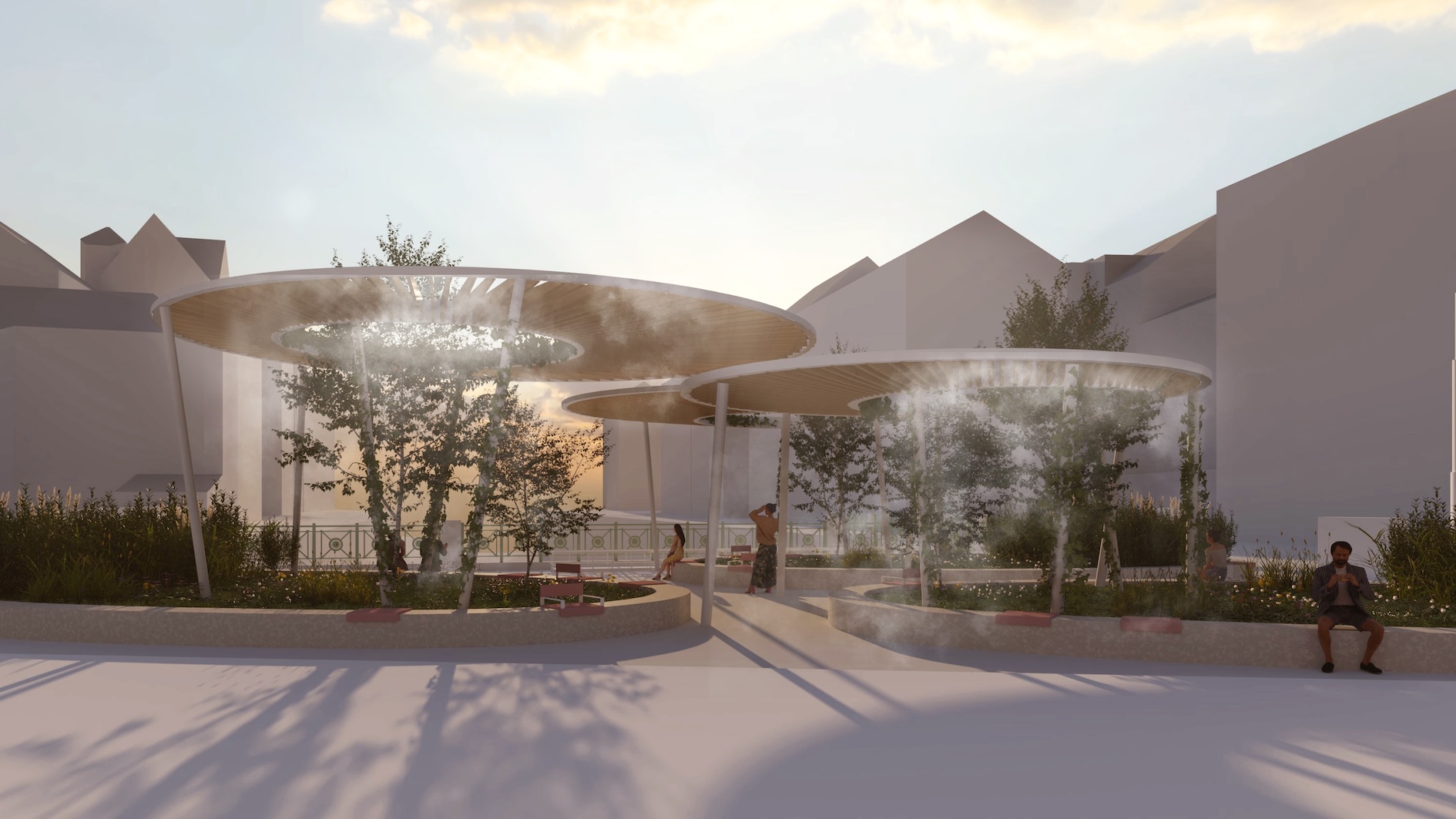
The Nevillebrücke (Neville Bridge) in Vienna is currently used as a pedestrian and cycling link as well as a small neighborhood meeting place. Our design proposal enhances this everyday space with shade, seating, and clear spatial zoning. Oval pergolas support shallow-rooted trees and bring natural cooling to the bridge. Raised planters and small platforms form places to pause, meet, and watch the sunset over the Wien River.
Competition Kindergarten Puch
| Location | Puch bei Weiz, Austria |
| Principal use | Kindergarten, Nursery |
| Total floor area | 1200m2 |
| Year | 2025 |
| Design team | Mark Neuner, Felix Redmann, Marlene Lötsch, Fabiola Roberti, Marine Devresse |
This proposal was developed for a competition by the municipality of Puch in Eastern Styria. Surrounded by orchards and historic apple varieties, the site offered the opportunity to link architecture, education and nature in a meaningful way. Our concept explored how every learning and community space could have a direct relationship to the outdoors. A generous garden with a sensory discovery trail was intended to support exploration and learning with all the senses. The project aimed for resource-efficient, circular construction with minimal impact on the landscape and high spatial quality – a building that opens itself to nature, community and learning.
Competition Gym Herbertgarten
| Location | Klagenfurt, Carinthia, Austria |
| Principal use | Gym |
| Total floor area | 1080m2 |
| Year | 2021 |
| Design team – Mostlikely Architecture | Mark Neuner, Agnes Schulz-Bongert |
| Design team – DMTK | Daniela Mehlich, Teresa Klestorfer |
| Competition | 3rd prize, in cooperation with DMTK |
After the preliminary study for the competition suggested an elevated gym in the first floor with very uninviting parking lots under the building we wanted to find a solution that harmonises with its environment.
We decided to focus on the connection between the new gym and its surroundings: the gym in the ground floor opens onto the sports field, can be seen from the outside and communicates with the existing buildings.
Leones Gelato Lange Gasse
| Location | Lange Gasse 78, Vienna |
| Principal use | Ice cream parlour |
| Total floor area | 50m2 |
| Year | 2015 |
| Status | Completed |
| Design team | Mark Neuner, Maik Perfahl |
At Leones Gelato in Lange Gasse the main focus was put on the concrete counter: A light-grey, monolithic block, carefully cast with several different techniques by the sculptor Stefan Buxbaum, which makes for a real eye-catcher. Contrasting to this are the light, delicate lamps: Their design seizes on the so called Pozzetti – Characteristically curved silver shiny lids, keeping the daily locally produced ice cream fresh and flavourful.
Edition k
| Location | Seilergasse, 1010 Vienna, Austria |
| Principal use | Fashion shop |
| Year | 2009 |
| Status | Completed |
| Design team | Mark Neuner, Maik Perfahl, Wolfgang List |
EDITION-K – design for a contemporary fashion shop
The idea for the interior design of EDITION-K was to create different atmospheres on the two levels—upstairs a luxury boutique and downstairs a loft style showroom with the staircase serving as a connecting link between the two spaces.
Jewelry Gallery Alja
| Location | Kärnterstraße 8, 1010 Vienna, Austria |
| Principal use | Goldsmith’s atelier |
| Total floor area | 180m2 |
| Year | 2012 |
| Status | Completed |
| Design team | Mark Neuner, Maik Perfahl, Robert Schwarz |
The aim was to develop a visual identity which proves to be timeless enough to outlast short-lived fashion trends. Inspired by Adolf Loos for whom it was all about the subtle treatment and correct application of materials, we searched for extraordinary Viennese hand-crafters and artisans. Most of them operated small workshops and were eager enough to cooperate on the development of small prototypes such as the concrete displays.
Nam Nam
| Location | 1060 Vienna, Austria |
| Principal use | Restaurant |
| Year | 2010 |
| Status | Completed |
| Design team | Mark Neuner, Kurt Mühlbauer, Wolfgang List, Esther Straganz |
The goal was to transform a run-down Viennese restaurant into a modern Indian restaurant. Our dreams and aims were big. However, we had so little budget, that we couldn’t realise them in a conventional manner. So we focused on recycled materials and included the muscle power of the new owner and his team. With the help of our DIY manuals and our instructions, the team could build all the furnitures by themselves.
By making a virtue of necessity we appropriated the concept of urban mining and circular economy.
Publication Mostlikely Sudden Workshop
| Year | 2018 |
| Author | Mark Neuner |
| Publisher | Park Books |
| Language | German |
| ISBN | 978-3-03860-122-7 |
The Sudden Workshop is a mobile workshop and tool for the collective reactivation of the city`s unused spaces. The temporary spatial interventions and prototypes demonstrates the potential of a shared city and collectively maintained spaces.
The book gives an insight into the cosmos of the sudden workshop by documenting our mission to activate public space in collaborative building actions. The realized projects were prototypes for new typologies which we defined as the open market, the open workshop, the open kitchen and the open centers of new work. These typologies manifest an open city model which we call the „common space city“. Next to this urban theory it assembles unique furniture designs, prototypes, photographs and texts. The furnitures – from chairs and tables to modular cityscapes – were further developed and enhanced to DIY manuals, which can be downloaded in the Download section. An exclusive feature of the book is the. „Wiener Werkstadt Kollektion“, which was created in cooperation with 18 Viennese architects, designers and artists.
Publication 14.03. – 23.03. Team Wien
| Year | 2017 |
| Research Team | Petra Petersson, Wolfgang List, Barbara Gruber, Daniel Huber |
| Research Facility | Institute of Design and Construction Principles at Graz University of Technology |
| Research Type | Research on Design |
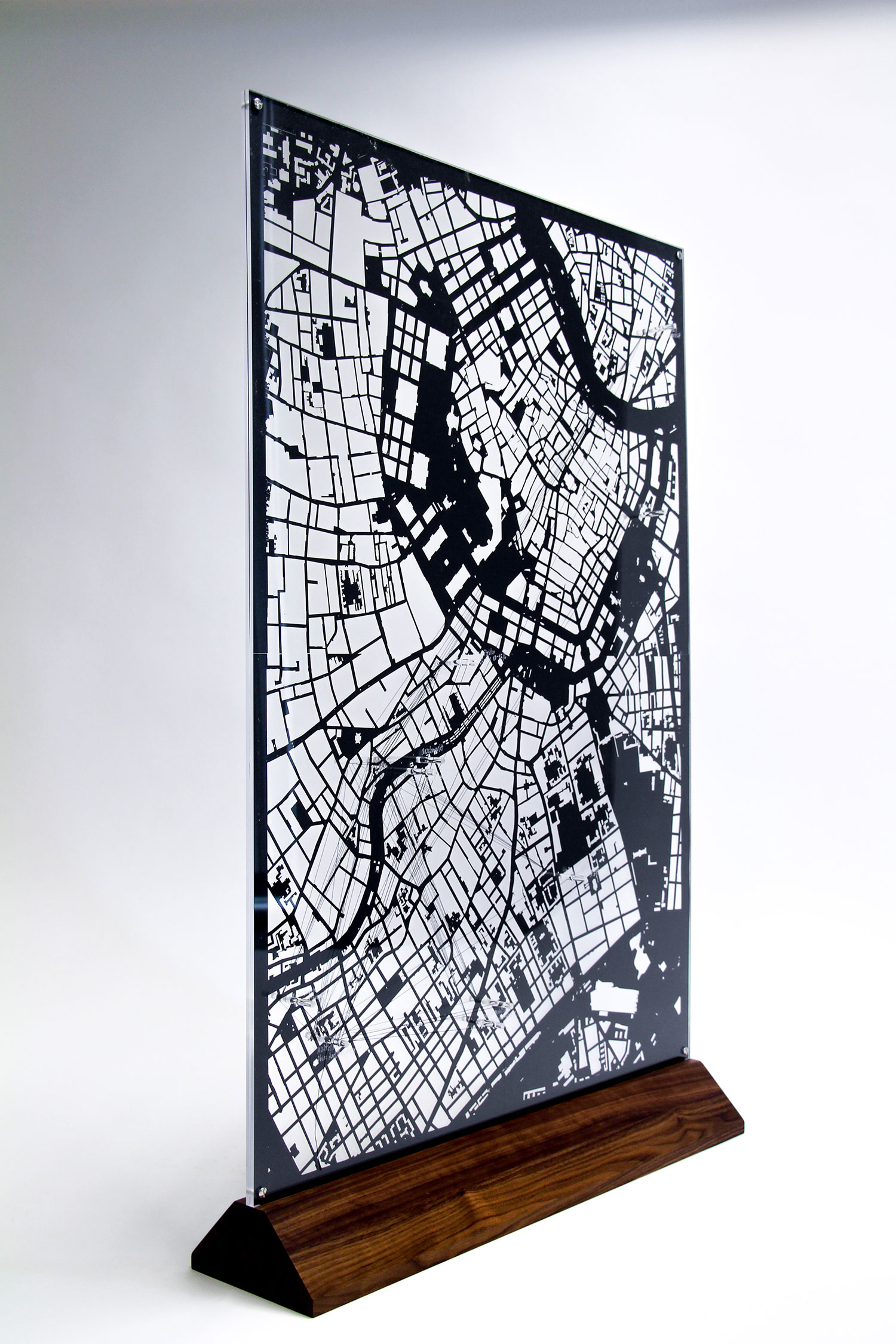
This project is a research on the process of designing. In 2017 Team Wien, consisting of Anna Paul, Bika Rebek, Büro KLK, Daniela Mehlich, Felix Steinhof, Mostlikely and Tzou Lubroth Architekten, were asked to present their concept of a collaborative and communicative architecture project at the Vienna Biennale co-organised by the Austrian Museum of Applied Arts. The research documents the work intensive and in time limited collaboration of the Team Wien in a book and an analogue model.
In the book the mainly written down collaboration of the Team Wien was documented. By presenting all collected emails, from the first meeting to the final design, in an easy readable medium, a classical book, the process of how decisions were made, on which ideas were agreed on and how ideas were rejected, the process of design can be observed. The additional analogue model can be seen as a contact tracing model of the different players in the design process.
Publication One Hit Wonders
| Year | 2014 |
| Research Team | Mark Neuner |
| Graphics | Mark Neuner, Atelier Olschinsky |
| Published in | “Nevertheless Magazine for Art & Architecture – The Passion Archive” (Issue 8) |
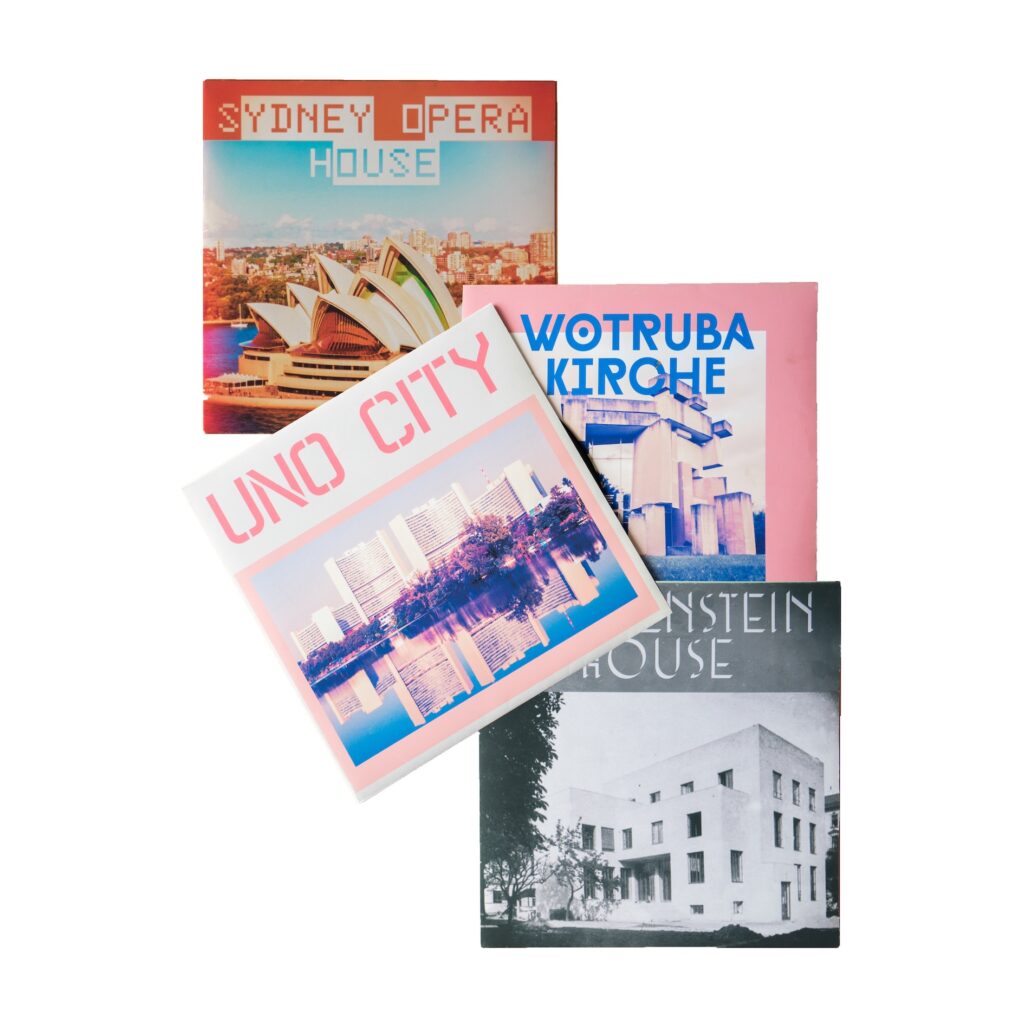
The phenomenon of a One Hit Wonder is first and foremost known in the field of Music. Even if a hit is said to be a “once in a lifetime” event that needs a “magic moment” and cannot be reproduced, the band The KLF had a different opinion. In their publication “The Manual (How to Have a Number One the Easy Way)” they explain to people how to produce this “magic moment” in order to land a Number One hit.
But what about architecture? Is there any such category? If there is, can you find a One Hit Wonder in Austrian architecture, or better still – a manual – that one could do this?
Publication Small World
| Year | 2014 |
| Research Team | Mark Neuner |
| Photography | Mark Neuner and Atelier Olschinsky |
| Published in | “Nevertheless Magazine for Art & Architecture – The Passion Archive” (Issue 7) |
Whether it is Lainzer Tiergarten, the Donauinsel, or the Prater, they are appearing in Vienna everywhere and yet are nowhere: the “Wohnwelten” (Residential Worlds), that seem to have been reduced by a factor of 0.5. Compared to Tokyo these miniature houses are still gigantic. There the so-called mini-house often has a ground plan the size of a parked car. What seems like an absurd product is at closer inspection the answer to the questions our megacities will be confronted with in 2030 at the latest. That is the expected point in time where we will have to have completely changed our consumption.
Sudden Workshop Summer School Ternitz
| Location | Dreiersiedlung, Ternitz, Lower Austria |
| Principal use | Infrastructure for Public Space |
| Year | Summer 2022 |
| Status | completed |
| Team Mostlikely Architecture | Marlene Lötsch, Mark Neuner |
| Consortium: | einszueins architektur, Caritas, carla lo, Schöberl & Pöll Bauphysik, Schwarzatal |
| TU Wien: Institut für Städtebau, Landschaftsarchitektur und Entwerfen | Univ.Prof.in Dipl.-Ing Ute Schneider, Almar Johan De Ruiter, MSc |
| Students | Max Puhr, Anna Wenisch, Maria Aikaterina Travlou, Danae Kokla, Alexander Thoma, Sebastian Wack, Moses Effnert, Patrick Strassberger, Sina Stadlbauer, Antonia Karner, Franziska Hummel, Karolin Wagner, Eva Maria Neumaier, Julia Kley, Lara Lübke, Sibylla Helena Windisch, Benedikt Mass, Maximilian Flassak |
| Supported by | FFG, klima+energiefonds |
| Time frame | 1 week designing, 2 weeks building |
In July 2022 we held a three-week summer school in Ternitz, Lower Austria, for 20 students of the Architectural faculty of TU Wien.
Embedded in the long-term research project “Transform Ternitz” by the project consortium under the lead of Caritas Stadtteilarbeit and einszueins architektur, the summer school’s goal was to redefine existing open spaces of the settlement, strengthen the community, and set new impulses for Ternitz.
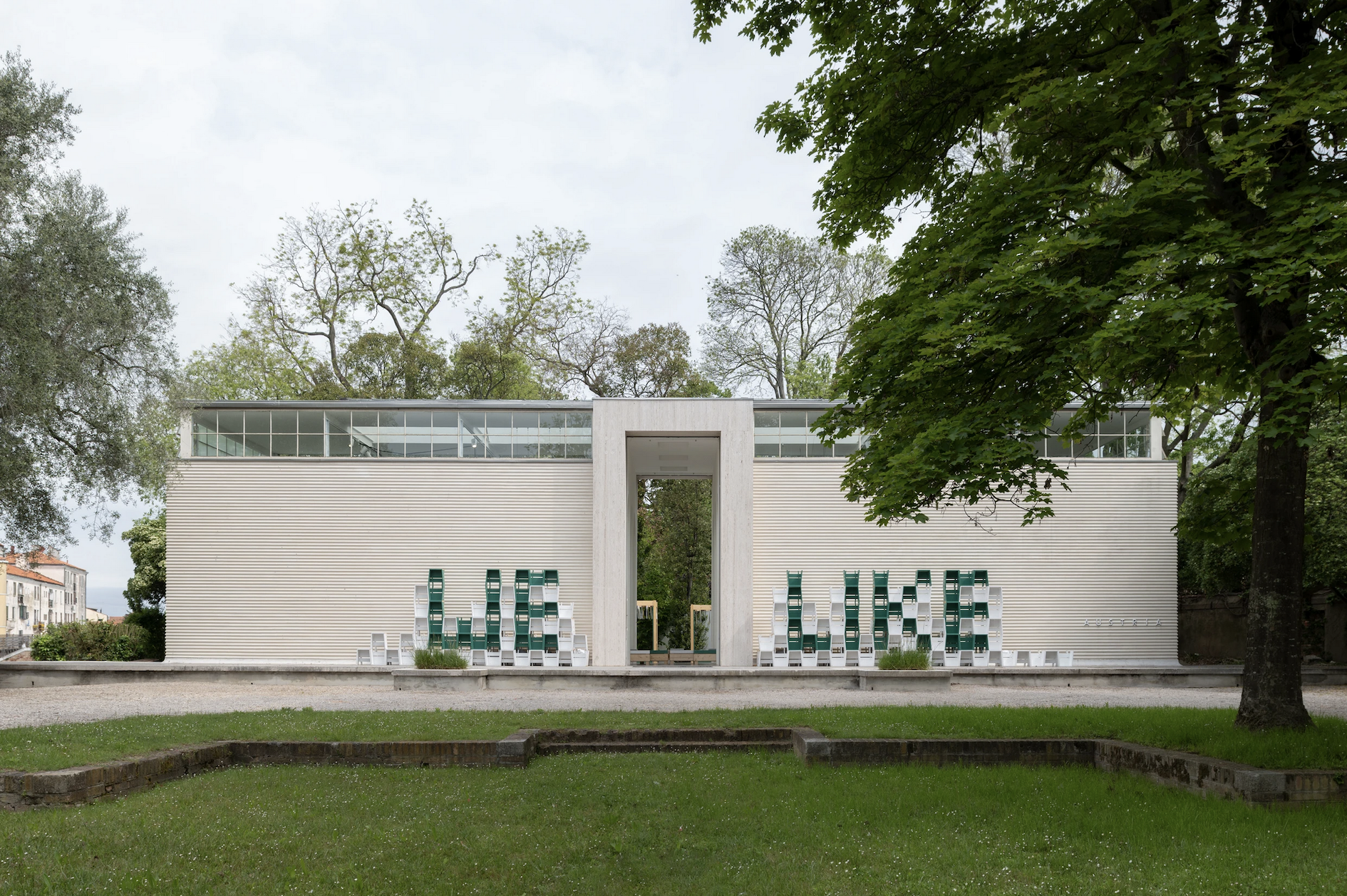
Sudden Workshop Objects for the Austrian Pavilion 2021
| Location | Austrian Pavilion, 17th Venice Architecture Biennale |
| Year | 2019–2021 |
| Sudden Workshop Team | Andreas Lint, Arne Leibnitz, Marlene Lötsch, Nikolaus Kastinger, Christian Höhl, Mark Neuner |
| Participants Building Workshop | Alexander Garber, Barbora Kolarova, Berke Onay, Bilal Alame, Caroline Rösner, Celine Stemmelen, Cosma Kremser, Deyvi Papo, Francesca Lysann Klute, Hanna Padasheuka, Laura Farmwald, Laura Sánchez Fernández, Martina Laslová, Mary Osibanjo, Merve Canga, Nadine Niederdeckl, Philipp Kitzberger, Viola Kryza |
| Curators | Helge Mooshammer, Peter Mörtenböck |
| Cooperations | section.a, TU Wien, Creative Cluster Margareten, tema, Monika Heiss |
| Funding | BMKOES, Fachverband der Österreichischen Holzindustrie, Verband der Europäischen Hobelindustrie, MH Massivholz Austria, Holzcenter Weiss, Adler Lacke, Kvadrat, Zumtobel, Schachermayer, Laufen |
In 2019 for the first time an open competition for the Austrian Pavilion 2020 at the Venice Architecture Biennale was launched. After the curators Peter Mortenböck and Helge Mooshammer and their proposal “Platform Austria” succeeded into the final stage of the competition, they asked Mostlikely to deliver a design concept for the second phase of the competition.
In the design proposal an endless grid hoovered over the Austrian Pavilion. The modular aesthetics was continued inside the Pavilion and immersed into flashy colours – a reference to the visual identity of utopian architecture groups of the sixties.
In the same way today our ideas are cheered by the promise of unlimited possibilities brought forth by digitation. The unreal and ambivalent installations in the Austrian Pavilion aimed to show the ambiguity of our era: On one side tempting and inviting, on the other shallow and hollow, they can be experienced as an enjoyable and relaxing spot, where visitors pause and stay for a moment.
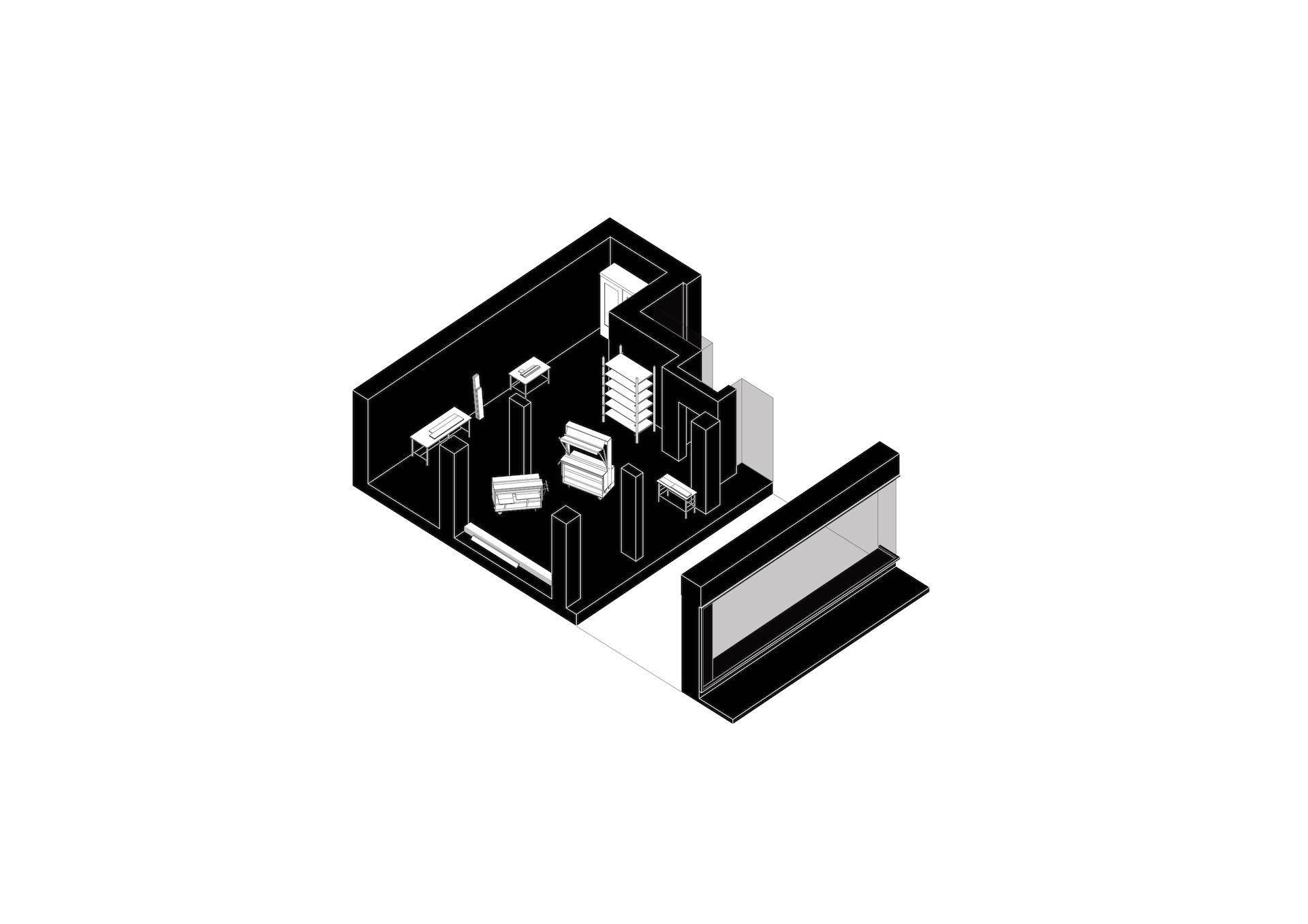
Due to Covid 19 and other reasons, the coherent design of the whole Pavilion was fragmented by the curators and reduced to wooden objects that will be on display inside and outside the pavilion of the Venice Architecture Biennale until November 2021.
Sudden Workshop Creau
| Location | Trabrennbahn Krieau, 1020 Vienna |
| Category | Sudden Workshop/cultural&community |
| Year | 2017-2018 |
| Building time | 2 weeks |
| Supervisors | Mark Neuner, Thomas Gamsjäger, Wilhelm F. Luggin |
| Budget | 15.000 € |
| Sponsoring | MH Massivholz Austria, Verband der Europäischen Hobelindustrie, Formholz, PEFC, Sigha, Synthesa, Baustoffe Quester |
| Cooperation | TU Wien – Department of Spatial and Sustainable Design, Nest – Argentur für Leerstandsmanagement, Nut & Feder |
Workshop in CREAU – Urban prototypes for the Krieau racetrack
On an underused part of the former racetrack Krieau, we organized a Sudden Workshop in cooperation with the Department of Spatial and Sustainable Design of the Technical University Vienna and the agency „Nest“. During the workshop we designed and built spatial interventions and installations to expand the possibilities of the temporary use and transform the former racetrack into a spatial resource, open for the neighbourhood and visitors. With a team of 25 students, we built four urban installations as prototypes for new urban uses. They have been in use from summer 2017 until autumn 2018.
Students: Maximilian Huber, Simon Cegar, Tobias Amann, Liz Tinaz, Iva Georgieva, Djordje Saric, Florian Freunschlag, Anel Bucan, Florian Pamminger, Aleksandra Firulovic, Anita Aigner, Anna Ulmer, Clement Dürr, Eliana Heltschl, Julia Raffel, Tanja Vucenovic, Rainer Hartl, Kristina Grausam, Julia Tamm, Elaine Mang, Nikola Chytil, Monika Furtner, Julia Gross
Sudden Workshop Markterei in der Alten Post
| Location | Alte Post, Dominikanerbastei 11, Vienna |
| Principal use | Market and public space |
| Year | 2015 |
| Building Time | 4 weeks |
| Sudden Workshop Team | Tobias Jager, Nikolaus Kastinger, Andreas Lint, Tobias Lint, Arne Leibnitz, Mark Neuner |
| Cooperation | Markterei, Mo-Ni-Ka |
| Budget | 12.000€ |
| Funding | Own resources Markterei, Fachverband der Österreichischen Hobelindustrie, Verband der Europäischen Hobelindustrie, PEFC |
| Sponsoring | Holzcenter Weiss, Sigha, Thonet, Donauer Design, Joval |
The Markterei opened its doors at the end of 2015 as a temporary market in heritage-protected spaces of a former post office, known as the Alte Post. Its intent was to support small food producers, chefs and local manufacturers by creating a marketplace where they could sell their products directly. The Sudden Workshop came together to collaboratively design and build the furniture and interior for the Markterei in situ.
The outcome of this was a 6-pieces Markterei-Furniture edition, of which all are flexible elements that can be extended, converted and combined in order to fit their intended use. Markterei Furniture Series: stool, bar table, two stackable modules, bench and market table.
Sudden Workshop Park macht Platz
| Location | parking lot at Naschmarkt, 1040 Vienna |
| Category | Sudden Workshop/cultural&community |
| Year | 2017 |
| Building time | 4 weeks construction, operating the following 3 weeks |
| Sudden Workshop team | Andreas Lint, Christian Höhl, Nikolaus Kastinger, Mark Neuner, Johnny Stein |
| Budget | Park & sudden workshop: 55.000 € |
| Funding | Bank Austria Kunstförderung, Bundesministerium für Kunst und Kultur, Kulturabteilung der Stadt Wien, Departure – Wirtschaftsagentur Wien Crowdfunding at we make it with 106 supporters and 16.572 € |
| Sponsoring | MH Massivholz Austria, Verband der Europäischen Hobelindustrie, Holzcenter Weiss, Holzcenter Seca, PEFC, Wittmann Metallbau, Trevision, Share Me, Zeppelin Solutions |
| Cooperation | Team Wien, Vienna Biennale, Demonstrator der Stadtfabrik, IBA Wien 2022, Nut & Feder, Viadukt Screen Prints, Urban Sync, Kino am Naschmarkt, Sidecar Catering and many more |
Park – a prototype for New Work
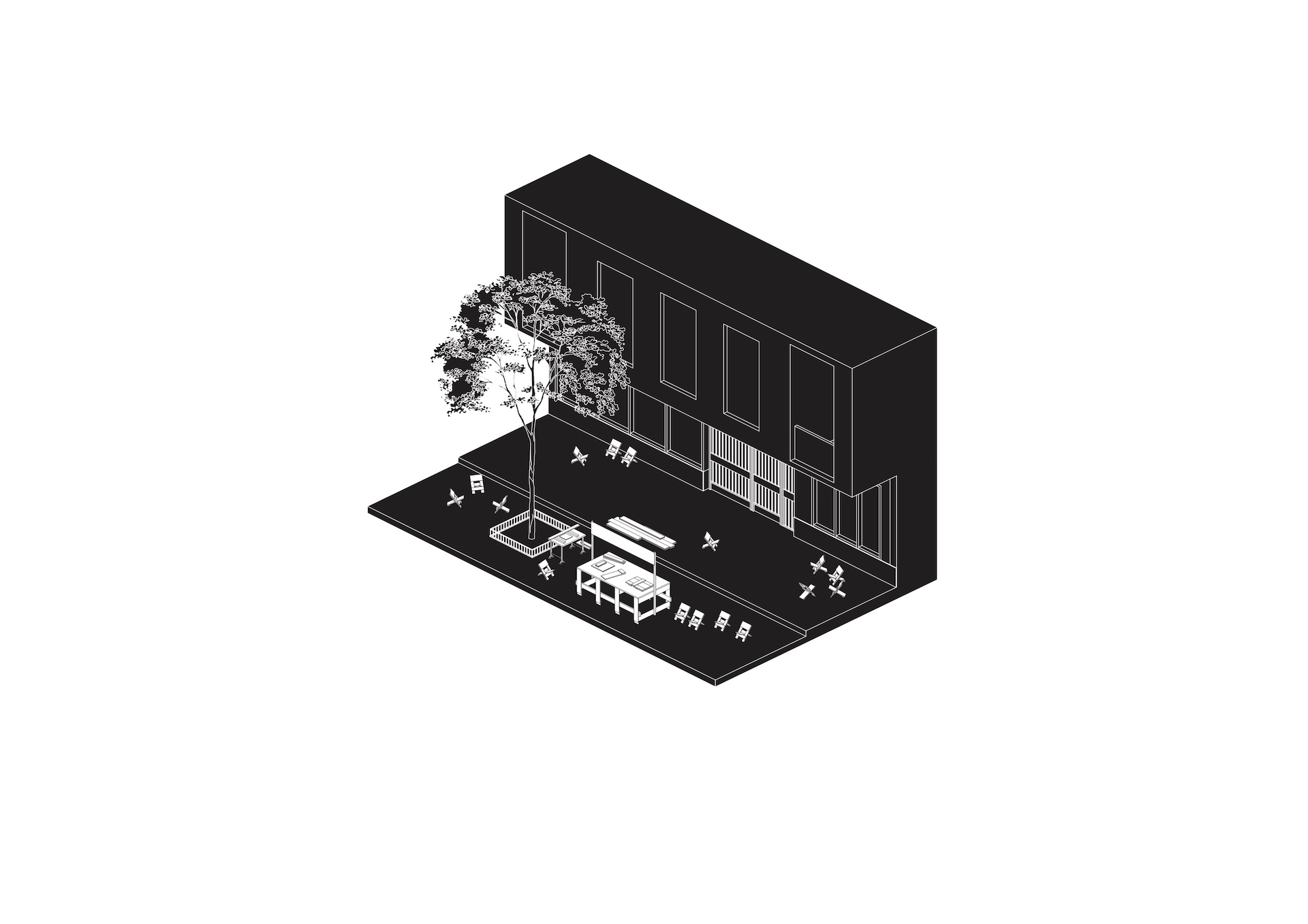
How can ongoing transitions in the working world be used for new forms of social coexistence and co-working? This question, or challenge, was the central theme of a participatory spatial installation by Team Wien in summer 2017, when a parking lot at the edge of Vienna’s Naschmarkt was used for such a public experiment. Team Wien developed and built a wooden structure to create free to use workspaces for anyone in Vienna. One of the provided infrastructures was an area for wood constructions, where the sudden workshop, together with passers-by, built the furniture for Park . The idea behind the project was to highlight the potential of urban commons and non-profit spaces.
The Park series consists of three basic modules in different sizes that can be stacked or plugged together, allowing for countless combinations and ways of utilization. Individually, each piece can be used as stools, boxes, shelves or room dividers.
Park series: Park Module S, Park Module M, Park Module L
Click here for manuals of the Park series and other sudden workshop designs.
Team Wien: Leni Enzinger, Daniel Kerbler, Christian Knapp, Quirin Krumbholz, Linda Lackner, Wolfgang List, Gregorio Lubroth, Jonathan Lutter, Daniela Mehlich, Mark Neuner, Anna Paul, Maik Perfahl, Sarah Podbelsek, Bika Rebek, Felix Steinhoff |
Sudden Workshop Grätzloase
| Location | Viktor-Christ Gasse, 1050 Vienna |
| Category | Sudden Workshop/cultural&community |
| Year | 2020 |
| Building time | 1 week |
| Sudden Workshop team | Arne Leibnitz, Nikolaus Kastinger, Andreas Lint, Christian Höhl, Marlene Lötsch, Mark Neuner |
| Funding | Grätzloase |
| Cooperation | Creative Cluster Margareten |
The parklet in front of Creative Cluster Margareten serves as a public terrace, where passers-by, neighbours and the creatives of the former school can host small events, meet and relax. Surrounded by many plants, the colorful modular landscape can be configured in various ways, each part functioning as a seating element, plant pot, low table or work table. In that way, the modular system can also be used for other parklets in other parts of the city and then be adapted to the given circumstances.
This Grätzloase is our contribution during summer 2020 to extend public space and to create a qualitative, yet safe outdoor space, where people, even in times of a global pandemic, can gather and exchange.
Sudden Workshop Küchenskulptur
| Location | Sandleitenhof, 1160 Vienna |
| Category | Sudden Workshop/cultural&community |
| Year | 2016 |
| Building time | 2 weeks construction, 3 weeks destruction |
| Sudden Workshop team | Nikolaus Kastinger, Andreas Lint, Arne Leibnitz, Mark Neuner, Annika Strassmair |
| Budget | 15.000 € |
| Funding | Grätzloase, Soho in Ottakring, Fachverband der Östereichischen Hobelindustrie, Verband der Europäischen Hobelindustrie, PEFC |
| Cooperation | SOHO Ottakring, Nut & Feder, Social Kitchen Club |
| Sponsoring | Holzcenter Seca, Sigha |
The Küchenskulptur – A 100-meter long urban intervention
The kitchen sculpture, a wooden installation stretching over 100m, was built within the framework of SOHO Ottakring in summer 2016. Winding through a vacant cinema inside Sandleitenhof it slowly makes its way out onto the open street. Designed and built like a red ribbon, the Kitchen Sculpture was intended to bring artists, visitors and neighbours together and to guide them through the festival, which took place inside the council housing building. The sculpture could be used as kitchen, desk, counter, dining table, and seating furniture. During the festival, the sculpture was removed and sawed into construction kits, which visitors later re-assembled into the SOHO Collection.
Nut & Feder Team: Christian Penz, Lamin, Ugochukwu, Mustapha, Hosep
Sudden Workshop Wiener Werkstadt
| Location | Alte Post, Dominikanerbastei 11, 1010 Vienna |
| Category | Sudden Workshop/cultural&community |
| Year | 2018 |
| Building time | 28 weeks |
| Sudden Workshop team | Mark Neuner, Andreas Lint |
| Budget | 5.000 € |
| Funding | Fachverband der Östereichischen Hobelindustrie, Verband der Europäischen Hobelindustrie, PEFC |
| Cooperation | Markterei, Nut & Feder, Thonet, Into the City / Wiener Festwochen |
| Sponsoring | Markterei, Holzcenter Weiss, Sigha |
Wiener Werkstadt – Unique furniture of a young architecture, art and design scene
After finishing the furniture for Markterei, we continued our Sudden Workshop in the Alte Post for 7 more months. With the aim to create an open workshop, we initiated the Wiener Werkstadt by asking friends, architects, designers and artists to develop and build furniture together. The only guidelines were the sole use of a chop saw and the restriction to two formats of wooden planks. Based on this low-tech manufacturing approach, unique designs could be realised. Each design approach and their results are featured in the Mostlikely Sudden Workshop book.
Guests: Anna Paul, Büro KLK, Christoph Leibl, Daniel Gutmann, Daniel Sanwald, George Rei, KIM+HEEP, madame architects, Maik Perfahl, Mark Balzar, Patrick Rampelotto, Percy Thonet, Robert Schwarz, Selina Traun, Valentinitsch Design, Tzou Lubroth
Sudden Workshop Jane & Cem
| Location | Schwendermarkt, Reindorfgasse, 1150 Vienna |
| Category | Sudden Workshop/cultural&community |
| Building time | 2 weeks |
| Sudden Workshop team | Mark Neuner, Andreas Lint, Mal Ballata |
| Budget | 3.000 € |
| Funding | Kulturförderung der Stadt Wien |
| Cooperation | Werkstatt 15, Palme13 |
Jane & Cem – two market stalls as urban commons
Jane & Cem are two mobile market stalls that were developed and built for the Schwendermarkt as urban commons with the aim to reactivate the run down market. The rollable stalls can be used free of charge by local farmers and producers to sell their goods at the market. If the two market stalls are not in use, they are parked in palme13, once a market stall that had been turned into a public space for art and culture.
Sudden Workshop Minimum-Maximum Workshop
| Location | Schwendergasse 13-15, 1150 Vienna |
| Category | Sudden Workshop/cultural&community |
| Year | 2016 |
| Building time | 2 weeks |
| Sudden Workshop team | Mark Neuner, Andreas Lint, Simon Waldl |
| Budget | 1.000 € |
| Funding | Kulturförderung der Stadt Wien |
| Cooperation | Reindorfgassenfest, Werkstatt 15 |
Minimum-Maximum-Werkstatt – New chairs for Reindorfgassenfest
During the Reindorfgassenfest in 2016, annually organised by local ateliers, initiatives, pubs and communities, we adapted a parking bay for the purpose of a sudden workshop: On a long work table, visitors could build their own chairs for the festival in our open workshop. In just a few minutes, the Minimum Maximum Chair could be assembled from a prepared construction kit. If you built two chairs, one was yours to take along, while the other one stayed at the nearby Schwendermarkt.
The Minimum Maximum Chair consists of just a few wooden planks, screws, two nails and a piece of rope and can quickly be assembled, even if inexperienced. Depending on how far the central board is pulled out, the seating position can be altered. After using, the stool can be folded and easily carried away – with the rope serving as a handle.
Schwendermarkt series: Minimum Maximum-Chair
Common Space Case Study Neighbourhood Market
| Location | Volkertmarkt, Vienna |
| Typology | Common Space Market |
| Year | 2021 |
| Common Space team | Mark Neuner, Marlene Lötsch, Irina Nalis, Alexander Fischer, Gloria Hinterleitner |
| Funding | Wirtschaftsagentur Wien |
The Common Space Neighborhood Market lays out new organizational, technological distributional and educational patterns for current and future farmers, vendors and citizens with an emphasis on the support of local small scale farming and food cooperatives.
The Volkertmarkt is currently the least visited market in Vienna: Many market stalls are vacant, visitors and offer are scarce, vendors are frustrated. However, it is centrally situated in the district, surrounded by many initiatives and is frequently used by neighbors for social gatherings. With the Common Space Neighborhood Market we want to strengthen the social aspects of the market, create a hub for synergies for the local initiatives and extend the market offer. The Neighborhood Market is an open platform, including facilities such as:
Fixed and temporary market stalls
Open market kitchen
Open market office
Multifunctional public market furniture
Flexible outdoor spaces for sports, events and social gatherings
Large seating staircase and a stage
Public roof
Green pergolas and cooling water elements
Youth center
Common Space Case Study Center for New Work
| Location | Sandleitenhof, Vienna |
| Typology | Common Space Center for New Work |
| Year | 2021 |
| Common Space team | Mark Neuner, Marlene Lötsch, Irina Nalis, Alexander Fischer, Gloria Hinterleitner |
| Funding | Wirtschaftsagentur Wien |
The Common Space Center for New Work provides local facilities for the new requirements in the world of work and opportunities for life-long learning.
The Sandleitenhof was built during the period famously known as „Red-Vienna“ and is the biggest communal housing project from that time. Today, still more than 4000 inhabitants live at the Sandleitenhof and around 13.500 people are located within a walking distance of ten minutes.Despite the various facilities integrated in the housing project in the 1920’s, today many shops and spaces remain empty. The Neighborhood Center for New Work re-activates the vacant spaces and transforms them into an open platform with facilities such as:
Fix desks and shared working desks
Rooms for workshops and education
Neighborhood Cafe
Spaces for digital fabrication
Amphitheater for Talks and Events
Common Space Case Study Circular Hub
| Location | Saurerwerke, Vienna |
| Typology | Common Space Circular Hub |
| Year | 2021 |
| Common Space team | Mark Neuner, Marlene Lötsch, Irina Nalis, Alexander Fischer, Gloria Hinterleitner |
| Funding | Wirtschaftsagentur Wien |
The Common Space Circular Hub provides extended spaces and infrastructures for urban production, to keep materials in a circulating flow and to act as an incubator for the creative potential of the neighborhood.
In many cities former industrial sites offer vast vacant spaces, often lacking a good concept for future use, despite having high spatial potential. Instead of selling off the plot to private land developers, a public open, up-dated industrial site could be implemented to generate new creative potentials and to support local urban production. The equipment of the Common Space Circular Hub meets the possibilities and requirements of digital technologies as wells as traditional crafts, offering facilities such as:
Wood workshops
Metal workshops
Electrotechnical workshops
Workshops for synthetic materials
Ceramics workshops
Textile workshops
Repair workshops
Re-use material sales
Recycling center
Community kitchen